.svg)


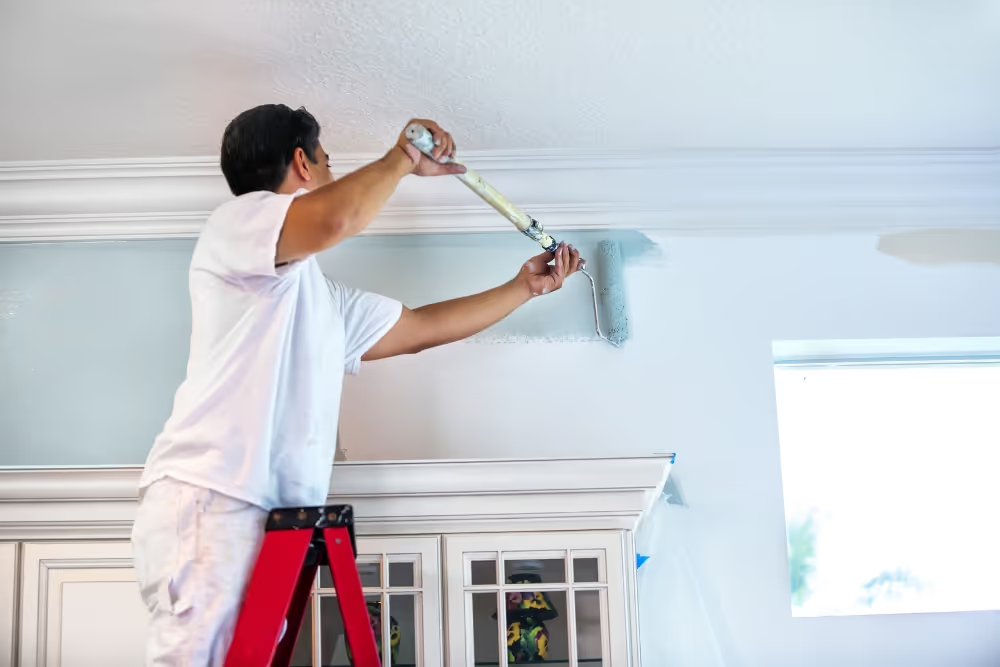
Rancho Mirage interior and exterior house painters price things differently than the rest of the valley. Larger homes, complex rooflines, custom ironwork, and HOA approval requirements all shape what a project costs and how long it takes.
Interior and Exterior House Painter Prices in Rancho Mirage
Rancho Mirage house painters charge $2 to $5 per square foot for interior work. Exterior painting on a typical home in the Coachella Valley runs $4,500 to $12,000, but Rancho Mirage projects frequently push past that range. The city is home to some of the largest and most architecturally complex residential properties in the valley. Estate homes with 4,000 to 8,000 square feet of exterior surface, multi-level rooflines, custom wrought iron gates, extensive trim work, and long runs of decorative block wall all take more time, more product, and more access equipment than a standard single-story stucco home.
The other factor that affects price in Rancho Mirage specifically is the standard of finish expected on these properties. A fast two-coat spray job with minimal prep is not what a homeowner in Morningside or The Springs is looking for. The work needs to be done right: full prep, right primer for every surface type, back-rolled where it needs to be back-rolled, trim lines that are clean, and a product that holds up in the desert.
Interior pricing follows the same range but varies considerably based on scope. A single-room repaint is a different job than a whole-house interior with vaulted ceilings, custom cabinetry, and specialty finishes on accent walls. Repair work, sheen variations by room, and cabinet refinishing all add to both time and cost.
Price Ranges at a Glance
Final price depends on square footage, number of stories, surface condition, repair scope, primer requirements, number of coats, and coating system. Use our Coachella Valley painting cost calculator for a project-specific estimate.
What Makes Rancho Mirage Painting Projects Different
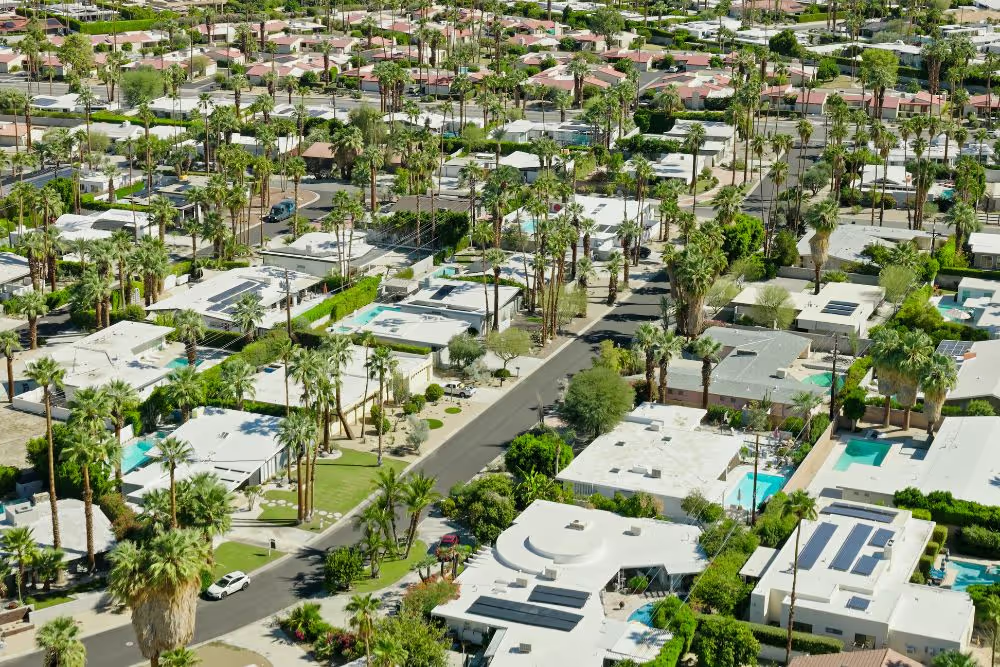
About 80 percent of homes in Rancho Mirage are in gated communities. That matters to how painting projects get planned and executed. Access to the property is coordinated through guard gates. Delivery of materials, staging of equipment, and daily crew entry all need to be scheduled with the community. On some larger estates, access to the rear or upper sections requires pump jack scaffolding or an aerial lift brought in on a scheduled day. That adds both cost and coordination time to a project that wouldn't apply on a standard residential street in Indio or La Quinta.
The homes themselves are also more complex. Contemporary desert estates and Mediterranean-style villas in communities like Thunderbird Heights, Mission Hills Country Club, and Mirada Estates have architectural features that take time to paint properly. Deep-set window reveals, multiple step fascias, custom corbels, decorative ironwork, long runs of smooth plaster exterior, and perimeter block walls or stone that need specific primer and coating systems. There's no spraying everything the same color and calling it done.
Mid-century homes in neighborhoods like Magnesia Falls Cove present a different set of considerations. Older construction means more chalking, more failed caulk joints, and in many cases surfaces that haven't been touched in 15 to 20 years. That prep scope drives cost and timeline more than any other variable.
We did a full exterior repaint at a home in Morningside Country Club, Rancho Mirage last season. The home had roughly 5,200 square feet of exterior stucco surface across two stories, plus perimeter block wall, wrought iron entry gates, and a detached casita. The stucco was about 12 years old with chalking across most of the south and west faces, hairline cracking at every window corner, and three sections of failed caulk at the roofline where water had gotten in behind the flashing. Stucco repair, caulk removal and reapplication, two coats of Loxon XP elastomeric primer, and two coats of Sherwin-Williams Duration. The wrought iron gates got wire-brushed, primed with Rust-Oleum direct-to-metal primer, and finished with a high-gloss oil-based enamel. That job was a seven-day project with a crew of four.
Desert Climate and Exterior Painting in Rancho Mirage
Rancho Mirage sits in the heart of the Coachella Valley and gets the same UV punishment as the rest of the desert. Surface temperatures on west-facing stucco can hit 160 to 170 degrees in summer. The thermal cycle from daytime peak to overnight low breaks down paint binders, sealants, and caulk joints faster than in almost any other residential market in California.
Standard 100% acrylic exterior paint holds up here, but its desert service life is shorter than what manufacturers advertise for temperate climates. Seven to ten years under good conditions is the honest range. Elastomeric coatings are the right choice for stucco homes that need to hold up longer with less maintenance. Products like Sherwin-Williams Loxon XP, Benjamin Moore Elastomeric, and Dryvit or Sto systems build a thick, flexible film: 10 to 40 dry mils compared to 1.5 to 2 mils for standard latex. That film bridges hairline cracks and flexes with thermal movement. A properly applied elastomeric system can hold up 15 to 20 years on desert stucco with annual touch-up inspections.
Scheduling is straightforward from September through May. Summer exterior work starts at 6 AM and wraps by 10 or 11 before surfaces get too hot to paint properly. We check surface temperature with an infrared thermometer before application each morning. Paint applied to a surface above 100 degrees skins over before it penetrates the substrate, which causes adhesion failure regardless of how good the product is.
The Full Exterior Painting Process
Interior Painting in Rancho Mirage
Interior painting in Rancho Mirage homes follows the same preparation discipline as exterior work. The standard of finish expected at this price point in the market is high. Clean trim lines at ceiling breaks and around door casings, even sheen across large wall planes, no roller texture variation, and color consistency from room to room are all things homeowners in this market notice and expect to be right.
New drywall or plaster surfaces need a PVA drywall sealer before finish coats to prevent flashing: the flat, patchy look that develops when porous gypsum pulls paint unevenly. Existing walls in good condition go straight to finish coats after cleaning and a light sand on rough spots. Glossy surfaces need to be deglossed before repainting so the new coat bonds properly.
Common interior repairs on Rancho Mirage properties include patching drywall at outlets and switch covers after electrical upgrades, floating and skimming ceilings where popcorn texture has been removed, sealing water stains on ceilings with shellac-based stain blocker like Zinsser BIN before the finish coat, and treating bath and laundry walls with antimicrobial paint to resist mildew in high-humidity zones.
Sheen selection is critical in homes with large open floor plans and significant natural light. Eggshell reads well on most wall surfaces and cleans without burnishing. Satin is the right call for kitchens, bathrooms, laundry rooms, and hallways that see daily traffic. Semi-gloss or gloss for trim, doors, built-ins, and cabinetry. These surfaces take impact and need a harder, more durable film that wipes clean without dulling.
Cabinet refinishing on Rancho Mirage properties is typically done with an HVLP spray system like a Fuji Q4 Pro or DeVilbiss gun for a smooth, spray-applied enamel finish. The substrate is cleaned, deglossed, and primed with a shellac-based or oil-based cabinet primer before the topcoat. Benjamin Moore Advance and Sherwin-Williams ProClassic are the go-to cabinet enamels: hard film, semi-gloss or gloss, minimal brush marks, and lasting durability.
Paint Brands and Products
We work with Sherwin-Williams and Benjamin Moore on most projects in Rancho Mirage. For exterior stucco in the desert, the product selection is driven by UV stability, crack-bridging capability, and how well the coating holds color over time. For interior, it's about hide, washability, and finish quality.
HOA Color Approval in Rancho Mirage
Rancho Mirage is one of the most HOA-dense cities in the Coachella Valley. Communities like Thunderbird Heights, The Springs, Mission Hills Country Club, Morningside, Rancho Las Palmas, and dozens of others all have architectural review committees that govern exterior color changes. If you're planning to repaint in a different color scheme, an ARC application with color brand, name, color code, and finish type is required before work begins. Starting without approval is one of the more reliable ways to receive a violation notice and a forced repaint at your own expense.
Most HOA color palettes in Rancho Mirage lean toward warm neutrals, desert sand tones, greige, and muted earth tones that complement the surrounding landscape and hold up visually under intense desert sun. Sherwin-Williams and Benjamin Moore both maintain HOA-specific color resources that many communities reference. Knowing which products and palettes your community has pre-approved saves significant back-and-forth with the architectural committee.
We handle ARC documentation and color submission as part of our project planning. If you're repainting in the same color, many communities don't require prior approval, but it's worth confirming in writing before scheduling the crew. Give the ARC process two to four weeks before your target start date. Some communities move faster, but several in Rancho Mirage review submittals only at scheduled board meetings, which can be monthly.
Surfaces Painters Work On in Rancho Mirage
Rancho Mirage properties typically have more surface variety than a standard Coachella Valley home. A full exterior scope on an estate property often includes stucco walls, fascia and soffits, wrought iron gates and railings, decorative block walls, a casita or guest house, and a long perimeter fence. Each surface requires a different primer and coating approach.
When Roofing and Exterior Painting Overlap
On estate homes in Rancho Mirage, roofline issues are a common discovery during exterior painting inspections. Complex rooflines with multiple hips, valleys, and parapets have more flashing transitions than a standard home, and those transitions are where water gets in. A paint failure at the top of a second-story stucco wall is often being driven by a flashing problem above it, not a paint problem.
When our inspection turns up roofline damage, we stop and flag it before paint goes on. Fresh exterior coating over an unresolved leak will fail within a year. Moisture pushes through from behind and causes blistering and delamination that no topcoat can prevent. The right sequence is roofing repairs first, adequate dry-out time, then exterior paint. Our roofing team in Rancho Mirage handles inspections and repairs as a coordinated scope. When both trades are needed, we schedule them together so the painting crew starts only when the roofline is resolved and dry.
Licensing and Questions to Ask Before Hiring
California painting contractors are required to hold a C-33 Painting and Decorating license issued by the Contractors State License Board. You can verify any contractor's active license status on the CSLB license check tool at no cost before signing anything. For painting work in Rancho Mirage, contractors performing work within the city are also required to hold a current Rancho Mirage business license. Details on contractor business licensing requirements are available through the Rancho Mirage Building and Safety Department.
If your home was built before 1978, lead-based paint may be present in existing coatings. The EPA's Lead Renovation, Repair and Painting (RRP) Rule requires that contractors disturbing more than six square feet of painted surface in pre-1978 homes be EPA-certified and follow lead-safe work practices. Mid-century homes in Magnesia Falls Cove and older sections of Rancho Mirage may fall under this rule. Ask any contractor working on an older property whether they hold EPA RRP certification before work starts.
Truly Tough Painting: Interior and Exterior in Rancho Mirage
Our painting team at Truly Tough Painting handles interior repaints, exterior stucco and elastomeric systems, wrought iron and metal prep and coating, cabinet refinishing, and HOA color documentation across Rancho Mirage, Palm Desert, Palm Springs, La Quinta, Indio, and the rest of the Coachella Valley. We use Sherwin-Williams and Benjamin Moore on every job, prime every surface that needs it, back-roll every sprayed exterior surface, and provide a written scope of work and final walkthrough on every project.
Call us at 760-343-5770 or reach us at Painting@TrulyTough.com.
Frequently Asked Questions
How much does interior painting cost in Rancho Mirage?
Interior painting runs $2 to $5 per square foot depending on surface condition, sheen selection, repair scope, and number of coats. Larger homes with vaulted ceilings, custom trim, and cabinet refinishing will run toward the higher end of that range.
How much does exterior house painting cost in Rancho Mirage?
A standard Coachella Valley home exterior runs $4,500 to $12,000. Estate homes in Rancho Mirage frequently push past that range given their size, architectural complexity, and the scope of ironwork, casitas, and perimeter walls included in the job.
Do I need HOA approval to repaint my Rancho Mirage home?
If you're in one of the city's many gated communities and changing your exterior color, yes. Most HOAs require an ARC application with color name, code, brand, and finish type before work begins. Repainting in the same color often does not require prior approval, but confirm that in writing with your HOA before scheduling.
How long does exterior paint last in Rancho Mirage?
A standard 100% acrylic exterior with proper prep and two coats lasts 7 to 10 years in the desert. A full elastomeric system on stucco can hold up 15 to 20 years. UV intensity and daily thermal cycling are the primary factors that shorten paint life in this climate.
What is an elastomeric coating and do I need it?
Elastomeric coatings are thick, flexible systems that bridge hairline cracks and flex with stucco as it expands and contracts in the heat. They're strongly recommended for stucco homes in the Coachella Valley. The service life is significantly longer than standard acrylic exterior paint.
How do painters handle wrought iron gates and railings?
Iron and metal surfaces need to be wire-brushed or ground to remove rust scale before any primer goes on. A rust-inhibiting direct-to-metal primer goes next, followed by an oil-based gloss or semi-gloss finish coat. Skipping the prep and priming steps means the rust returns quickly from beneath the topcoat.
What is a C-33 license and why does it matter?
A C-33 is the California painting and decorating contractor license issued by the CSLB. It confirms the contractor passed a trade exam covering surface prep, primer use, and coating application. Verify any painter's C-33 is active on the CSLB website before signing a contract.
Does my older Rancho Mirage home have lead paint concerns?
Homes built before 1978 can have lead-based paint in existing coatings. Mid-century properties in Magnesia Falls Cove and other older neighborhoods may fall under the EPA's RRP Rule. Ask any contractor working on a pre-1978 home whether they hold EPA RRP certification.
Is one coat of exterior paint enough?
No. Two coats are the minimum for proper film thickness, full hide, and color accuracy. One coat in desert conditions won't provide adequate UV protection and will show wear significantly ahead of a properly applied two-coat system.
What paint brands do professional painters in Rancho Mirage use?
Most professional painters in the Coachella Valley work with Sherwin-Williams and Benjamin Moore. For exterior stucco, Sherwin-Williams Duration and Loxon XP are standard. For interior, Emerald and Aura are the premium lines most commonly specified on higher-end properties.









.svg)
