.svg)



The cost of plumbing services in Desert Hot Springs depends on what your home needs, whether it is an inspection, a replacement like a water heater, a repair, or a new installation. Knowing the general range before you call helps you compare quotes and avoid surprises.
Desert Hot Springs Plumbing Inspection, Replace, Repair, and Install Cost
Desert Hot Springs plumbing inspection costs typically run $150 to $400 for a standard home. Repairs range from $200 to $4,000 or more depending on the scope. A service call for a leaking fixture or drain clearing sits on the lower end. Slab leak repair, a full repipe, or water heater replacement can push well past $1,000 and into the $5,000 to $15,000 range on more involved work.
Desert Hot Springs sits at higher elevation than the rest of the Coachella Valley and has its own distinct plumbing environment. The city is known for its geothermal hot springs, and the area's groundwater carries a mineral profile that is aggressive even by desert standards. Hard water conditions are a constant, and some properties in outlying areas of DHS are on septic systems rather than public sewer, which adds a layer of maintenance that homeowners connected to city sewer do not have to manage. The city also has a mix of older neighborhoods with aging pipe infrastructure and newer developments that are still settling into the desert soil. Both present their own set of plumbing challenges.
Plumbing Services Cost
Prices vary based on home size, pipe access, system condition, permit requirements, and how complex the job turns out to be. Get a written estimate before any work starts.
Why Desert Hot Springs Plumbing Is Different
Hard water is the starting point. Desert Hot Springs water carries 300 to 450 parts per million of dissolved minerals, well above the threshold where water is considered hard. Scale builds inside water heater tanks, narrows pipe interiors, deposits calcium on fixtures, and wears out appliances faster than most homeowners expect when they move here from a coastal market. This is the same hard water story that runs through every city in the Coachella Valley, but in DHS the mineral profile can be more varied depending on whether the property draws from the city water supply or from a well.
The geothermal conditions that make Desert Hot Springs famous for its hot springs also mean that some residential properties sit on ground with elevated mineral content in the soil and local water table. For homes on private wells, this can translate to water chemistry that is more aggressive than the city supply, with higher sulfur content, elevated silica, or other dissolved solids that standard softeners may not fully address without a more targeted filtration approach. A water quality test is worth doing before selecting a treatment system.
A meaningful share of Desert Hot Springs properties, particularly in the areas outside the main urban core, are on septic systems rather than public sewer. Those properties have an entirely different set of maintenance requirements. Septic tanks need regular pumping every three to five years depending on household size, and the drain field needs to be protected from things that kill the beneficial bacteria the system depends on. A plumber who does not flag septic-specific considerations on a DHS property inspection is missing a significant part of the picture.
Soil conditions in DHS, particularly in newer hillside developments, include expansive clay soils that shift with moisture changes. That ground movement stresses pipe joints, contributes to slab leaks, and can misalign sewer laterals over time.
What a Plumbing Inspection Covers
A proper inspection covers incoming water pressure at multiple points, all visible supply lines and shutoff valves, every fixture for drips or corrosion, drain flow and venting, and the water heater for age and early failure signs. On properties with septic systems, inspection also covers checking for signs of drain field stress and verifying that the tank has been pumped within the appropriate interval. If water bills have been rising without explanation or pressure has been inconsistent, a supply-side pressure test tells us quickly whether there is a hidden loss in the system.
Plumbing Repair vs Replace
The decision comes down to age, pattern, and cost ratio. When a repair costs more than 50% of what a replacement would run and the system is already well into its service life, replacement is almost always the more sensible financial call. Patching a failing system delays the inevitable while the underlying problem continues.
We did a repipe job at a home in Sky Valley near Desert Hot Springs where the owner had been managing repeated copper patch repairs on a section of the supply line for two years. The pipe was original to a 1980s build and had been on well water with high mineral content the entire time. The pitting was severe and the patches were only buying a few months before the next leak appeared nearby. We repiped that section with PEX, and while we had the walls open we found two more vulnerable sections the owner had not known about. The full repipe cost less over three years than the patch cycle would have, and the problem was done.
Water Heater Options for Desert Hot Springs Homes
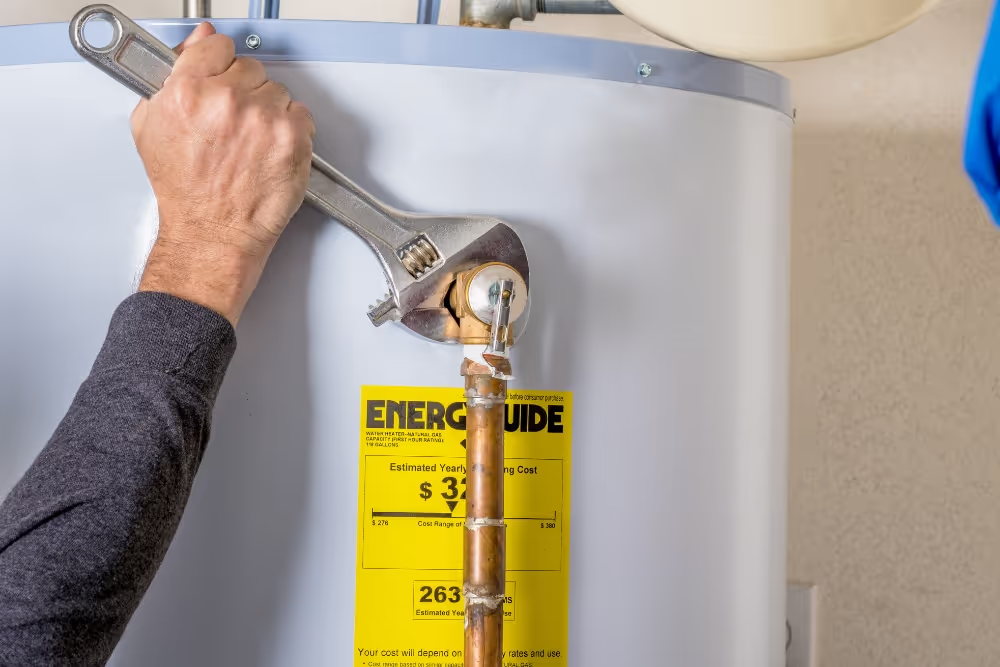
Water heater replacement is one of the most frequent plumbing calls we handle in Desert Hot Springs. Most homes run a 40 or 50-gallon gas tank, and in hard water conditions those units realistically last 8 to 10 years before sediment buildup and anode rod depletion catch up with them. For well water properties, that service life is often shorter. The four main options are tank-style gas, electric, tankless, and hybrid heat pump.
Gas tank water heaters are the most common install across Desert Hot Springs. Rheem, Bradford White, and A.O. Smith make solid 50-gallon units that run $1,200 to $2,200 installed with permits. They recover quickly and hold enough volume for most households.
Electric tank water heaters cost less upfront but carry higher monthly operating costs than gas. They are the right call when there is no gas connection or when a specific install location limits gas options.
Tankless water heaters heat on demand with no storage tank. Navien and Rinnai are the most proven brands in this market. Installed cost runs $2,500 to $5,500 depending on gas line capacity and whether new circuits are needed. Tankless units eliminate standby heat loss and handle variable demand well. The hard water caveat is real here: scale builds up in the heat exchanger faster in Desert Hot Springs than in most California markets, and annual descaling is required maintenance to protect the unit and keep the warranty valid. On well water properties, a scale inhibitor upstream of the unit is particularly important.
Hybrid heat pump water heaters use ambient air to heat water, making them efficient in a climate where utility rooms stay warm most of the year. A.O. Smith and Rheem both make solid units at $2,000 to $4,000 installed. California rebate programs have lowered the effective upfront cost and are worth factoring in when replacing an aging electric tank.
Pipe Materials, Repipe Options, and Slab Leaks
Desert Hot Springs homes span a wide range of construction eras. Older properties in the lower city areas may have galvanized steel pipe from the 1960s and 1970s or early copper from the 1980s. Newer developments on the hillside above town have more modern pipe but sit on expansive soils that move with moisture changes, putting stress on pipe joints and slab connections that a newer home would not be expected to face so soon.
When a repipe is the right call, PEX and copper are the two main options. PEX tubing from Uponor and Viega, connected with SharkBite or crimped fittings, is flexible, scale-resistant, and easier to route through existing walls with less drywall damage. A whole-home PEX repipe on a typical Desert Hot Springs home in the 1,200 to 2,000 square foot range runs $4,000 to $8,500. Larger or more complex homes push costs higher. Type L copper repipe costs more but remains a solid option for homeowners who prefer it or where required by an HOA.
Slab Leak Detection and Repair
Detection starts with a pressure test to confirm supply loss, then acoustic listening equipment and thermal imaging to pinpoint the position under the slab before anything gets opened. Once found, the repair options are spot repair through the slab, rerouting the pipe above grade through the walls, or a full repipe. Spot repair is right when the leak is isolated and the surrounding pipe is sound. Rerouting is better when that section has a history. A full repipe is the answer when the material has failed broadly throughout the home.
Water Softeners, Filtration, and Well Water in Desert Hot Springs
Hard water is the constant across all of Desert Hot Springs, and a whole-house softener is one of the most practical investments for any home here. A salt-based system from Culligan or Pentair runs $800 to $2,500 installed and pays for itself through longer appliance life and fewer repair calls within five years. For homes on the city water supply, a standard salt-based softener addresses the calcium and magnesium that cause most of the plumbing problems in the valley.
For Desert Hot Springs properties on private wells, the situation can be more complex. Well water in the DHS area sometimes contains elevated silica, sulfur, iron, or other dissolved solids alongside the standard hard water minerals. A standard salt-based softener handles the calcium and magnesium but may not address iron staining, sulfur odor, or silica scale without additional filtration stages. A water quality test from a certified lab before selecting a treatment system is the right starting point. From there a plumber and water treatment specialist can recommend the right combination of softening, filtration, and UV treatment if bacterial content is a concern.
For drinking water quality, a reverse osmosis system from Aquasana, Pentair, or A.O. Smith under the kitchen sink runs $300 to $900 installed and handles a broad range of contaminants that a whole-house softener alone does not remove.
Septic Systems in Desert Hot Springs
Not every Desert Hot Springs property is connected to the city sewer system. Properties in Sky Valley, Indio Hills adjacent areas, and some outer DHS neighborhoods rely on septic systems for wastewater disposal. If your home is on a septic system, a few things are worth knowing.
Septic tanks require pumping every three to five years depending on household size and usage. Skipping that maintenance allows solids to build up in the tank, eventually pushing into the drain field and causing a far more expensive failure. A drain field replacement costs $5,000 to $20,000 or more and is almost always a consequence of a neglected pumping schedule.
What goes down the drains on a septic property matters. Garbage disposals increase the solid load in the tank and require more frequent pumping. Chemical drain cleaners, antibacterial soaps used in large quantities, and certain household chemicals can kill the beneficial bacteria that make the system work. And unlike a city sewer failure that shows up as a slow drain, septic system problems can back up the entire house at once when the tank or field is overwhelmed.
If you are buying a home in Desert Hot Springs and the property is on septic, a septic inspection before closing is worth every dollar. If you have lived in the home and are not sure when the tank was last pumped, schedule it sooner rather than later.
Fixture Replacement and Installation Costs
Licensed plumbers in Desert Hot Springs charge roughly $75 to $150 per hour for fixture work, and most swaps take one to three hours. Dual-flush and pressure-assist toilets from Kohler, Toto, and American Standard hold up better against hard water mineral staining and use less water per flush. A standard toilet replacement runs $350 to $900 installed. Kitchen plumbing covers garbage disposals at $200 to $450 (InSinkErator and Waste King are the most common brands), dishwasher hookups and refrigerator lines at $150 to $350 each, and faucet replacements at $200 to $500.
Sewer Line Repair, Drain Cleaning, and Camera Inspection
For Desert Hot Springs homes connected to city sewer, blockages from grease, sand, and root intrusion are the most common call, cleared with hydro jetting or mechanical snaking. Structural failures including cracked or offset pipe from soil movement or age require excavation and replacement or trenchless lining depending on the pipe condition. A camera inspection down the main cleanout is the right first step for recurring backups, slow drains across multiple fixtures, or gurgling after any water use. Cost is $200 to $500 and tells you exactly what you are dealing with before committing to a repair approach.
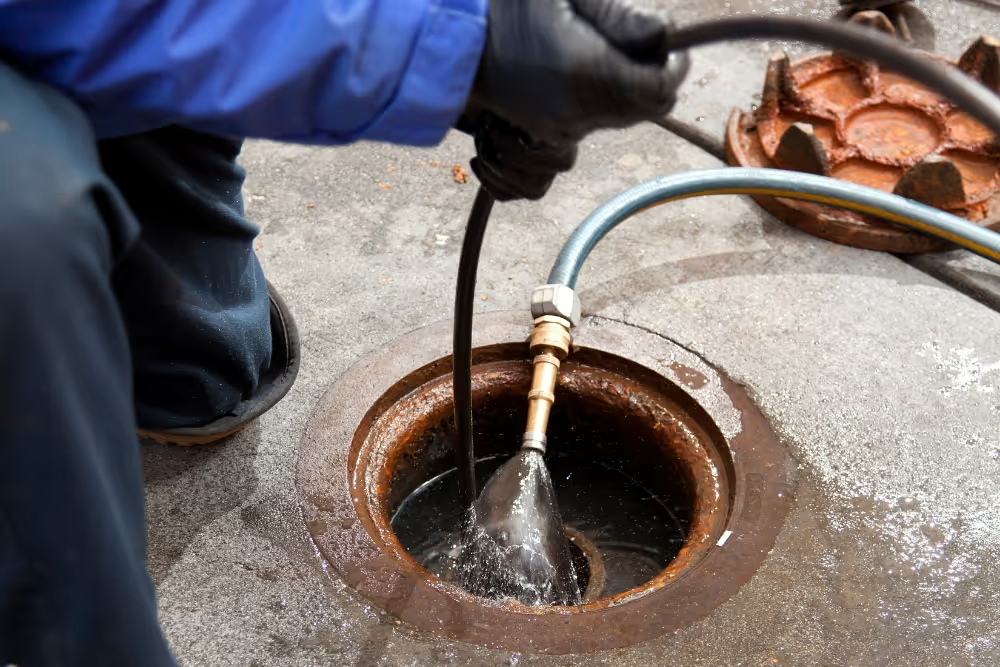
Hydro jetting at up to 4,000 psi removes sand, scale, and grease more completely than snaking and holds longer before the problem returns. In Desert Hot Springs, sand in drain lines is a real issue that basic snaking only partially addresses. Hydro jetting is a better long-term solution for persistent drain problems in this area. Trenchless CIPP lining works for lines under driveways or established landscaping, but a camera inspection always comes first to confirm the pipe can accept a liner.
Permits and Licensing for Desert Hot Springs Plumbing Work
California requires plumbing contractors to hold a C-36 Plumbing Contractor license issued by the Contractors State License Board. Always verify a contractor's license is active before signing anything. The CSLB lookup is free and takes about 30 seconds.
Desert Hot Springs has its own city building department. Water heater replacements, repipes, gas line work, and sewer line repairs all require a permit through the City of Desert Hot Springs Building Division. Permits can be applied for online or in person at City Hall. Your contractor should handle the permit application and coordinate required inspections. Unpermitted plumbing work creates problems at resale and can affect homeowner's insurance coverage on related water damage claims.
If you are adding a dedicated circuit for a tankless water heater or coordinating electrical work alongside plumbing, our electrical division can handle both scopes under one project so you are not managing separate permit applications for each trade.
What to Ask Before Hiring a Plumber in Desert Hot Springs
- Is your C-36 license active? Get the license number and verify it on the CSLB website yourself before agreeing to anything.
- Will you pull permits through the City of Desert Hot Springs? DHS has its own building department. Any plumber doing water heater, repipe, or gas work here should be submitting permits through the city.
- Do you provide a written scope and price before starting? Verbal quotes mean nothing. Get the full scope and total price in writing before any work begins.
- Do you warranty your labor? Most reputable plumbers cover labor for at least one year. Ask specifically what the warranty includes and excludes.
- Are you familiar with well water plumbing in Desert Hot Springs? A plumber who works this area regularly will ask whether the property is on city water or a private well before recommending any treatment or pipe solution.
- Do you service septic systems? If your property is on septic, confirm the plumber understands the specific requirements and can inspect and recommend servicing for the full system, not just the interior plumbing.
- Can you provide local references for similar jobs? Ask for references from Desert Hot Springs homeowners who had comparable work done, not just general reviews from across the valley.
Truly Tough Plumbing: Full-Service Plumbing Across the Coachella Valley
Our plumbing division at Truly Tough Plumbing handles residential plumbing work across Desert Hot Springs, Palm Springs, Cathedral City, Palm Desert, Rancho Mirage, La Quinta, Indio, and throughout the Coachella Valley. We do plumbing inspections, slab leak detection and repair, whole-home repiping in PEX and copper, water heater and tankless water heater installations, water softener and filtration system installation, sewer camera inspections, drain cleaning, fixture replacement, and gas line work.
Call us at 760-343-5732 or reach us at Plumbing@TrulyTough.com.
Frequently Asked Questions
How much does a plumbing inspection cost in Desert Hot Springs?
A standard residential inspection runs $150 to $400 depending on home size and whether a sewer camera inspection is included. Homes on septic systems benefit from an inspection that also covers the tank and drain field condition.
What are signs of a slab leak in a Desert Hot Springs home?
Warm spots on the floor, unexplained increases in the water bill, the sound of running water when all fixtures are off, and cracking in tile or stucco are the most common signs. Newer hillside DHS properties can also see slab leaks caused by soil movement rather than pipe age.
How much does slab leak repair cost in Desert Hot Springs?
Detection plus repair typically runs $1,500 to $5,000 or more depending on the leak location, the repair approach, and whether concrete or finished flooring needs to be cut and restored.
How long do water heaters last in Desert Hot Springs?
Tank-style water heaters typically last 8 to 10 years on city water. Homes on private wells with higher mineral content often see failures on the shorter end of that range, sometimes less, without scale protection upstream of the unit.
Should I get a tankless water heater in Desert Hot Springs?
Tankless units work well here but require annual descaling of the heat exchanger. For well water properties, a scale inhibitor or softener upstream of the unit is particularly important to protect the heat exchanger from accelerated buildup.
Does a water heater replacement require a permit in Desert Hot Springs?
Yes. Water heater replacements require a permit through the City of Desert Hot Springs Building Division. Your contractor should handle the permit application and required inspections, which cover seismic strapping, pressure relief valve piping, and gas or electrical connections.
My Desert Hot Springs home is on a septic system. What should I know?
Septic tanks need pumping every three to five years depending on household size. Skipping that maintenance leads to drain field failure, which costs far more to repair than regular pumping does to prevent. A septic inspection is worthwhile when buying a DHS property, and a garbage disposal should be used carefully or avoided on septic systems.
Is a water softener worth it in Desert Hot Springs?
Yes, for city water properties. For well water properties, get a water quality test first, because well water in DHS sometimes contains minerals and compounds beyond calcium and magnesium that a standard softener alone may not fully address.
How do I verify a plumbing contractor is licensed in California?
Look up any contractor by name or license number through the California Contractors State License Board website. Plumbing work requires a C-36 classification. Never sign an agreement without a verifiable active license number.






.svg)
