.svg)



Palm Springs house painters handle a lot more than brushwork. This covers interior and exterior painting costs in the Coachella Valley, how the process works from prep to final coat, and what separates a paint job that holds up in the desert from one that doesn't.
Interior and Exterior Painting Costs in Palm Springs
Palm Springs house painters charge $2 to $5 per square foot for interior work. Exterior painting on a typical Coachella Valley home runs $4,500 to $12,000 depending on surface condition, prep requirements, and the coating system used. Those ranges come from projects in this market, on stucco homes in this climate, not a national average that has nothing to do with how things are priced here.
The spread is wide because two painting jobs can be completely different. A home with fresh stucco and no cracking costs far less to paint than one with a decade of chalking, failed caulk joints, and hairline cracks at every window corner. A single-story mid-century flat-roof takes less labor than a two-story Spanish colonial with complex trim, multiple rooflines, and fascia boards that need epoxy repair before a brush touches them.
Material choice matters too. Standard 100% acrylic exterior paint and a premium elastomeric coating system are not the same product and do not produce the same result in this climate. The cost difference is measurable and the durability difference is bigger.
Cost Ranges at a Glance
Final cost depends on square footage, number of stories, surface condition, prep scope, primer requirements, number of coats, and coating type. Use our Palm Springs painting cost calculator for a project-specific estimate.
What House Painters Do from Start to Finish
Most homeowners picture a painter showing up with a roller and getting to work. That's not how a proper painting job starts. A professional painter functions as a surface specialist first. They evaluate what's going on with the substrate, identify what has failed or is starting to, and work out a prep plan before any coating goes on.
That inspection matters more than most people expect. A painter looking at a Palm Springs exterior isn't just seeing color. They're checking for chalking: the white powdery residue that tells you UV has degraded the old paint binder. They're pressing on stucco for soft spots, looking for hairline cracks at window corners and wall bases, checking where caulk joints have separated. They're looking at fascia boards and soffits for wood rot. Inside, they're noting water stains on ceilings, checking paint adhesion at corners and trim lines, and figuring out how much prep the job needs.
Surface preparation is where most of the labor time goes on a quality job. It accounts for 60 to 70 percent of total labor hours on most exterior repaints. Pressure washing, scraping loose paint, sanding to feather edges, wire-brushing rust from iron railings, removing failed caulk with an oscillating tool, patching drywall or stucco, applying epoxy wood filler to rotted fascia, and recaulking every joint before primer goes on. Skip those steps and the paint fails early. The desert makes that worse. UV exposure and daily thermal cycling find every weak point in a paint system.
Desert Climate and Palm Springs Exterior Painting
The Coachella Valley is not a typical paint market. UV radiation here is among the most intense in the country. Surface temperatures on a south- or west-facing stucco wall in July can reach 160 to 170 degrees. Overnight temps drop 30 to 40 degrees in summer. That daily thermal cycling breaks down paint binders, sealants, and caulk joints faster than in most other California climates.
Standard acrylic latex exterior paint works here, but it has a shorter service life than in cooler regions. A product rated for 15 years in a moderate climate might give you 7 to 10 years in Palm Springs under good conditions. That assumes proper prep, proper primer, two coats, and a quality product. A budget paint applied in a hurry won't come close to that.
Elastomeric coatings are a different category. Products like Sherwin-Williams Loxon XP and Benjamin Moore Elastomeric are formulated to flex with the substrate as it expands and contracts. They build a much thicker film: 10 to 40 dry mils depending on application rate, compared to 1.5 to 2 mils for standard latex. That film thickness is what delivers the crack-bridging capability, which matters a lot on stucco homes in the desert. A 15 to 20-year service life on exterior stucco is achievable with a full elastomeric system applied correctly over an elastomeric masonry primer.
We schedule exterior jobs carefully in summer. Work starts at 6 AM and wraps by 10 or 11 before surfaces overheat. Paint applied to a surface above 100 degrees skins over before it penetrates properly, which causes adhesion failure. We check surface temperature with an infrared thermometer before starting each morning. If you're planning an exterior paint project, September through May gives you the best conditions. Summer jobs are workable but require strict early-morning scheduling.
Stucco Exterior Painting in the Coachella Valley
Most homes in Palm Springs and across the Coachella Valley have stucco exteriors. Stucco handles heat well and breathes, which matters in this climate. But it has specific painting requirements that differ from wood siding or fiber cement.
Stucco is alkaline and highly porous. Rolling standard exterior latex directly onto bare or poorly prepared stucco gives you inconsistent absorption, sheen variation, and weak adhesion. The right primer for stucco is a masonry primer or elastomeric primer. Sherwin-Williams Loxon Concrete & Masonry and Behr Masonry Primer are products we use regularly. They fill the surface porosity and give the finish coat a uniform base to bond to.
Hairline cracking in stucco is normal in a desert climate. Thermal cycling causes stucco to move slightly over time and micro-cracks develop. The right approach is to fill wider cracks with a flexible elastomeric caulk, not rigid joint compound, and then apply an elastomeric primer and elastomeric topcoat. That crack-bridging film means the next generation of micro-cracks won't become water entry points.
We did an exterior repaint at a home in Demuth Park, Palm Springs not long ago. The previous paint job was about nine years old with no elastomeric product in the system at all. The surface was heavily chalked with hairline cracks at every window corner. We pressure-washed at 2,500 PSI with a mildewcide pre-treat, scraped all loose paint, filled cracks with Sikaflex polyurethane caulk, applied Loxon XP elastomeric primer, and finished with two coats of Sherwin-Williams Duration Exterior. The homeowner had put it off for two seasons. Surface prep took nearly as long as the application itself.
The Exterior Painting Process Step by Step
Back-rolling after spraying is not optional on stucco. Spraying alone leaves paint bridging over texture peaks without penetrating the valleys. Back-rolling pushes the wet product into the texture and eliminates runs and surface voids. Skipping it is one of the most common shortcuts that leads to early delamination on desert stucco homes.
Interior House Painting in Palm Springs
Interior painting follows the same discipline as exterior work: preparation comes first. The focus shifts from weathering and moisture to surface repair quality, adhesion on previously painted surfaces, and finish consistency under artificial and natural light.
Walls and ceilings in most valley homes are drywall or plaster. New drywall needs a PVA drywall sealer before finish coats. Without it, the porous gypsum absorbs paint unevenly and produces a flat, splotchy look called flashing that additional coats won't fix. Existing walls in good condition can usually go straight to finish coats after cleaning and a light sand on rough spots. High-gloss or semi-gloss surfaces need to be deglossed, either by sanding or with a liquid deglosser, so the new paint has something to grip.
Sheen selection matters more than most homeowners expect. Flat paint hides imperfections but isn't washable. Eggshell is the standard for most interior walls: a slight sheen, cleanable, and forgiving on walls that aren't perfectly smooth. Satin is what we recommend for kitchens, bathrooms, kids' rooms, and high-traffic hallways. Semi-gloss or gloss for trim, doors, and cabinets. Those surfaces take the most abuse and need a harder, more durable film.
Cabinet refinishing is its own category. We spray cabinets using an HVLP system like a Fuji Q4 Pro for fine atomization and a smooth, factory-quality finish. The substrate gets cleaned, deglossed, and primed with shellac or an oil-based cabinet primer like Zinsser Cover Stain before the topcoat. The topcoat is a cabinet-specific enamel: Benjamin Moore Advance or Sherwin-Williams ProClassic. Two coats minimum with a light scuff sand between coats.
Paint Brands and Products
We work with Sherwin-Williams and Benjamin Moore on most projects. Both produce professional-grade products that hold up in extreme UV and heat. The cost difference between a premium paint and a mid-grade product is typically $20 to $40 per gallon. On a standard exterior job, that's $300 to $600 more in materials. Spread over a 7 to 10-year service life, it's a straightforward calculation.
Tools and Equipment on a Professional Painting Job
The equipment a painter shows up with tells you a lot about the quality of the job. A spray rig, a roller, and a brush is the minimum. A professional operation brings considerably more.
- Airless sprayer: Graco or Titan units at 2,000 to 3,300 PSI for exterior surfaces and broad interior areas; tip selection matched to the product being applied, standard latex versus heavy elastomeric coatings
- HVLP sprayer: Fuji Q4 Pro or similar turbine unit for cabinet refinishing and fine interior trim; fine atomization, minimal overspray
- Rollers: Purdy or Wooster frames with nap thickness matched to surface texture; 3/8" for smooth interior walls, 3/4" for heavy stucco, 18" frames for large field coverage
- Brushes: Purdy Clearcut or Wooster Alpha angled sash brushes for cutting in; nylon and polyester bristles for latex products
- Random orbital sander: Festool ETS EC or Makita with HEPA dust extraction for sanding drywall patches, feathering paint edges, and deglossing
- Pressure washer: Gas-powered Simpson or Generac unit at 2,500 to 4,000 PSI for exterior cleaning; electric units for lighter prep work
- Masking machine: 3M Hand-Masker for fast tape-and-paper or tape-and-plastic masking along trim lines and ceiling breaks
- Infrared thermometer: Surface temperature check before applying paint or coatings in desert conditions; required before elastomeric application
- Wet film thickness gauge: Verifies application rate on elastomeric and specialty coatings to confirm rated dry film thickness is achieved
Extension ladders, pump jack scaffold, or Baker rolling scaffold depending on building height. All spray equipment gets cleaned between jobs. Dried paint in sprayer filters and tip guards causes finish defects and shortens equipment life.
Surfaces Palm Springs House Painters Work On
A full residential painting scope covers far more than walls. Each surface has specific prep and product requirements, and skipping those requirements is usually how paint jobs fail early.
Interior vs. Exterior Painting
The prep, products, and scheduling for interior and exterior painting are fundamentally different. Interior work happens in a controlled environment. Temperature and humidity are stable, and the primary wear factors are cleaning, scuffing, and the occasional water stain. Exterior work in Palm Springs is a fight against UV, thermal cycling, moisture, and direct sun that doesn't let up for six months of the year.
Interior paint chemistry uses lower VOC formulations and softer dried films because indoor surfaces don't face weathering the same way. Exterior paint is 100% acrylic, UV-stabilized, and usually includes integrated mildewcide to resist algae and biological growth on north-facing shaded walls.
Recoat timing also differs. Interior latex allows recoat in 2 to 4 hours under normal conditions. Exterior products need 4 to 6 hours between coats, and elastomeric coatings have stricter windows. Exterior paint should never go on when rain is forecast within 24 hours or when humidity exceeds 85 percent.
Interior jobs in this climate last 10 to 15 years or longer on walls with proper prep and premium paint. Exterior jobs run 7 to 10 years with standard acrylic systems and 15 to 20 years with a full elastomeric coating system. Both timelines assume quality prep, quality product, and two finish coats minimum.
When Exterior Painting and Roofing Work at the Same Time
Exterior painting jobs surface other problems regularly. You start pressure-washing a stucco wall and the paint failure at the roofline turns out to be driven by a failing flashing joint or a degraded fascia board. You pull back old trim caulk and find water damage in the substrate from a roof penetration that was never properly sealed.
If a roofing inspection is overdue at the same time, it makes sense to run both at once. Fresh exterior paint against a failing roofline doesn't last. On jobs where both trades need to happen, roofing repairs go first, then exterior paint. That way the new finish coat isn't sitting under a roofline that still has unresolved issues.
We handle that sequencing in-house with our roofing team and painting crew working from the same project timeline. For homeowners, that means one point of contact and work that finishes in the right order.
Licensing, Lead Paint, and Questions to Ask Before You Hire
In California, painting contractors are required to hold a C-33 Painting and Decorating license issued by the Contractors State License Board. That classification covers surface preparation, priming, and application of paints, stains, varnishes, shellacs, and specialty coatings. You can verify any contractor's active license status directly on the CSLB website at no cost before signing anything.
If your home was built before 1978, lead-based paint may be present in existing coatings. The EPA's Lead Renovation, Repair and Painting (RRP) Rule requires that contractors disturbing more than six square feet of painted surface in pre-1978 homes be EPA-certified and follow specific lead-safe work practices. That includes HEPA vacuum dust collection during sanding, work area containment, and proper cleanup and disposal. Ask any contractor working on an older Palm Springs home whether they hold EPA RRP certification before work starts.
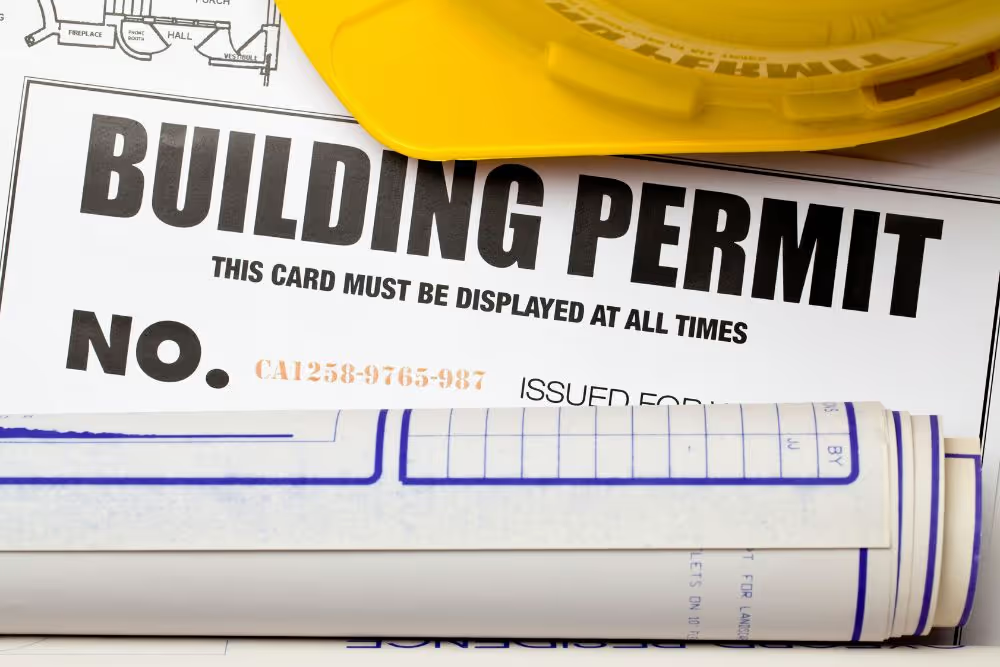
Permits are generally not required for exterior repainting in Palm Springs. The City of Palm Springs Building Department lists repainting among the work types that do not trigger a permit requirement. If your project includes structural repairs or changes beyond surface coating, confirm with the building department before work begins.
Truly Tough Painting: Interior and Exterior in Palm Springs and the Coachella Valley
Our painting team at Truly Tough Painting handles interior repaints, exterior stucco systems, elastomeric coatings, cabinet refinishing, and specialty coating work across Palm Springs, Palm Desert, La Quinta, Indio, and the rest of the valley. We use Sherwin-Williams and Benjamin Moore products on every job, prime every surface that needs it, and back-roll every sprayed exterior surface. A written scope of work, product documentation, and a final walkthrough come standard on every project.
Call us at 760-343-5770 or reach us at Painting@TrulyTough.com.
Frequently Asked Questions
How much does interior painting cost in Palm Springs?
Interior painting runs $2 to $5 per square foot depending on wall condition, sheen selection, prep scope, and number of coats. A single room averages $900 to $2,300. A full interior repaint on a mid-size home can run $5,000 to $12,000 or more.
How much does exterior house painting cost in Palm Springs?
Most exterior repaints on a standard Coachella Valley home run $4,500 to $12,000. Homes with significant prep needs, multiple stories, or elastomeric coating systems will run higher depending on scope.
How long does exterior paint last in the Coachella Valley?
A standard 100% acrylic exterior paint with proper prep and two coats lasts 7 to 10 years in this climate. A full elastomeric coating system on stucco can last 15 to 20 years. UV radiation and thermal cycling are the main factors that shorten paint life here.
Do I need a permit to repaint my house in Palm Springs?
No. Repainting is listed by the City of Palm Springs Building Department as work that does not require a building permit. If your project involves structural repairs beyond surface coating, confirm with the building department before starting.
What is an elastomeric coating and do I need it on my Palm Springs home?
Elastomeric coatings are thick, flexible paint systems designed to bridge hairline cracks and flex with stucco as it expands and contracts in the heat. They are strongly recommended for stucco homes in the desert.
What is a C-33 license and why does it matter?
A C-33 is the California painting and decorating contractor license issued by the CSLB. It means the contractor passed a trade exam covering surface prep, primer use, and coating application. Verify any painter's C-33 license is active on the CSLB website before signing a contract.
Does my pre-1978 Palm Springs home have lead paint concerns?
It may. Homes built before 1978 can have lead-based paint in existing coatings. Contractors disturbing painted surfaces in pre-1978 homes must be EPA RRP certified and follow lead-safe work practices including HEPA dust collection and proper containment.
How early do painters start in the summer in Palm Springs?
On exterior jobs during summer, most crews start at 6 AM and finish outdoor application by 10 or 11 before surfaces overheat. Paint applied to surfaces above 100 degrees fails to form a proper film.
Is one coat of exterior paint enough?
No. Two coats are the minimum for proper film thickness, full hide, and color accuracy. One coat produces a thinner, less durable finish that shows wear much sooner under the UV and heat of the Coachella Valley.
What paint brands do professional painters in Palm Springs use?
Most professional painters in the valley work with Sherwin-Williams and Benjamin Moore. For exterior stucco, Sherwin-Williams Duration and Loxon XP are common choices. For interior, Emerald and Aura are the go-to premium lines.







.svg)
