.svg)


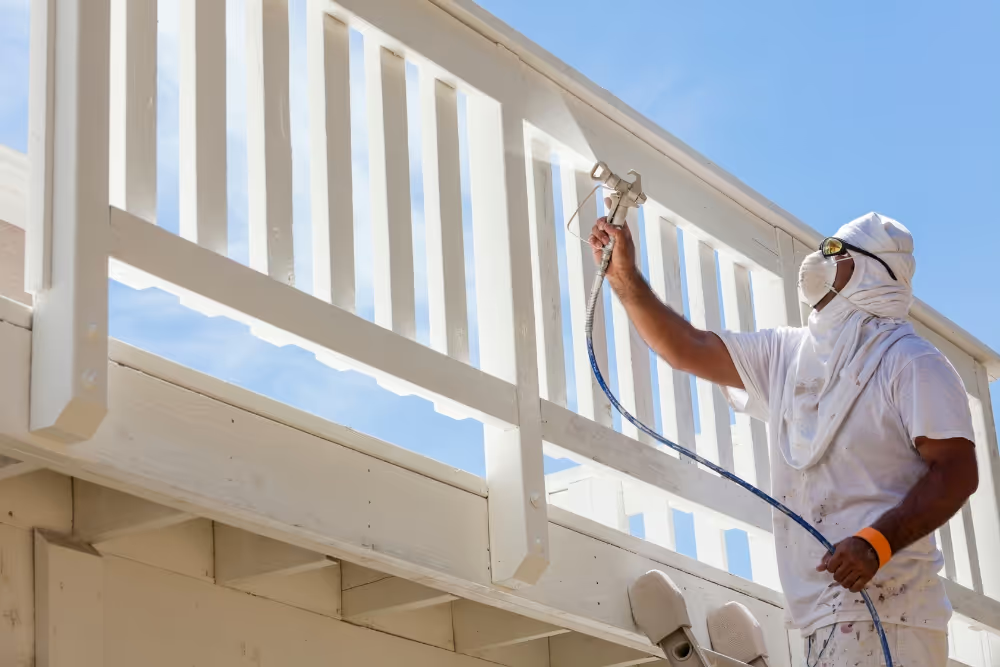
Indio house painters work across one of the hottest and most sun-exposed cities in the Coachella Valley. Interior and exterior company experience in this climate means knowing how heat, UV, and deferred maintenance shape every project.
Interior and Exterior House Painter Prices in Indio
Indio house painters charge $2 to $5 per square foot for interior work. Exterior painting on a standard Coachella Valley home runs $4,500 to $12,000, with Indio projects spanning that full range and beyond depending on surface condition and prep scope. Indio sits at the eastern end of the valley and consistently records some of the highest summer temperatures in the region. That sustained heat and UV exposure accelerates exterior paint degradation faster than in most other California cities, which means prep requirements on older Indio homes are often more substantial than a visual inspection from the street would suggest.
The city has genuine range. Older neighborhoods in central and south Indio have homes that are 25 to 40 years old with heavy chalking, failed caulk, and in some cases stucco surfaces that have never had a proper elastomeric primer. Active adult communities like Sun City Shadow Hills and Terra Lago in north Indio have newer homes, many built in the mid-2000s, with lighter prep needs but HOA color approval requirements that add to the project timeline. Newer tract developments throughout the city are somewhere in between.
Interior project costs vary for the same reasons they do everywhere: surface condition, sheen requirements by room, whether repair work is needed, and whether cabinets are part of the scope. A simple two-room repaint is a different day than a whole-house interior with water-stained ceilings, a bathroom wall with mildew from years of inadequate ventilation, and kitchen cabinets that need to be stripped and refinished.
Pricing at a Glance
Final price depends on square footage, stories, surface condition, repair scope, primer requirements, number of coats, and coating system. Use our Coachella Valley painting cost calculator for a project-specific estimate.
Indio's Heat: The Harshest Exterior Paint Environment in the Valley
Indio regularly records summer air temperatures above 115 degrees. Surface temperatures on south and west-facing stucco walls can reach 170 degrees or higher in July and August. That level of sustained heat does something standard exterior paint was not fully designed to handle: it breaks down the paint binder faster, drives hairline cracking in stucco at a higher rate, and causes sealants and caulk joints to fail earlier than they would in a cooler climate.
This is not a reason to avoid exterior painting in Indio. It's a reason to use the right products and the right application process. Standard 100% acrylic exterior paint holds up, but its realistic service life in this specific market is 7 to 10 years under good conditions. A lesser product applied without proper prep might give you four to five years before chalking and cracking become visible. That's money spent twice for a result that never fully held up.
Elastomeric coatings are the better long-term choice for most Indio stucco homes, particularly older ones where the stucco substrate has been through multiple thermal cycles and the surface has micro-cracks that standard latex won't bridge. Sherwin-Williams Loxon XP and Dryvit or Sto elastomeric systems build 10 to 40 dry mils of flexible film. That film bridges hairline cracks and moves with the stucco as it expands and contracts through daily temperature swings of 40 to 50 degrees. On a properly prepped and primed surface, an elastomeric system can last 15 to 20 years in Indio's climate.
We schedule exterior painting in summer around the heat. Application starts at 6 AM and we wrap outdoor work by 10 or 11 before surfaces overheat. Surface temperature is checked with an infrared thermometer before painting starts each morning. Paint applied to a surface above 100 degrees skins over before it bonds to the substrate. That's an adhesion failure that shows up months later when the coating starts lifting, and no warranty covers poor application conditions. September through May is the optimal window for exterior projects in Indio, but summer jobs get done with strict early-morning scheduling.
Indio's Neighborhoods and What They Mean for Painting
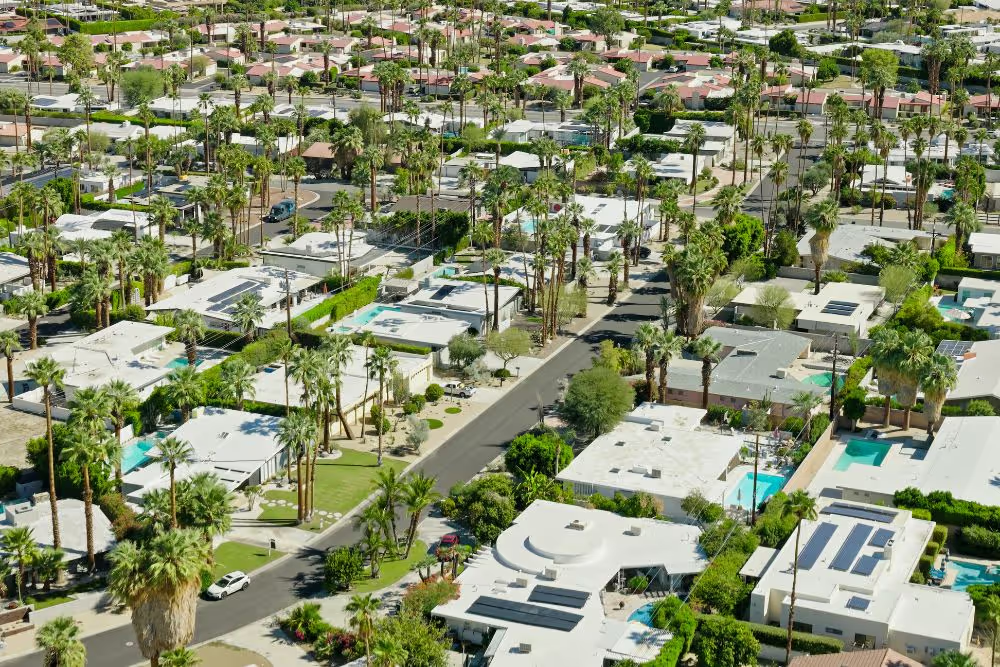
Indio has more residential variety than most people realize. Understanding what part of the city a home is in shapes what the painting project actually looks like in terms of prep, primer, product, and timeline.
Older central and south Indio neighborhoods have homes built in the 1970s through 1990s. Many of these have stucco exteriors that have never had an elastomeric coating. Paint is chalking heavily, caulk joints at windows and doors have long since failed, and the substrate has been through enough thermal cycles that hairline cracks are present across most of the wall area. These are the most prep-intensive jobs we handle in the city. Pressure washing, scraping, crack repair with flexible elastomeric caulk, full elastomeric primer, and two finish coats is the right scope. Trying to cut corners on prep here is a short path to a paint job that starts showing failure within two or three years.
North Indio's active adult communities, Sun City Shadow Hills and Terra Lago, are a different profile. These Del Webb and SunCal-built homes from 2003 to 2016 are newer construction with Spanish and Mediterranean stucco exteriors and tile roofs. They're in better condition generally, but they're approaching 10 to 20 years old now and many are due for their first full exterior repaint. Light to moderate chalking, some hairline cracking at window corners from settling, and caulk that's starting to separate at frame transitions. The prep is lighter here than on older Indio homes, but the HOA color approval process adds lead time to the project schedule.
Talavera, Four Seasons at Terra Lago, Indian Springs, and other mid-2000s to 2010s developments fall in between. Newer construction with moderate UV degradation, generally good stucco condition, and prep needs that are proportional to the age of the home and how well it was maintained.
We finished a full exterior repaint at a home in Terra Lago, Indio earlier this year. The home was a 2007 build, about 2,400 square feet of single-story stucco with a tile roof. The HOA required color approval before we could start, so we submitted the ARC documentation about five weeks ahead of schedule. The stucco was in decent shape overall but had hairline cracking at both garage window corners and a section of the west wall where an irrigation head had been spraying the stucco for years. We patched cracks with Sikaflex elastomeric caulk, spot-primed with Loxon XP, and applied two coats of Sherwin-Williams Duration Exterior in the HOA-approved color. Four days with a crew of three.
The Full Exterior Painting Process
Back-rolling after spraying is not optional on Indio stucco. Spraying alone leaves paint bridging over texture peaks without penetrating the valleys. Back-rolling pushes product into the texture, eliminates surface voids, and ensures proper adhesion across the full surface. It is one of the most consequential steps in any exterior stucco repaint.
Interior House Painting in Indio
Interior painting in Indio homes follows the same preparation discipline as exterior work. The surface needs to be right before any finish coat goes on. That means cleaning, patching, priming the right surfaces, and selecting the right sheen for each area of the home.
Most homes in Indio have drywall walls and ceilings. New drywall needs a PVA drywall sealer before finish coats. Without it, the porous gypsum pulls paint unevenly and produces flashing: a flat, patchy look that no additional coats will fix. Existing walls in good condition go straight to finish coats after cleaning and a light sand on rough spots. Glossy surfaces need to be deglossed by sanding or with a liquid deglosser before repainting so the new coat bonds properly.
In Indio's older housing stock, water staining on ceilings is common from previous HVAC condensation issues or old roof leaks. Those stains must be sealed with a shellac-based stain blocker like Zinsser BIN before any finish coat goes on. Painting straight over a water stain produces bleed-through. The stain shows through within a year regardless of how many coats of finish paint are applied over it. Same goes for mold or mildew staining on bathroom walls. It needs to be treated and sealed before painting, not painted over.
Sheen selection matters throughout the house. Flat for ceilings. Eggshell for most living area walls: cleanable, slight sheen, forgiving on walls that aren't perfectly smooth. Satin for kitchens, bathrooms, hallways, and laundry rooms where moisture and traffic are higher. Semi-gloss or gloss for all trim, doors, and cabinets. Those surfaces take constant contact and need a harder film that wipes clean without dulling.
Cabinet refinishing is a separate scope from wall painting and uses a different application system. We spray cabinets with an HVLP system: a Fuji Q4 Pro or similar turbine unit for fine atomization and a factory-quality finish. The substrate is cleaned, deglossed, and primed with a shellac or oil-based cabinet primer before the topcoat. We use Benjamin Moore Advance or Sherwin-Williams ProClassic: hard enamel film, spray-applied, two coats minimum with a scuff sand between coats.
HOA Painting in Indio's Active Adult Communities
Sun City Shadow Hills and Terra Lago are two of Indio's largest and most populated communities, and both have active homeowners associations that govern exterior appearance. An exterior color change in either community requires submitting an Architectural Review Committee application with color brand, name, color code, and finish type before any painting begins. Starting without approval leads to a violation notice and a forced repaint on your own dime.
Both communities lean toward warm neutral palettes that hold up visually in the desert environment. Soft whites, sand tones, warm beiges, and muted earth tones are standard. Sherwin-Williams and Benjamin Moore both maintain HOA-specific color resources that many communities reference, which makes finding compliant color options more straightforward than starting from scratch. We're familiar with how both communities handle submittals and what documentation they need.
If you're repainting in the same color, many HOA communities in Indio do not require prior approval. Confirm that with your HOA in writing before scheduling. Don't rely on a verbal conversation or assume the rules are the same as they were the last time someone in your neighborhood repainted. Give the ARC process three to six weeks before your target paint date. Some communities move faster, but it's not worth scheduling a crew around an approval that hasn't come through yet.
Paint Brands and Products
We work with Sherwin-Williams and Benjamin Moore on most Indio projects. In this climate, product selection on the exterior is driven by UV stability, heat resistance, and crack-bridging capability. The cost difference between a premium paint and a mid-grade product is typically $20 to $40 per gallon. On a standard exterior job that's $300 to $600 more in materials. In a city where the desert accelerates coating degradation the way Indio does, the payback on quality product is clear.
Tools and Equipment
The equipment on a job site tells you a lot about how seriously a painting company takes the work. A spray rig and a few rollers is the floor, not the ceiling.
- Airless sprayer: Graco or Titan units at 2,000 to 3,300 PSI for exterior stucco and large interior surfaces; tip selection matched to product viscosity, larger orifice for heavy elastomeric coatings
- HVLP sprayer: Fuji Q4 Pro or similar turbine unit for cabinet refinishing and fine interior trim; fine atomization, minimal overspray
- Rollers: Purdy or Wooster frames with nap thickness matched to surface texture; 3/8" for smooth interior walls, 3/4" to 1" for heavy stucco, 18" frames for large field coverage
- Brushes: Purdy Clearcut or Wooster Alpha angled sash brushes for cutting in; nylon and polyester bristles for latex products
- Random orbital sander: Festool ETS EC or Makita with HEPA dust extraction for sanding drywall patches, feathering paint edges, and deglossing
- Pressure washer: Gas-powered Simpson or Generac unit at 2,500 to 4,000 PSI for exterior cleaning and chalk removal; essential on Indio's older housing stock
- Oscillating multi-tool: Fein or Milwaukee for removing failed caulk at window and door frames without damaging surrounding substrate
- Infrared thermometer: Surface temperature check before paint or coating application; required every morning during summer exterior work in Indio
- Wet film thickness gauge: Verifies application rate on elastomeric coatings to confirm rated dry film thickness is achieved across the full surface
- Masking machine: 3M Hand-Masker for fast tape-and-paper or tape-and-plastic masking at trim lines, ceiling breaks, and adjacent surfaces
When Roofing and Fencing Overlap with Painting
Exterior painting inspections in Indio frequently turn up issues beyond the paint scope. On older properties in particular, roofline problems are common: failed flashing above windows, deteriorated fascia boards where moisture has been working behind the stucco for one or more seasons, and cracked parapet caps on flat-roof sections that are letting water into the wall below. These are roofing and substrate issues. Painting over them doesn't fix them — it just covers them until the paint fails again, usually within a year.
When our inspection turns up a roofline issue, we flag it and stop before any paint goes on. Our roofing team in Indio handles inspections and repairs as a coordinated scope. On jobs where both trades are needed, roofing repairs go first. The surface is allowed to dry out fully before paint application starts. That sequencing prevents the most common failure mode on Indio exteriors: painting over a moisture problem and having the new coating blister from behind within months.
Block walls and fencing are common in Indio and often part of a full exterior paint scope. Cracked or shifted block wall sections need structural repair before they get coated or the paint fails at the crack lines within a season. If fencing or perimeter wall repair is needed alongside the paint work, our fencing team in Indio handles that scope and we coordinate so the painting crew starts after repairs are complete.
Licensing and What to Ask Before Hiring an Indio Painting Company
California painting contractors are required to hold a C-33 Painting and Decorating license issued by the Contractors State License Board. You can verify any contractor's active license status on the CSLB license verification tool before signing anything. In Indio, contractors performing work within the city are also required to hold a current city business license. The Indio Building and Safety Division can answer questions about what's required for your specific project scope.
If your home was built before 1978, lead-based paint may be present in existing coatings. The EPA's Lead Renovation, Repair and Painting (RRP) Rule requires that contractors disturbing more than six square feet of painted surface in pre-1978 homes be EPA-certified and follow lead-safe work practices including HEPA dust collection during sanding, work area containment, and proper cleanup. Older neighborhoods in central and south Indio have a significant share of pre-1978 homes. Ask any contractor working on an older property whether they hold EPA RRP certification before work starts.
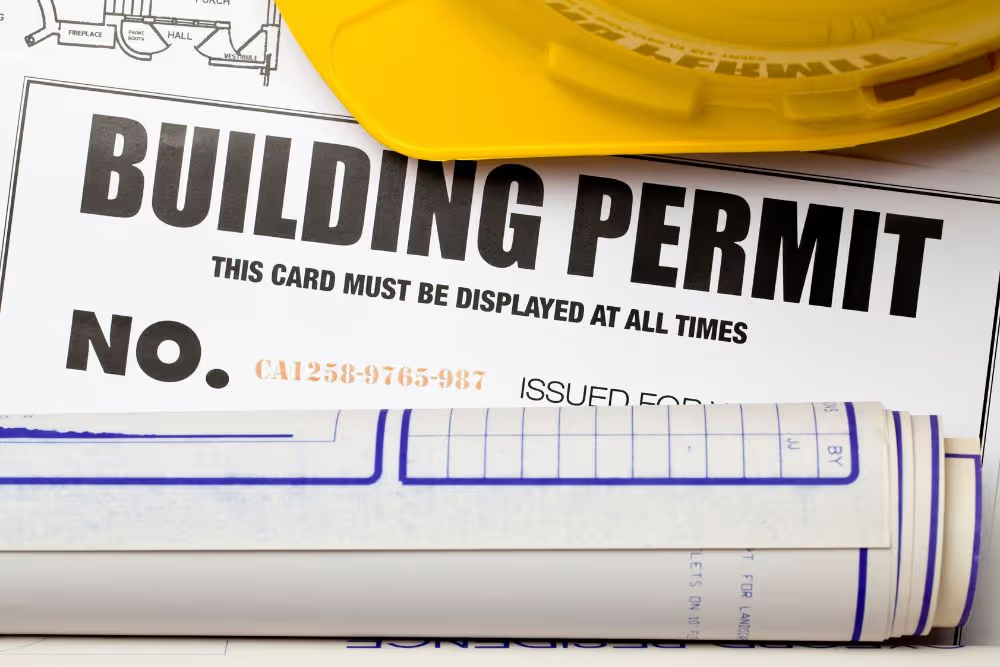
Repainting generally does not require a building permit in Indio. If your project includes structural repairs to stucco, fascia, or other elements of the building envelope, confirm permit requirements with the Indio Building and Safety Division before work begins.
Truly Tough Painting: Interior and Exterior Company in Indio
Our painting team at Truly Tough Painting handles interior repaints, exterior stucco and elastomeric systems, stucco and wood repair, cabinet refinishing, and HOA color documentation across Indio, La Quinta, Palm Desert, Palm Springs, Rancho Mirage, and the rest of the Coachella Valley. We use Sherwin-Williams and Benjamin Moore on every job, prime every surface that needs it, back-roll every sprayed exterior surface, and provide a written scope and final walkthrough on every project.
Call us at 760-343-5770 or reach us at Painting@TrulyTough.com.
Frequently Asked Questions
How much does interior painting cost in Indio?
Interior painting runs $2 to $5 per square foot depending on surface condition, sheen selection, repair scope, and number of coats. A single room averages $900 to $2,300. A full interior repaint on a mid-size home can run $5,000 to $12,000 or more.
How much does exterior house painting cost in Indio?
Most exterior repaints on a standard Coachella Valley home run $4,500 to $12,000. Older Indio homes with heavy chalking, stucco cracking, and wood rot repair push toward the higher end or past it due to the prep scope those conditions require.
Why does Indio's heat matter so much for exterior painting?
Indio records some of the highest summer temperatures in California. Surface temperatures on stucco walls can hit 170 degrees in July. That sustained heat breaks down paint binders faster, causes more stucco cracking, and shortens the service life of exterior coatings compared to cooler markets. The right product, primer, and application timing matter more here than in most other cities.
What is an elastomeric coating and do I need it in Indio?
Elastomeric coatings are thick, flexible systems that bridge hairline cracks and flex with stucco as it moves through daily temperature swings. They're strongly recommended for most Indio stucco homes, especially older properties. The service life is significantly longer than standard acrylic exterior paint in this climate.
Do I need HOA approval to repaint my Indio home?
If you live in Sun City Shadow Hills, Terra Lago, or another HOA-governed community and are changing your exterior color, yes. An ARC application with color brand, name, code, and finish type is required before work begins. Repainting in the same color often doesn't require prior approval, but confirm that in writing with your HOA before scheduling.
What primer do painters use on stucco in Indio?
Masonry or elastomeric primers are required on stucco. Sherwin-Williams Loxon Concrete & Masonry and Behr Masonry Primer are the standard products. Standard latex primers don't bond adequately to alkaline stucco and lead to early adhesion failure, which shows up as peeling from the substrate rather than the surface.
What is a C-33 license and why does it matter?
A C-33 is the California painting and decorating contractor license issued by the CSLB. It confirms the contractor passed a trade exam covering surface prep, primer use, and coating application. Verify any painting company's C-33 is active on the CSLB website before signing anything.
Does my older Indio home have lead paint concerns?
Homes built before 1978 can have lead-based paint in existing coatings. Older neighborhoods in central and south Indio have a meaningful share of pre-1978 construction. Contractors disturbing painted surfaces in these homes must be EPA RRP certified and follow lead-safe work practices. Ask before work starts.
How early do painters start in the summer in Indio?
Exterior application in summer starts at 6 AM and wraps before 10 or 11 before surfaces overheat. Paint applied to surfaces above 100 degrees fails to form a proper film. Surface temperature is checked with an infrared thermometer every morning before application begins.
Is one coat of exterior paint enough in Indio?
No. Two coats are the minimum for proper film thickness, full hide, and color accuracy. In Indio's extreme UV and heat, one coat provides inadequate protection and will show degradation significantly ahead of a properly applied two-coat system.







.svg)
