.svg)



Indian Wells house painters work in the most exclusively residential city in the Coachella Valley. Interior and exterior repair here means maintaining and restoring some of the finest private estates in the desert, almost all of them inside gated country clubs with strict HOA color standards and high expectations for how the work gets done.
Interior and Exterior Painting Cost in Indian Wells
Indian Wells house painters charge $2 to $5 per square foot for interior work. Exterior painting on a residential property here runs $6,000 to $20,000 or more depending on the size of the estate, the extent of the repair scope, and the finish standard the community requires. That upper range extends further on large custom homes with complex rooflines, multiple casitas, wraparound covered loggias, and detailed wrought iron or architectural metalwork. Indian Wells is a different market from anywhere else in the valley and the painting projects here reflect that.
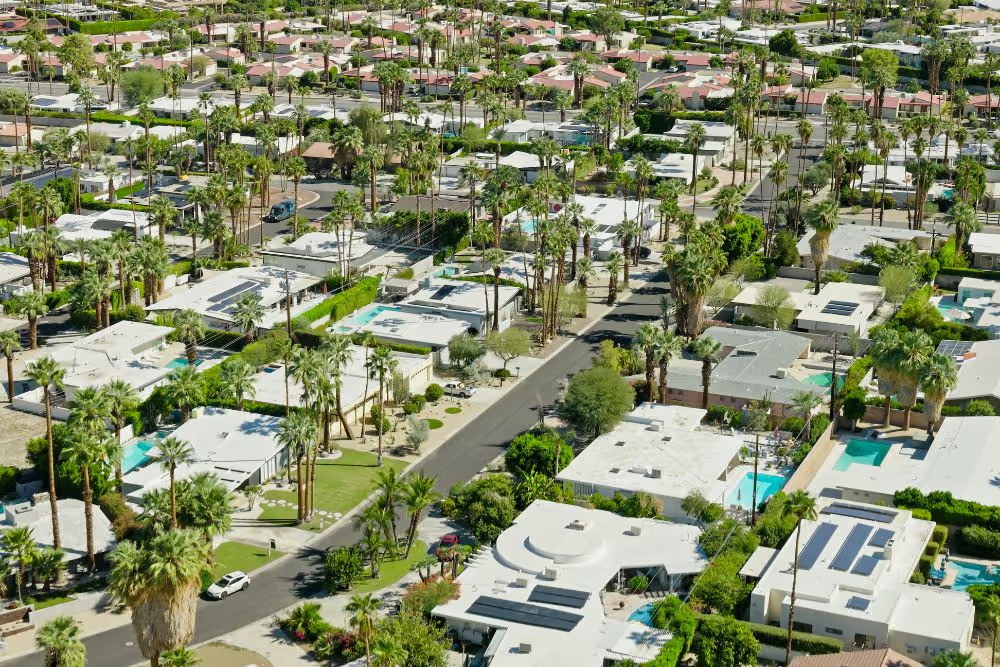
The city has a population of just over 5,000 people and a median age of 67.5. Nearly all of its residential properties are inside gated country club communities. The Vintage Club, Eldorado Country Club, Indian Wells Country Club, Desert Horizons, Toscana Country Club, and The Reserve account for most of the city's housing. There are no stucco tracts here. No entry-level subdivisions. The housing ranges from mid-century modern homes that were here when Desi Arnaz co-founded the Indian Wells Country Club in the 1950s to contemporary custom estates built in the last decade at Toscana or The Reserve. The common thread across all of it is that the finish expectation is high and the HOA approval process is real.
The repair component in the page title is not decorative. The oldest homes in Indian Wells, properties at Eldorado and Indian Wells Country Club that date to the 1950s and 1960s, have been through 60 to 70 years of desert UV, thermal cycling, and in many cases multiple coat layers from repaints done over the decades without adequate prep between them. Those accumulated layers can cause adhesion failure from the substrate up that can't be solved by adding another coat. They require stripping back to a sound foundation before any new system goes on. That's not a standard repaint scope. It's a restoration scope, and it costs more and takes longer than most homeowners expect when they first call for an estimate.
Cost at a Glance
Final cost depends on square footage, number of structures, surface condition, repair scope, primer system, number of coats, finish standard, and HOA approval lead time. Use our Indian Wells painting cost calculator for a project-specific estimate.
What Makes Indian Wells Painting Projects Different
Every city in the Coachella Valley has stucco homes that need prep and a painter who knows how to work in the desert. Indian Wells has that plus four things that no other city in the valley has at the same concentration.
Nearly universal HOA governance. In Indian Wells, almost every residential property is inside a gated community with an active HOA and an Architectural Review Committee. An exterior color change without prior ARC approval is not a minor oversight. It's a violation that results in a mandated repaint at the homeowner's expense. The approval process involves submitting the paint brand, name, color code, finish type, and in some communities a physical color board, for review. That process takes three to six weeks at minimum and longer at some communities during peak season. A painter who doesn't understand this sequence and starts work before approval is granted creates a problem that costs the homeowner significantly more than the original job.
Older estate-scale properties with deep repair needs. Eldorado Country Club was established in 1951. Indian Wells Country Club opened in the late 1950s. The original homes in these communities have been through 65 to 70 years of desert exposure. Many have had multiple exterior repaints applied over the decades, some without adequate prep between coats. When you get enough accumulated layers of paint over failed adhesion planes, the problem is not one more coat. It's a careful strip-back to find the last sound layer, a full assessment of what's underneath, and a proper primer and topcoat system applied to a substrate that's been correctly prepared. That's a different scope and a different cost from a routine repaint.
Property complexity. Indian Wells estates frequently include the main residence, a detached casita, a pool house or cabana, a guard entry structure, and perimeter walls that span significant distances. Each structure has its own stucco condition, its own exposure profile, and its own set of caulk joints and penetrations to address. The total painting scope on a complex Indian Wells property can be three to four times what a similarly-aged home in Palm Desert would involve just from the added structures and surface area.
Finish expectations are different here. At the price point of Indian Wells real estate, a paint job that's acceptable in a 1990s stucco tract is not acceptable inside The Vintage Club or Toscana. The HOA inspection at completion is thorough. Lap marks, holidays, inconsistent sheen, or any visible application defect that would pass unnoticed on a standard residential repaint will be flagged. The prep and application standard has to match the standard of the community.
Surface Repair Before Painting in Indian Wells
The repair angle in this article's title reflects what actually happens on Indian Wells projects. Repair is not an add-on. It's part of the core scope on most of the older properties in the city.
On homes at Eldorado Country Club and Indian Wells Country Club that date to the 1950s and 1960s, the stucco has been through enough thermal cycles and UV exposure to produce widespread hairline cracking across the field, not just at window corners. Caulk at frame transitions failed long ago and was patched over in subsequent repaints without being removed and replaced. On some homes, there are three or four layers of paint over the original stucco, and the adhesion of those layers is inconsistent. Finding the solid adhesion plane and working from there is a diagnostic step that requires physical testing with a pull knife and moisture meter, not just a visual walk.
Wood repair is common on the older homes. Fascia boards, window surrounds, and any exposed wood trim on properties that weren't fully converted to stucco trim have been through desert heat and in some cases irrigation spray at the foundation. Soft rot treated with epoxy consolidant and two-part filler, primed with oil-based alkyd, and topcoated with a quality exterior enamel holds up well. Wood that's too far gone needs to be replaced before painting. There's no coating that fixes structurally compromised wood.
Wrought iron and architectural metalwork are common on Indian Wells properties, particularly at entry gates, perimeter fencing, courtyard features, and decorative elements on the main residence. Iron that's been through multiple seasons without maintenance develops surface rust that has to be treated before it can be coated. Rust-inhibiting primer, followed by a direct-to-metal topcoat in the HOA-approved color, is the right system. Painting over rust without treating it produces a coating that blisters from behind within months.
On a recent project at a home in Bighorn Golf Club, Palm Desert, we encountered conditions similar to what we see regularly on older Indian Wells estates. The property was a 1970s-era custom home on a golf course lot with a detached casita and a pool house. The main residence had four distinct paint layers over the original stucco, and the outermost two had delaminated from the third layer across approximately 30% of the west elevation. We hand-scraped the failed sections, spot-primed with Sherwin-Williams Loxon XP elastomeric primer, applied full Loxon XP to all stucco, replaced failed caulk at all penetrations, treated two sections of fascia rot with epoxy consolidant, primed iron entry features with Rust-Oleum rust-inhibiting primer, and applied two coats of Sherwin-Williams Duration Exterior in the HOA-approved color. Eight days with a crew of four.
HOA Color Approval in Indian Wells Country Clubs
Every Indian Wells country club community has an Architectural Review Committee and a color approval process for exterior changes. No two communities have identical requirements, but the structure is consistent across all of them: submit color details before work starts, wait for written approval, then schedule the painter.
What gets submitted varies by community. At minimum, most require the paint brand, color name, color code, and finish type for every surface being changed: body color, trim color, accent color, and any iron or metalwork being painted. Some communities require a physical color board, either a painted sample on a piece of drywall or a printed swatch, submitted with the application. Some require a site visit from an ARC representative before approval is granted. The process at The Vintage Club and Eldorado is more rigorous than at Desert Horizons or Los Lagos. Know which community you're in before assuming how long the process takes.
The typical review timeline is three to six weeks. Communities that are actively managing high volumes of projects or have smaller ARC committees can run longer during peak season from January through April. Submit early. A painter who books a crew, orders materials, and schedules gate access before the ARC approval arrives is setting up the homeowner for a delay that costs everyone time and credibility with the HOA.
Indian Wells communities generally favor warm neutral palettes: soft whites, warm tans, creamy stucco tones, muted sage and terracotta accents, and warm beige trim. Mediterranean and Spanish Colonial architectural palettes dominate. Bold colors, cool grays, or anything that stands apart from the community's established palette typically does not pass ARC review. Sherwin-Williams and Benjamin Moore both maintain HOA-specific color systems that identify common compliant combinations, which is a useful starting point when working within a new community for the first time.
If you are repainting in the same color, most communities do not require prior approval. Confirm that in writing with the HOA office before scheduling. Do not rely on a neighbor's experience or a verbal conversation with a staff member. Get the confirmation in writing and keep it on file in case the question comes up during the job.
The Full Exterior Painting Process
Back-rolling after spraying is required on stucco, including on Indian Wells estates where the surfaces are larger and the application pressure to speed through with spray alone is greater. Spraying without back-rolling leaves paint bridging over texture peaks without penetrating the valleys. At the finish standard Indian Wells HOA inspections apply, a bridged surface is a visible defect that will be flagged.
Interior House Painting in Indian Wells
Interior painting in Indian Wells homes operates at a higher finish standard than most other markets. Many of these properties have custom plaster walls, high ceilings, vaulted or beamed living rooms, specialty wall finishes that were applied during original construction, and in some cases hand-applied decorative textures that require specific techniques to paint over without destroying the visual character of the surface.
High ceilings require extension poles, scaffolding, or scissor lifts on rooms with 14-foot-plus vault heights. That adds time and in some cases equipment rental cost to the job. In rooms with specialty plaster or decorative texture, matching the existing finish before painting is its own scope. A painter who rolls straight over original Venetian plaster with a standard roller damages the surface character and produces a result that doesn't match what was there. That kind of work requires the right nap, the right tool, and the right primer system for the specific surface.
Sheen selection in Indian Wells interiors follows the same logic as elsewhere but with tighter tolerances. Flat for ceilings. Eggshell for most living area walls. Satin for kitchens, bathrooms, and high-traffic hallways. Semi-gloss or gloss for all trim, doors, and cabinetry. The difference at this market level is that the sheen consistency has to be uniform across every surface in a room, and any inconsistency in application is visible at the finish expectation these homeowners carry. Two coats is the floor, not the ceiling, on interior work in Indian Wells.
Cabinet refinishing is a separate scope requiring an HVLP spray system for factory-quality results. Benjamin Moore Advance and Sherwin-Williams ProClassic are the products we use: hard enamel film, spray-applied, two coats with a scuff sand between coats. On properties with custom cabinetry, the prep and primer selection has to be matched to the substrate material, whether that's solid wood, MDF, or a combination, before any topcoat goes on.
Paint Brands and Products
We use Sherwin-Williams and Benjamin Moore on Indian Wells projects. At this market, product selection is not a cost-saving conversation. Premium coatings on a high-value property are an investment in the home's appearance and the longevity of the system. The difference in material cost between a premium and a mid-grade exterior is $20 to $40 per gallon, which on a large estate might represent $600 to $1,500 in total. On a property worth several million dollars, the argument for the better product writes itself.
When Roofing Overlaps with Painting in Indian Wells
On older Indian Wells estate properties, exterior painting inspections regularly surface roofline conditions that explain paint failures that look like coating problems but are actually moisture problems. Failed flashing at a parapet cap on a flat-roof section that's been channeling water into the stucco below it. Separated eave detail at the fascia on a tile-roof home where moisture has been working into the wall above a window for one or more seasons. Cracked caulk at an HVAC curb or skylight that's been allowing water behind the coating.
None of those problems are solved by painting over them. They need to be addressed at the source first, with the surface given adequate dry-out time before primer goes on. Our roofing team in Indian Wells handles inspections and repairs as a coordinated scope alongside exterior painting on properties where both trades are needed. Roofing goes first. The surface dries. Then painting starts. On Indian Wells properties, where a paint failure at a HOA inspection creates a whole chain of unwanted attention and cost, getting the sequence right is not optional.
Licensing and What to Ask Before Hiring an Indian Wells Painter
California painting contractors are required to hold a C-33 Painting and Decorating license issued by the Contractors State License Board. You can verify any contractor's active license on the CSLB license verification tool before signing anything. At the property values involved in Indian Wells, hiring an unlicensed contractor is not a risk worth taking regardless of how compelling the price is.
Repainting does not require a permit in Indian Wells. Structural repairs to stucco, fascia, or other building envelope elements may require one. The Indian Wells Building Department can confirm what applies to your specific scope before work begins. Their counter hours are Monday through Friday, 8 AM to noon and 1 PM to 5 PM.
If your home was built before 1978, lead-based paint may be present in existing coatings. The oldest homes at Eldorado Country Club and Indian Wells Country Club, dating to the 1950s and 1960s, fall well within this window. The EPA's Lead Renovation, Repair and Painting (RRP) Rule requires that contractors disturbing more than six square feet of painted surface in pre-1978 homes be EPA-certified and follow lead-safe work practices including HEPA dust collection during sanding and proper work area containment. Ask any contractor working on an older Indian Wells property whether they hold EPA RRP certification before work starts.
Truly Tough Painting: Interior, Exterior, and Repair in Indian Wells
Our painting team at Truly Tough Painting handles interior repaints, exterior stucco and elastomeric systems, adhesion assessment and repair on older estate properties, wrought iron and metal treatment, HOA color documentation and ARC submission support, and cabinet refinishing across Indian Wells, Palm Desert, Rancho Mirage, La Quinta, and the rest of the Coachella Valley. We use Sherwin-Williams and Benjamin Moore on every project, prime every surface that needs it, back-roll every sprayed stucco surface, and provide a written scope of work and a final walkthrough on every job.
Call us at 760-343-5770 or reach us at Painting@TrulyTough.com.
Frequently Asked Questions
How much does interior painting cost in Indian Wells?
Interior painting runs $2 to $5 per square foot. On large Indian Wells estates with high ceilings, specialty wall finishes, custom cabinetry, and multiple rooms, a full interior project can run $12,000 to $30,000 or more depending on scope and finish standard.
How much does exterior house painting cost in Indian Wells?
Most Indian Wells exterior projects run $6,000 to $20,000 for a standard estate home. Large custom properties with multiple structures, casitas, pool houses, perimeter walls, and significant repair scope push well past $20,000. The repair and prep scope drives cost more than square footage alone on older Indian Wells properties.
Do I need HOA approval to repaint my Indian Wells home?
Yes, for any exterior color change. Submit your ARC application with paint brand, color name, color code, and finish type three to six weeks before your target start date. Repainting in the same color typically does not require prior approval, but confirm that in writing with your HOA before scheduling. Do not start work without written ARC approval in hand.
What does exterior repair involve on older Indian Wells estate homes?
On homes at Eldorado Country Club and Indian Wells Country Club that date to the 1950s and 1960s, repair typically includes stripping delaminated paint layers to find the last sound adhesion plane, filling widespread hairline stucco cracks with elastomeric caulk, treating wood rot with epoxy consolidant, replacing failed caulk at all frame transitions, and treating iron features with rust-inhibiting primer before any topcoat is applied.
What is an elastomeric coating and do I need it in Indian Wells?
Elastomeric coatings are thick, flexible systems that bridge hairline cracks and flex with stucco through daily desert temperature swings. They're strongly recommended for older Indian Wells estate properties where surface cracking is present. On homes with significant repair scope, an elastomeric primer and topcoat system gives the longest service life of any available option.
What is a C-33 license and why does it matter?
A C-33 is the California painting and decorating contractor license issued by the CSLB. It confirms the contractor passed a trade exam covering surface prep, primer use, and coating application. Verify any painter's C-33 is active on the CSLB website before signing anything.
Does my 1950s Indian Wells home have lead paint concerns?
Almost certainly. Homes built before 1978 may contain lead-based paint in existing coatings. The oldest homes at Eldorado and Indian Wells Country Club were built in the 1950s, well within this window. Any contractor disturbing more than six square feet of painted surface must be EPA RRP certified and follow lead-safe work practices. Confirm this before work begins.
Do I need a permit to repaint my house in Indian Wells?
Generally no. Repainting does not require a permit. If your project includes structural repairs to stucco, fascia, or other building envelope components, confirm the permit requirement with the Indian Wells Building Department before work begins.
How long does exterior paint last in Indian Wells?
A properly prepped standard 100% acrylic exterior with two coats lasts 7 to 10 years in the desert. A full elastomeric coating system applied over elastomeric primer can last 15 to 20 years. UV exposure and daily thermal cycling are the primary factors that accelerate degradation in this climate.
Is one coat of exterior paint enough in Indian Wells?
No. Two coats are the minimum for proper film thickness, full hide, and color accuracy. At the finish standard Indian Wells HOA inspections apply, one coat will not produce an acceptable result and will degrade ahead of what a properly applied two-coat system delivers.







.svg)
