.svg)


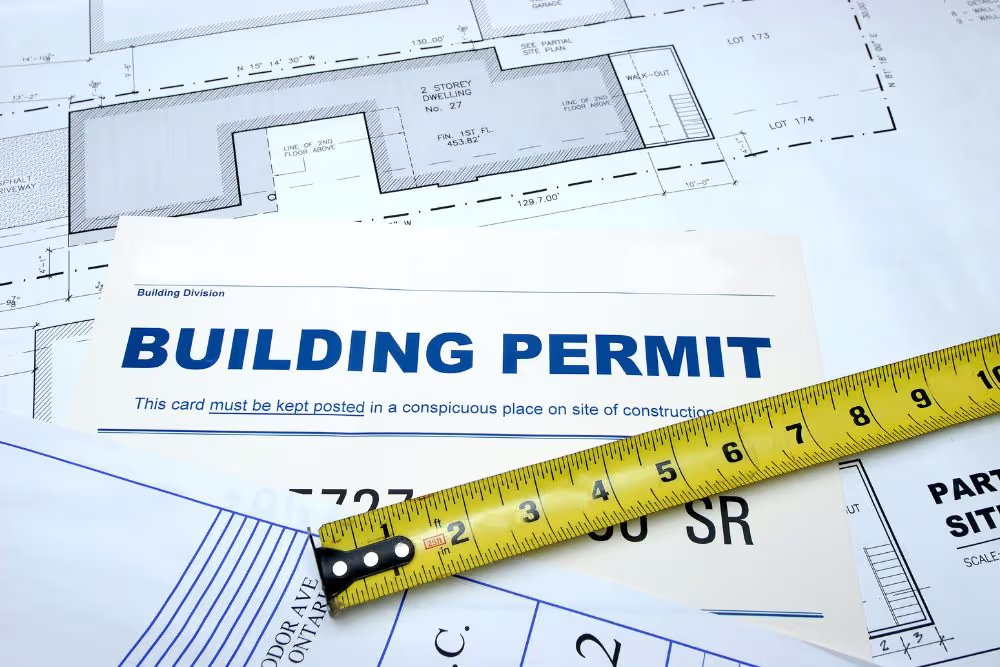
Every city in the Coachella Valley has its own building department, permit portal, and requirements. This guide covers where to apply, who to call, and which trades require a permit in your jurisdiction.
How to Apply for Building Permits in the Coachella Valley
Building permits in the Coachella Valley are not managed by a single authority. Each incorporated city runs its own building department, issues its own permits, and sets its own inspection schedules. Unincorporated areas including Bermuda Dunes and parts of the east valley fall under Riverside County Building and Safety. Manufactured and mobile homes are handled separately through the California Department of Housing and Community Development regardless of city.
Before any work starts on your home, confirm which jurisdiction covers your address. This determines where to submit your application, who signs off on inspections, and which local amendments to the California Building Code apply to your project. Most cities now accept permit applications online, but requirements and timelines vary. Your contractor should be pulling the permit and scheduling inspections as part of the job. If they are not, ask why.
Building Jurisdictions in the Coachella Valley
Use the contact information below to reach the building department for your city directly. All phone numbers, emails, and permit portal links are current as of the time this page was published.
Permit Requirements by Trade
Whether a permit is required depends on the trade, the scope of the work, and in some cases the specific city. The guidelines below reflect standard California requirements as adopted across Coachella Valley jurisdictions. When in doubt, call the building department for your city before work begins. Most will tell you over the phone whether a permit is required for your specific project.
- Roof repair under 25% of total roof area
- Minor patching or spot repairs
- Replacing a few tiles or shingles
- One-time repair under the city's exemption threshold
- Full reroof or roof overlay
- Roof replacement over 25% of area
- Structural roof repairs or new framing
- Skylight installation
- Solar attachments
- Solar panels (roof-mounted or ground-mounted)
- Battery storage systems
- Main panel upgrades tied to solar
- New circuits for solar equipment
No city in the valley allows residential solar installation without permits. Solar contractors submit plans through SolarAPP+.
- Replacing an outlet or switch
- Replacing a breaker of the same size
- Panel upgrade or service upgrade
- New circuit installation
- EV charger installation
- Generator connection
- Subpanel installation
- Rewire of any portion of the home
- New lighting circuits
- Thermostat replacement
- Capacitor or contactor replacement
- Routine service repairs on existing equipment
- Furnace replacement
- Condenser or package unit replacement
- New duct system installation
- Mini-split installation
- Heat pump installation
Most HVAC equipment changeouts in California require permits.
- Faucet replacement
- Toilet replacement
- Garbage disposal replacement
- Clearing drain stoppages
- Repairing accessible leaks
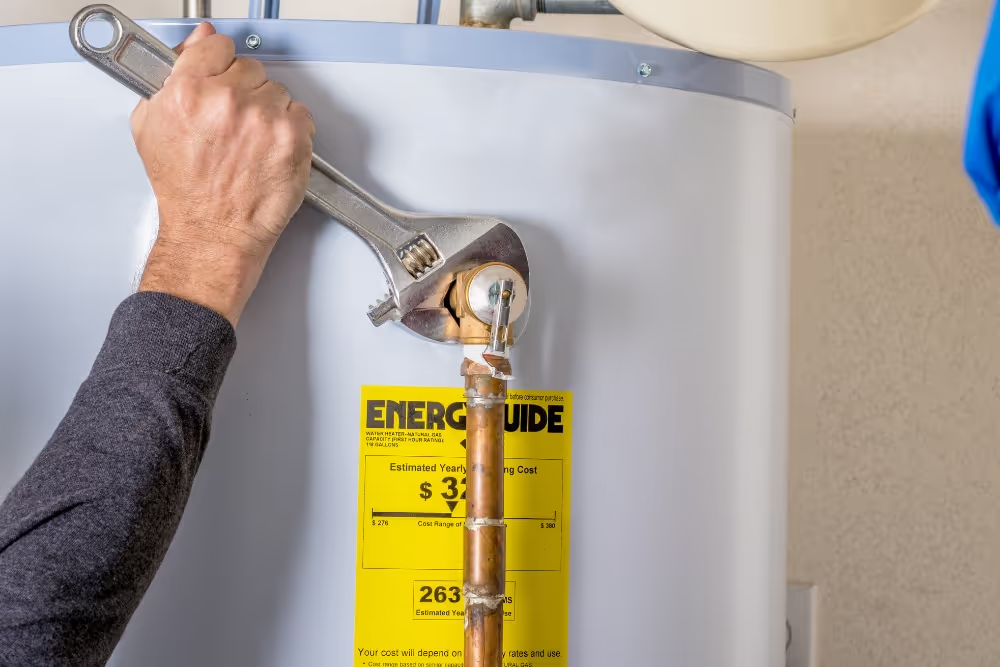
- Water heater replacement
- Repiping (full or partial)
- Sewer line replacement
- Gas piping installation or modification
- New fixture installations
- Relocating any plumbing
Any work behind walls or under floors requires a permit.
- New pool or spa construction
- Pool remodel or structural repairs
- Equipment relocation
- New gas lines for pool heaters
- New electrical systems for pool equipment
Minor equipment repairs and chemical servicing do not require permits.
- Interior painting
- Exterior painting
- Surface preparation and primer
- Work involves historic review requirements
- Tied to structural alterations
- Commercial code upgrade required
For nearly all residential painting jobs, no permit is required.
- Drywall repair and patching
- Non-rated drywall replacement
- Fire-rated assemblies
- Garage separation walls
- Structural remodels involving new walls
- Carpet installation
- Tile installation
- LVP, laminate, or hardwood
- Structural floor repairs
- Subfloor replacement beyond minor repairs
- Fences 6 feet or under in height
- Fences over 6 feet in height
- Retaining wall and fence combinations
- Pool barrier fencing in some jurisdictions
- Flatwork: patios, sidewalks, driveways
- Driveway replacement
- Foundations
- Structural slabs
- Raised decks
- Retaining walls
- Footings
Why Permits Matter in the Coachella Valley
Skipping a required permit is not just a code violation. It creates real financial problems down the line. Unpermitted work has to be disclosed when you sell the home. Buyers, title companies, and lenders catch it during inspection or title review, and it either kills the deal or forces you to retroactively permit and inspect the work, which sometimes means opening up finished walls to prove what was done. Homeowner's insurance can also deny claims tied to unpermitted work if the damage is directly related to the unpermitted scope.
In the Coachella Valley, this comes up most often with water heater replacements, HVAC changeouts, and electrical panel upgrades done by contractors who offer to skip the permit to save time or money. The permit itself rarely costs much. The problem is when you skip it and later need to sell, refinance, or file a claim.
The right contractor pulls the permit, schedules the inspections, and hands you the final sign-off at the end of the job. That is the standard. If a contractor suggests skipping it, ask them to explain why in writing.
Truly Tough Contractors: We Handle the Permits
Navigating permits across multiple Coachella Valley jurisdictions is something we do on every job. Whether it is a solar installation, a new pool, a reroof, an HVAC changeout, or a full plumbing repipe, our team pulls the permits, coordinates the inspections, and handles the sign-off so you do not have to manage that process yourself.
We operate eleven trade divisions across the valley, covering solar, roofing, HVAC, plumbing, electrical, pools, concrete, fencing, flooring, painting, and drywall. If you are starting a project and want to know whether a permit is required, which department to contact, or how the process works in your city, call us before you do anything else. We can answer those questions quickly and help you avoid the mistakes that create problems at the worst time.
Frequently Asked Questions
Do I need a permit to replace a water heater in the Coachella Valley?
Yes. Every city in the valley requires a permit for water heater replacement. Your contractor should pull the permit and schedule the inspection as part of the job.
Do I need a permit to replace my HVAC unit?
Most HVAC equipment changeouts in California require a permit, including condenser replacements, furnace replacements, package units, mini-splits, and heat pumps. Thermostat swaps and minor component repairs typically do not.
Does a reroof require a permit in Palm Springs or La Quinta?
Yes. A full reroof or any roof replacement over 25% of the total area requires a permit in every Coachella Valley city. Minor spot repairs typically do not.
Who handles permits in Bermuda Dunes?
Bermuda Dunes is an unincorporated community in Riverside County. Permits are handled by Riverside County Building and Safety at 951-955-1800 or BuildingDispatch@rivco.org.
How do solar contractors submit permit applications?
Solar contractors in California submit plans through the SolarAPP+ online portal at gosolarapp.org. No city in the Coachella Valley allows residential solar installation without permits.
Do I need a permit for a new pool in Indian Wells or La Quinta?
Yes. New pool and spa construction almost always requires permits in every Coachella Valley jurisdiction, including all associated gas and electrical work.
What happens if I do unpermitted work?
Unpermitted work must be disclosed when selling the home and can cause problems with title, lenders, and buyer inspections. It may also void homeowner's insurance coverage for related claims and can require expensive retroactive permitting and inspections.
Can my contractor pull the permit for me?
Yes, and they should. A licensed contractor pulling permits on your behalf is standard practice and part of what you pay for when you hire a professional. If a contractor asks you to pull your own permit or suggests skipping it, that is a red flag.







.svg)
