.svg)



Desert Hot Springs house painters work in one of the most distinct climates in the Coachella Valley. Interior and exterior painting cost here is shaped by the city's elevation, its wind exposure from the San Gorgonio Pass, and a housing stock that ranges from affordable 1990s stucco tracts to mid-century ranch homes overdue for serious prep work.
Interior and Exterior Painting Cost in Desert Hot Springs
Desert Hot Springs house painters charge $2 to $5 per square foot for interior work. Exterior painting on a standard Coachella Valley home runs $4,500 to $12,000, and Desert Hot Springs projects span that full range. The city sits at a higher elevation than the rest of the valley and runs 5 to 7 degrees cooler in summer than Palm Springs or Indio. That's a meaningful difference in terms of where the city sits climatically. But what makes Desert Hot Springs distinct for exterior painting is not the heat — it's the wind.
The San Gorgonio Pass funnels sustained winds directly into the north end of the Coachella Valley, and Desert Hot Springs sits right in that path. The windmill farms visible from the western edge of the city are not decorative. They're there because the wind is reliable and strong. That sustained wind-driven abrasion, combined with UV exposure and desert thermal cycling, breaks down exterior coatings faster than UV alone. Stucco on windward-facing walls in Desert Hot Springs shows chalking, surface erosion, and caulk failure at a higher rate than comparable homes in Palm Springs or Palm Desert.
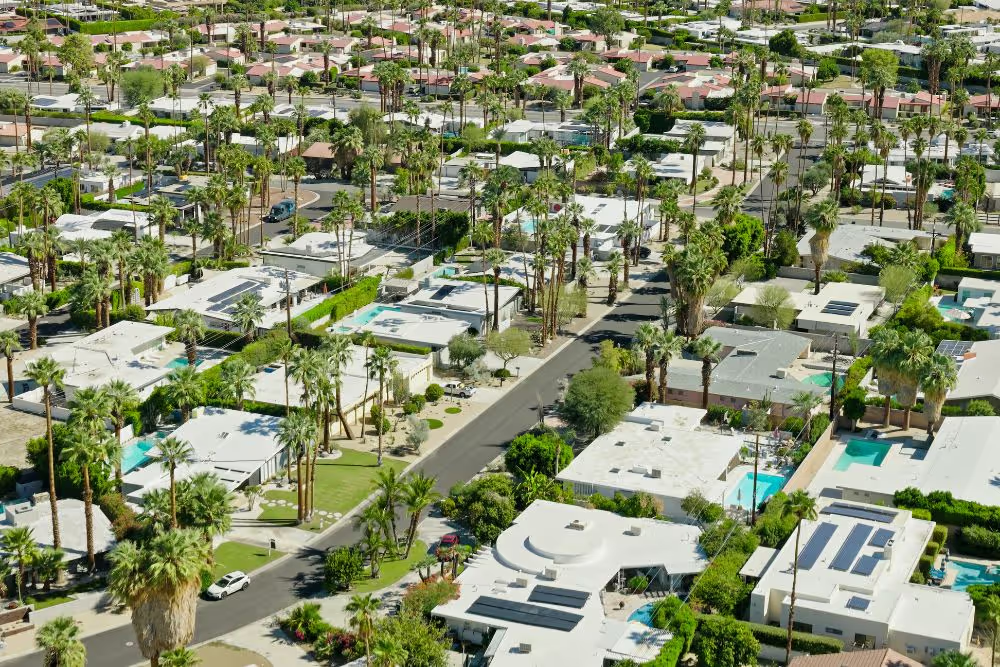
Interior painting costs in Desert Hot Springs track with the rest of the valley: surface condition, sheen requirements, repair scope, and whether cabinets are part of the job. The city's housing stock is a mix of 1990s-2000s Spanish Revival stucco homes that are the most common property type, older mid-century California ranch homes that need more intensive prep and repair, and some newer master-planned communities on the city's western perimeter.
Cost at a Glance
Final cost depends on square footage, stories, surface condition, repair scope, primer requirements, number of coats, and coating system. Use our Coachella Valley painting cost calculator for a project-specific estimate.
Wind: The Factor That Makes Desert Hot Springs Different
Every city in the Coachella Valley deals with UV and heat. Desert Hot Springs also deals with sustained, abrasive wind from the San Gorgonio Pass in a way that no other city in the valley does at the same intensity. The pass is the low point between the San Jacinto and San Bernardino mountain ranges, and it funnels weather systems from the Los Angeles basin directly into the north end of the valley. Desert Hot Springs sits at the mouth of that funnel.
What that means for exterior paint is straightforward. Wind carries fine desert dust and sand particles at sustained velocity. Over months and years, that abrasive load acts like very fine sandpaper on the paint surface, wearing through the topcoat on windward elevations faster than UV alone would. North and west-facing walls in Desert Hot Springs — the faces that take the most direct wind exposure — show chalking and surface erosion earlier than south and east faces. Caulk joints on those elevations fail faster too, because the wind-driven temperature cycling and mechanical movement stresses the sealant at every joint.
The practical consequence for a painting project is that windward walls typically need more prep than leeward walls on the same home. Heavier chalking to remove, more caulk to replace, and sometimes surface erosion deep enough that a thicker-bodied elastomeric primer is needed to re-establish a uniform substrate before the finish coat goes on. A painter who hasn't worked on Desert Hot Springs homes regularly may not account for this difference when scoping the job, which is how underquoted projects end up with shortcuts on the prep that cost the homeowner later.
Elastomeric coatings are strongly recommended for Desert Hot Springs stucco homes for this reason. The thicker, more flexible film — 10 to 40 dry mils versus 1.5 to 2 mils for standard latex — holds up better against abrasive wind exposure than a standard acrylic coat and bridges the hairline cracks that wind-driven thermal cycling creates at stress points. Sherwin-Williams Loxon XP and Dryvit or Sto elastomeric systems are the products we reach for on Desert Hot Springs exteriors where the prep confirms significant wind-side degradation.
Desert Hot Springs Homes and What They Cost to Paint
The city's housing stock shapes the painting market in ways that are worth understanding before getting a quote.
The most common property type in Desert Hot Springs is the Spanish Revival stucco home built in the 1990s and 2000s during the city's major growth period. These homes are typically single-story, 1,200 to 2,200 square feet, with tile roofs and standard stucco exteriors that have been through 20 to 30 years of desert exposure and San Gorgonio Pass wind. Most have moderate to heavy chalking on windward faces, hairline cracking at window corners from thermal cycling, and caulk that has failed at most window and door frame transitions. Prep scope on these homes is moderate to heavy. Elastomeric primer and topcoat is the right system for most of them.
Older mid-century California ranch homes in Desert Hot Springs are in a different category. Many of these were built in the 1950s and 1960s and have been through decades of abrasive wind, UV, and in some cases extended vacancy. The preparation scope on these properties is the most intensive in the city. Surface chalking may be deep enough to require aggressive pressure washing before scraping. Wood elements that have never been properly primed and protected often have significant rot. Stucco cracking can be widespread rather than isolated to corner stress points. These jobs cost more to do right, and the homes that have been vacant or poorly maintained present the highest risk of discovering additional substrate problems during prep.
The newer master-planned communities on the western perimeter of the city, Mountain View Country Estates and Skyborne, and adjacent Mission Lakes Country Club in unincorporated Riverside County, are in better condition. Newer construction, lighter prep needs, and in some cases HOA color approval requirements that add lead time to the project schedule before painting can start.
We painted the exterior of a home in Desert Highland Gateway, Palm Springs, a community just over the ridge from Desert Hot Springs with comparable wind exposure and 1990s construction vintage. The north-facing wall had significant chalking and surface erosion from wind-driven abrasion. We pressure-washed at 2,800 PSI, scraped loose paint, filled window corner cracks with Sikaflex elastomeric caulk, applied Loxon XP elastomeric primer on all stucco, and finished with two coats of Sherwin-Williams Duration Exterior. The north elevation took twice the prep time of the south face on the same house.
The Full Exterior Painting Process
Wind adds a scheduling consideration that doesn't exist in other valley cities. Application needs to happen in the morning when conditions are calm. Wind picks up through the afternoon and into the evening in Desert Hot Springs. Painting into wind creates uneven film thickness, accelerates dry time before product has penetrated the substrate, and drives airborne debris into the wet coating. Early morning scheduling is standard practice on Desert Hot Springs exterior projects, not just a summer heat precaution.
Interior House Painting in Desert Hot Springs
Interior painting in Desert Hot Springs follows the same preparation discipline as any other desert city. Surface condition drives the scope. Newer homes with drywall in good shape need cleaning, light sanding on rough spots, and the right primer on any new or repaired areas before finish coats. Older homes and mid-century properties have more going on: textured ceilings that were never removed and need to be painted around or addressed, water stains from previous plumbing or evaporative cooler issues, settling cracks in drywall that need to be taped and floated before painting, and original cabinets that are long overdue for refinishing.
Water stains on ceilings need to be sealed with a shellac-based stain blocker like Zinsser BIN before any finish coat goes on. Paint rolled over an unsealed stain bleeds through the finish coat within months. The shellac primer encapsulates the stain chemically and gives the topcoat a clean, neutral surface. Same approach for any mold or mildew staining on bathroom walls: treat and seal before painting, not after.
Sheen selection is a decision that affects the durability of the finish and how the room reads under the desert's intense natural light. Flat for ceilings. Eggshell for most living area walls: cleanable, slight sheen, forgiving on walls that aren't perfectly smooth. Satin for kitchens, bathrooms, laundry rooms, and hallways. Semi-gloss or gloss for all trim, doors, and cabinetry. The harder sheens on those surfaces resist moisture, impact, and daily cleaning better than eggshell or satin.
Cabinet refinishing is a separate scope that uses a different application system. We spray cabinets with an HVLP system for fine atomization and a factory-quality finish. The substrate is cleaned, deglossed, and primed with shellac or oil-based cabinet primer before the topcoat. Benjamin Moore Advance and Sherwin-Williams ProClassic are the products we use: hard enamel film, spray-applied, two coats with a scuff sand between coats.
Paint Brands and Products
We use Sherwin-Williams and Benjamin Moore on most Desert Hot Springs projects. In a city that adds wind abrasion to the standard desert combination of UV and heat, exterior product selection leans toward the thicker-bodied, more flexible systems that can handle the mechanical stress of sustained wind-driven conditions better than a standard acrylic coat.
When Roofing and Fencing Overlap with Painting
In Desert Hot Springs, exterior painting inspections frequently turn up roofline problems driven by wind rather than simple UV degradation. Wind lifts flashing at parapet walls and roof-to-wall transitions, drives moisture under roofline caulk joints, and accelerates the separation of eave details from the fascia boards below them. Paint failure at the top of a stucco wall in Desert Hot Springs is often a roofline issue, not just a paint issue. Coating over it without addressing the source produces a blister failure from behind within months.
When our inspection identifies a roofline problem, we stop and flag it before paint goes on. Our roofing team in the Coachella Valley handles inspections and repairs as a coordinated scope. On jobs where both trades are needed, roofing work goes first, the surface gets adequate dry-out time, and then exterior painting starts. That sequence prevents the most common failure mode on older Desert Hot Springs exteriors: new paint over an unresolved wind or moisture infiltration point.
Block walls and perimeter fencing in Desert Hot Springs also take wind abuse. Cracked or shifted block sections from wind-driven settling need structural repair before coating or the paint fails at the crack lines within a season. If fencing or block wall repair is needed alongside the painting scope, our fencing team in the Coachella Valley handles that work and we coordinate the timing so paint goes on last over properly repaired surfaces.
Licensing and What to Ask Before Hiring a Desert Hot Springs Painter
California painting contractors are required to hold a C-33 Painting and Decorating license issued by the Contractors State License Board. You can verify any contractor's active license status on the CSLB license verification tool at no cost before signing anything.
If your home was built before 1978, lead-based paint may be present in existing coatings. Desert Hot Springs's older mid-century housing stock and some of the city's earlier tract construction fall in this category. The EPA's Lead Renovation, Repair and Painting (RRP) Rule requires that contractors disturbing more than six square feet of painted surface in pre-1978 homes be EPA-certified and follow lead-safe work practices including HEPA dust collection during sanding, work area containment, and proper cleanup. Ask any contractor working on an older Desert Hot Springs property whether they hold EPA RRP certification before work starts.
Repainting generally does not require a building permit in Desert Hot Springs. If your project includes structural repairs to stucco, fascia, or other building envelope elements, the Desert Hot Springs Building Division can confirm what applies to your specific scope before work begins.
Truly Tough Painting: Interior and Exterior in Desert Hot Springs
Our painting team at Truly Tough Painting handles interior repaints, exterior stucco and elastomeric systems, stucco crack and wood rot repair, cabinet refinishing, and full exterior prep across Desert Hot Springs, Palm Springs, Cathedral City, Palm Desert, and the rest of the Coachella Valley. We use Sherwin-Williams and Benjamin Moore on every job, prime every surface that needs it, back-roll every sprayed stucco surface, and schedule exterior work in morning calm windows on Desert Hot Springs projects. A written scope of work and a final walkthrough come standard on every job.
Call us at 760-343-5770 or reach us at Painting@TrulyTough.com.
Frequently Asked Questions
How much does interior painting cost in Desert Hot Springs?
Interior painting runs $2 to $5 per square foot depending on surface condition, sheen selection, repair scope, and number of coats. A single room averages $900 to $2,300. A full interior repaint on a mid-size home can run $5,000 to $12,000 or more depending on ceiling repair and cabinet scope.
How much does exterior house painting cost in Desert Hot Springs?
Most exterior repaints on a standard Coachella Valley home run $4,500 to $12,000. Older Desert Hot Springs homes with heavy wind-side chalking, stucco cracking, and wood rot repair push toward the higher end or past it. The windward elevation prep scope is the main cost driver on most Desert Hot Springs projects.
How does the San Gorgonio Pass wind affect exterior paint?
Sustained wind from the San Gorgonio Pass carries fine desert dust and sand that abrades exterior coatings on windward faces. It accelerates chalking, caulk failure, and surface erosion on north and west-facing walls. It also demands that exterior paint be applied in morning hours before the wind picks up each afternoon.
What is an elastomeric coating and do I need it in Desert Hot Springs?
Elastomeric coatings are thick, flexible systems that bridge hairline cracks and flex with stucco through thermal cycling and wind-driven movement. They're recommended for most Desert Hot Springs stucco homes, particularly windward elevations where standard acrylic paint wears down faster. The service life is significantly longer than standard latex.
Is Desert Hot Springs cooler than other Coachella Valley cities?
Yes. The city sits at a higher elevation than the rest of the valley and runs 5 to 7 degrees cooler in summer than Palm Springs or Indio. That makes it more comfortable to live in during peak summer months, but the wind exposure more than compensates in terms of exterior coating stress.
What primer do painters use on stucco in Desert Hot Springs?
Masonry or elastomeric primers are required. Sherwin-Williams Loxon Concrete & Masonry and Behr Masonry Primer are standard. On wind-eroded stucco surfaces with significant surface texture loss, a thicker-bodied elastomeric primer helps re-establish a uniform substrate before the finish coat.
What is a C-33 license and why does it matter?
A C-33 is the California painting and decorating contractor license issued by the CSLB. It confirms the contractor passed a trade exam covering surface prep, primer use, and coating application. Verify any painter's C-33 is active on the CSLB website before signing a contract.
Does my older Desert Hot Springs home have lead paint concerns?
It may. Homes built before 1978 can have lead-based paint in existing coatings. Desert Hot Springs's mid-century ranch homes and some early tract construction fall in this category. Ask any contractor working on a pre-1978 home whether they hold EPA RRP certification before work starts.
Do I need a permit to repaint my house in Desert Hot Springs?
Generally no. Repainting does not require a building permit. If your project includes structural repairs to stucco, fascia, or other building envelope elements, confirm with the Desert Hot Springs Building Division before work begins.
Is one coat of exterior paint enough in Desert Hot Springs?
No. Two coats are the minimum for proper film thickness, full hide, and color accuracy. In a city with both UV and sustained wind abrasion on exterior coatings, one coat provides inadequate protection and will show wear significantly ahead of a two-coat system.








.svg)
