.svg)



Cathedral City house painters work across one of the most architecturally varied cities in the Coachella Valley. Interior and exterior price depends on whether you're in a 1960s ranch home in the Cove, a 1980s stucco tract, or a gated community with HOA color requirements.
Interior and Exterior House Painting Prices in Cathedral City
Cathedral City house painters charge $2 to $5 per square foot for interior work. Exterior painting on a typical Coachella Valley home runs $4,500 to $12,000, and Cathedral City projects land throughout that range. The city's median construction year is 1987, which means the bulk of its housing stock is 35 to 45 years old. That age matters to pricing because homes in that vintage are generally past due for their first or second full repaint, and the prep scope on a house that's been in the desert sun for that long is considerably heavier than on a newer build.
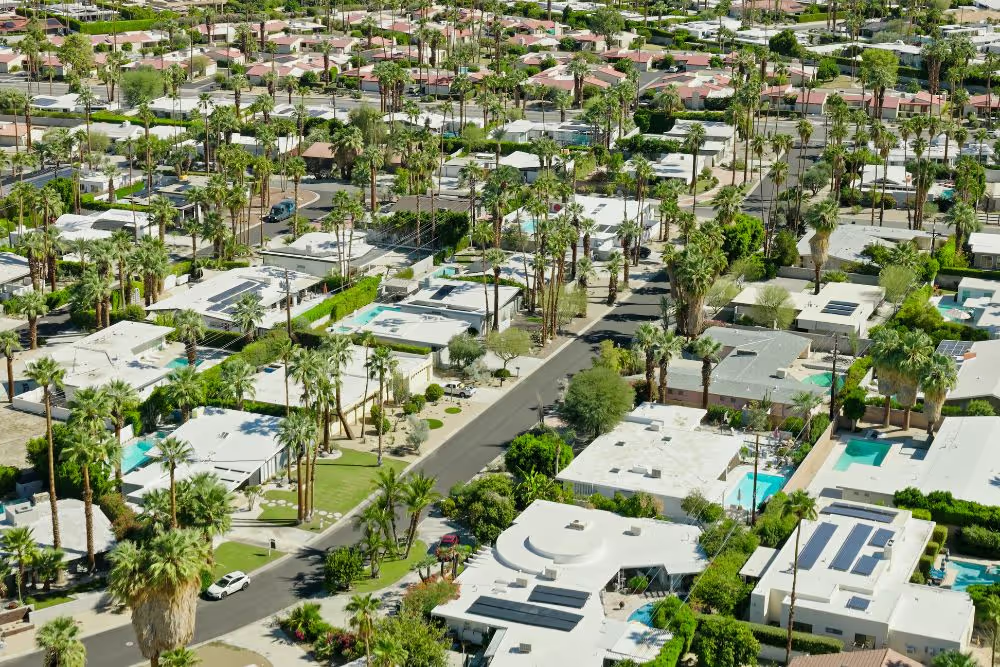
Cathedral City sits directly between Palm Springs and Palm Desert on Highway 111, making it the geographic center of the western Coachella Valley. It's the most affordable and most densely populated city on the west end of the valley. The housing mix spans 1960s mid-century ranch homes in the Cove and Dream Homes neighborhoods, established 1980s-2000s stucco suburban tracts through the bulk of the city, and gated communities like Desert Princess Country Club and Cathedral Canyon Country Club at the higher end. Each part of that range has different prep needs, different product requirements, and different project timelines.
Interior pricing follows the same fundamentals: surface condition, sheen requirements, repair scope, and whether cabinets are part of the job. A fresh coat in a newer tract home is a different scope from a repaint in a 1960s mid-century with textured ceilings that need addressing, water stains from an old evaporative cooler, and original cabinetry that's due for refinishing.
Pricing at a Glance
Final price depends on square footage, stories, surface condition, repair scope, primer requirements, number of coats, and coating system. Use our Coachella Valley painting cost calculator for a project-specific estimate.
Cathedral City's Neighborhoods and What They Mean for Painting Price
Cathedral City is architecturally more varied than most people expect. The neighborhood you're in shapes what the painting project actually costs more than any other single factor.
The Cathedral City Cove and Dream Homes neighborhoods are the oldest residential areas in the city. Homes here are mostly 1960s ranch-style builds on larger lots, tucked into the hillside terrain above central Cathedral City. Many have exposed wood trim, stucco walls that were never designed to take the current UV load without maintenance, and original window frames that have been through 60-plus years of desert heat. These are the highest-prep jobs in Cathedral City. By the time a homeowner calls a painter, there's almost always chalking on the south and west faces, failed caulk at every frame, some level of wood rot on the fascia or trim boards, and stucco that hasn't had an elastomeric coating in its entire life. The prep scope on these homes drives the price as much as the size of the house does.
The city's established suburban tracts, built through the 1980s and 1990s, are the most common property type in Cathedral City. Ranch-style and Spanish Colonial stucco with tile roofs, open floor plans, single or two-story layouts. These homes are in the moderate prep category: some chalking on sun-exposed elevations, hairline cracking at window corners from thermal cycling, and caulk that's starting to separate at frame transitions. Prep is lighter than on older homes but still required before primer goes on. Product selection, primer system, and number of coats are the same as on any desert stucco home.
Gated communities like Desert Princess Country Club, Cathedral Canyon Country Club, and Mission Hills East are at the upper end of Cathedral City's market. These communities have HOA architectural review requirements for exterior color changes, which adds lead time to the project schedule. Homes here tend to be in better condition, more recently painted, and carry a higher finish expectation. The per-square-foot price is comparable, but the job timeline is longer due to the coordination and gate access logistics on gated communities.
We did a full exterior repaint at a home in Racquet Club West, Palm Springs, just over the city line from Cathedral City's Dream Homes area — same housing vintage and very similar conditions to what we regularly see in the Cove. The home was a 1968 ranch build, never had an elastomeric coating. South and west faces with heavy chalking, wood window frames with two sections of soft rot, and five hairline stucco cracks at window corners. Full prep scope: pressure wash, scrape, epoxy wood treatment, crack filling with Sikaflex, full Loxon XP elastomeric primer, two coats of Sherwin-Williams Duration Exterior. Four days with a crew of three.
Desert Climate and Exterior Painting in Cathedral City
Cathedral City gets the same intense UV and summer heat as the rest of the western Coachella Valley. Surface temperatures on south and west-facing stucco walls in July can exceed 160 degrees. Daily thermal cycling from daytime peaks to cooler nights stresses exterior coatings, sealants, and caulk joints continuously. The result, over years without maintenance, is chalking, hairline cracking, and caulk failure that gives water a path into the wall substrate.
Standard 100% acrylic exterior paint holds up here, but its realistic service life is 7 to 10 years in ideal conditions. On a south or west-facing wall with full summer sun exposure, that timeline is at the shorter end. A budget product applied without adequate prep might give you four to five years before failure is visible. In a city where the median home is 35-plus years old and many haven't been painted in a decade, that timeline compounds quickly.
Elastomeric coatings are the more durable choice for Cathedral City stucco homes, particularly older ones. Products like Sherwin-Williams Loxon XP and Dryvit or Sto elastomeric systems build 10 to 40 dry mils of flexible film. That film bridges hairline cracks and flexes with the stucco as it expands and contracts through the desert's daily temperature swings. A properly applied elastomeric system over elastomeric masonry primer can hold up 15 to 20 years in this climate. For a home that hasn't been painted in 10 years, the premium on elastomeric product is worth it.
We schedule around the heat the same way throughout the western valley. Summer exterior work starts at 6 AM and wraps before 10 or 11 as surface temperatures spike. We check surface temperature with an infrared thermometer before starting each morning. Paint applied to a surface above 100 degrees won't bond properly regardless of product quality. September through May is the best window for exterior work. Summer jobs are workable with strict early-morning scheduling.
The Full Exterior Painting Process
Back-rolling after spraying is not optional on stucco. Spraying alone leaves paint bridging over texture peaks without penetrating the valleys. Back-rolling pushes product into the texture, eliminates surface voids, and ensures full adhesion. On older Cathedral City homes with repaired stucco sections, back-rolling also ensures the new coating contacts the patched areas fully rather than bridging over them.
Interior House Painting in Cathedral City
Interior painting in Cathedral City follows the same preparation discipline as exterior work. The specific challenges vary by housing age and type. Older mid-century homes in the Cove and Dream Homes areas often have textured ceilings, original window and door trim that's seen decades of use, water stains from old evaporative coolers or plumbing issues, and cabinets that are original to the build and long overdue for refinishing. Newer tract homes are in better interior condition but still have drywall that needs to be checked for cracks from settling, sheen specifications that need to match each room's function, and in some cases cabinets that were painted once years ago and need to be stripped and refinished properly to get a durable result.
Water stains on ceilings must be sealed with a shellac-based stain blocker like Zinsser BIN before any finish coat goes on. Rolling latex paint over an unsealed water stain produces bleed-through that shows through the finish coat within months. The shellac primer encapsulates the stain chemically and gives the topcoat a clean surface to bond to. Same applies to mold or mildew staining in bathrooms: treat and seal before painting, not after.
New drywall in any of Cathedral City's newer construction needs a PVA drywall sealer before finish coats. Existing walls in good condition go straight to finish coats after cleaning and a light sand on rough spots. Glossy or previously semi-gloss surfaces need to be deglossed before repainting so the new coat bonds properly rather than peeling at edges.
Sheen selection matters throughout the house. Flat for ceilings. Eggshell for most living area walls: slight sheen, cleanable, forgiving on walls that aren't perfectly smooth. Satin for kitchens, bathrooms, laundry rooms, and high-traffic hallways. Semi-gloss or gloss for all trim, doors, and cabinetry. Those surfaces need the hardest film available because they take daily contact and moisture exposure.
Cabinet refinishing uses a different process and application system from wall painting. We spray cabinets with an HVLP system for fine atomization and a smooth, factory-quality finish. The substrate is cleaned, deglossed, and primed with a shellac or oil-based cabinet primer before the topcoat. We use Benjamin Moore Advance or Sherwin-Williams ProClassic: hard enamel film, spray-applied, two coats with a scuff sand between coats.
Mid-Century Homes: Painting the Cove and Dream Homes
Cathedral City's Cove and Dream Homes neighborhoods have a specific painting profile that's worth calling out. These are 1960s ranch-style homes on elevated hillside lots, many with original stucco that has never had a purpose-designed elastomeric coating applied to it. The terrain in these neighborhoods also means homes are more exposed to wind from the San Gorgonio Pass, which carries abrasive dust that adds to surface degradation on the windward elevations.
Exposed wood is more common on Cove homes than on later stucco-only builds. Many have wood window frames, wood fascia boards, and in some cases wood trim elements that require a different primer and coating approach than the stucco walls. Oil-based alkyd primer on bare or repaired wood is the right call. It penetrates deeper than latex primer, seals tannins, and gives a better bond for the finish coat than a latex primer would on bare or weathered wood.
The elevated lots mean some homes need more access equipment: an extension ladder or pump jack scaffold to reach upper sections of walls that sit well above grade on the hillside side of the structure. That adds to the job time and cost compared to a flat-lot home of similar square footage in the flats of central Cathedral City.
Interior painting on these older homes requires attention to the detail work that was standard on 1960s construction but uncommon today: bullnose corners, lower ceiling heights, original wood doors and trim that need a different approach than modern hollow-core doors and painted MDF trim. The prep and painting time per room is longer on these properties, which is reflected in the final price.
Paint Brands and Products
We use Sherwin-Williams and Benjamin Moore on most Cathedral City projects. In a desert climate with this level of UV and heat, exterior product selection is driven by UV stability, crack-bridging capability, and how well the coating holds color over years of intense sun exposure.
When Roofing and Fencing Overlap with Painting
On exterior painting inspections in Cathedral City, roofline problems are a consistent finding, particularly on older properties. Cracked or missing caulk at a roof-to-wall transition. Flashing above a window that's separated and been letting moisture into the stucco below for a season or two. Fascia boards at the eave edge that have rotted from moisture driven by windstorms. These are not paint problems. Painting over them covers them temporarily and then fails from behind as moisture continues to work through.
When our inspection finds a roofline issue, we flag it and stop before paint goes on. Our roofing team in Cathedral City handles inspections and repairs as a coordinated scope. On jobs where both trades are needed, roofing goes first. The surface gets adequate dry-out time before exterior paint starts. That sequence prevents the failure mode we see repeatedly on Cathedral City homes: new paint over an unresolved leak, blistering from behind within months.
Fencing and block walls are common throughout Cathedral City and often part of a full exterior scope. Cracked or shifted block sections need structural repair before coating or the paint fails at the crack lines within one season. If fencing needs structural repair or replacement alongside the paint work, our fencing team in Cathedral City handles that scope and we coordinate so the painting crew starts after the structural work is complete.
Licensing and What to Ask Before Hiring a Cathedral City Painter
California painting contractors are required to hold a C-33 Painting and Decorating license issued by the Contractors State License Board. You can verify any contractor's active license status on the CSLB license verification tool at no cost before signing anything.
If your home was built before 1978, lead-based paint may be present in existing coatings. Cathedral City's Cove and Dream Homes neighborhoods have significant 1960s and 1970s construction that may fall under this category. The EPA's Lead Renovation, Repair and Painting (RRP) Rule requires that contractors disturbing more than six square feet of painted surface in pre-1978 homes be EPA-certified and follow lead-safe work practices including HEPA dust collection during sanding, work area containment, and proper cleanup procedures. Ask any contractor working on a Cove or Dream Homes property whether they hold EPA RRP certification before work begins.
Repainting generally does not require a building permit in Cathedral City. If your project includes structural repairs or any modification to the building envelope, the Cathedral City Building and Safety Division can confirm what applies to your specific scope before work begins.
Truly Tough Painting: Interior and Exterior in Cathedral City
Our painting team at Truly Tough Painting handles interior repaints, exterior stucco and elastomeric systems, wood rot treatment, stucco crack repair, cabinet refinishing, and HOA color documentation across Cathedral City, Palm Springs, Palm Desert, Rancho Mirage, and the rest of the Coachella Valley. We use Sherwin-Williams and Benjamin Moore on every job, prime every surface that needs it, back-roll every sprayed stucco surface, and provide a written scope and final walkthrough on every project.
Call us at 760-343-5770 or reach us at Painting@TrulyTough.com.
Frequently Asked Questions
How much does interior painting cost in Cathedral City?
Interior painting runs $2 to $5 per square foot depending on surface condition, sheen selection, repair scope, and number of coats. A single room averages $900 to $2,300. A full interior repaint on a mid-size home runs $5,000 to $12,000 or more depending on ceiling repair, cabinet scope, and number of rooms.
How much does exterior house painting cost in Cathedral City?
Most exterior repaints on a standard Coachella Valley home run $4,500 to $12,000. Older homes in the Cathedral City Cove and Dream Homes areas with heavy prep scope, wood rot repair, and no prior elastomeric coating push toward the higher end or beyond it.
Why do older Cathedral City Cove homes cost more to paint?
1960s ranch-style homes in the Cove and Dream Homes areas have never had an elastomeric coating, often have exposed wood trim with rot, and have been through 60-plus years of desert UV without the prep and product approach those surfaces needed. The repair and prep scope before primer goes on is significantly heavier than on a 1990s stucco tract home in comparable condition.
How long does exterior paint last in Cathedral City?
A standard 100% acrylic exterior with proper prep and two coats lasts 7 to 10 years in the desert. A full elastomeric coating system on stucco can last 15 to 20 years. UV intensity and daily thermal cycling are the main factors that shorten paint life in this climate.
What is an elastomeric coating and do I need it in Cathedral City?
Elastomeric coatings are thick, flexible systems that bridge hairline cracks and flex with stucco as it moves through daily temperature swings. They're strongly recommended for stucco homes in the Coachella Valley, particularly older properties where hairline cracking is already present.
Do Cathedral City gated communities require HOA approval for painting?
Yes. Communities like Desert Princess Country Club and Cathedral Canyon Country Club require ARC application with color brand, name, code, and finish type before exterior color changes. Start the approval process three to six weeks before your scheduled paint date. Repainting in the same color often doesn't require prior approval, but confirm that in writing first.
What is a C-33 license and why does it matter?
A C-33 is the California painting and decorating contractor license issued by the CSLB. It confirms the contractor passed a trade exam covering surface prep, primer use, and coating application. Verify any painter's C-33 is active on the CSLB website before signing a contract.
Does my older Cathedral City Cove home have lead paint concerns?
It may. Homes built before 1978 can have lead-based paint in existing coatings. 1960s and 1970s construction in the Cove and Dream Homes neighborhoods falls in this category. Ask any contractor working on these properties whether they hold EPA RRP certification before work starts.
Do I need a permit to repaint my house in Cathedral City?
Generally no. Repainting does not require a building permit. If your project includes structural repairs to stucco, fascia, or other building envelope elements, confirm with the Cathedral City Building and Safety Division before work begins.
Is one coat of exterior paint enough in Cathedral City?
No. Two coats are the minimum for proper film thickness, full hide, and color accuracy. One coat in the desert provides inadequate UV protection and will show degradation well ahead of a properly applied two-coat system, especially on sun-exposed elevations.











.svg)
