.svg)


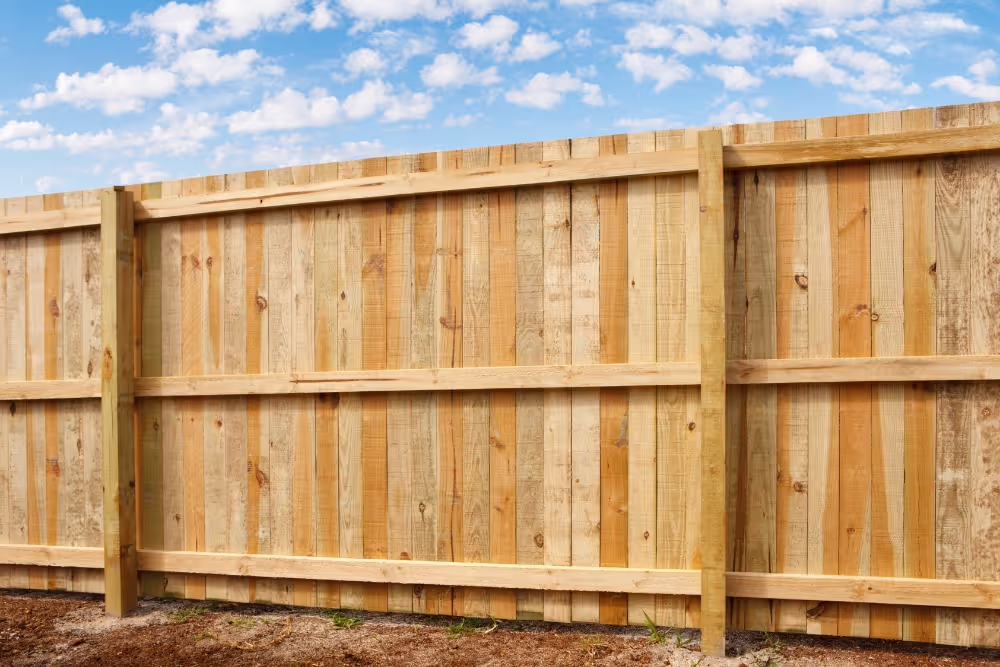
Wood fence installation in Indio is one of the most straightforward fencing projects available, and also one where the desert climate creates specific challenges that a good contractor will account for from the start.
Wood Fence Installation and Repair in Indio
Wood fence installation in Indio typically runs $25 to $60 per linear foot for most standard residential projects. A straightforward 6-foot cedar privacy fence on level ground with accessible posts comes in on the lower end of that range. Taller walls, premium wood species, difficult site access, or significant demolition of existing fencing push costs higher. Repair work, covering anything from replacing broken boards and resetting loose posts to gate rehang and rail replacement, usually runs $250 to $2,500 depending on how much of the fence is involved.
The case for wood fencing in Indio is primarily about upfront cost and speed. It is the least expensive option to install among privacy fence materials, it goes up faster than block wall or vinyl, and it is easy to repair or modify over time. For rental properties, short-to-medium term ownership scenarios, or any situation where budget is the primary consideration, wood is a reasonable choice. The tradeoff is ongoing maintenance and a shorter service life than either vinyl or masonry in the desert climate.
The properties where we see wood fencing hold up best in Indio are those that get proactive treatment applied before installation and then refreshed on a consistent schedule. Unpainted, unsealed wood left to the Coachella Valley sun is on a fast track to splitting, warping, and fading. Wood that is properly sealed before the boards go up and treated again every two to three years performs considerably better and pushes the realistic lifespan toward the upper end of the range.
Wood Types for Fencing in Indio's Desert Climate
The wood species chosen for a fence in Indio matters more than in a cooler or wetter climate. Extreme UV exposure, sustained heat, low humidity, and occasional high-wind events create conditions that expose the weaknesses of lower-grade materials faster than most other environments in California.
Wood Fence Styles in Indio
Cost of Wood Fence Installation and Repair in Indio
Gates add $200 to $600 each for a standard walk gate and $400 to $1,000 for wider double gates. Old fence removal and disposal is typically a separate line item at $3 to $7 per linear foot. Always ask for a written quote that breaks out materials, labor, gate work, and demolition so the numbers across contractors are actually comparable.
Why Wood Fences Degrade Faster in Indio
Indio sits at the eastern end of the Coachella Valley, where summer temperatures regularly exceed 115 degrees and the sun angle is intense from May through September. Those conditions accelerate every failure mechanism wood fencing is subject to.
UV degradation is the biggest factor. Direct desert sun breaks down the lignin in wood, causing the fibers to gray, crack, and lose structural integrity faster than in any coastal or inland valley climate. A wood fence that might last 20 years in a San Diego neighborhood will reach end-of-life in 10 to 12 years in Indio if it receives no maintenance treatment. The difference between a fence that lasts 8 years and one that lasts 15 is almost entirely in the treatment schedule.
Wind is the second major factor. Indio experiences significant wind events through the Coachella Valley corridor, particularly during seasonal weather patterns. How posts are set in concrete determines whether those wind events push panels out of alignment gradually or take a section down entirely. Posts set too shallow in sandy soil with insufficient concrete footing are the most common cause of leaning and fallen wood fence sections after wind events. A contractor who understands Indio's wind exposure should be setting posts to appropriate depths and using adequate concrete volume, not the minimum that gets the fence standing on day one.
Irrigation is the third factor. Drip systems and spray heads near fence posts introduce repeated soil moisture at the base of every post. Wood posts in direct ground contact absorb that moisture and begin to rot from the base up, often without any visible sign above grade until the post is structurally compromised. Steel posts with wood rails and boards, rather than all-wood construction, eliminate the rot-at-grade problem entirely for properties where ground irrigation is consistent.
Repair vs Replacement for Indio Wood Fences
Most wood fence calls in Indio fall into one of two categories: isolated damage that is genuinely worth repairing, or fences that have reached the point where ongoing repairs cost more than a replacement over the next few years. Reading which situation you are in before spending money on repairs is the most important decision.
Permits for Wood Fences in Indio
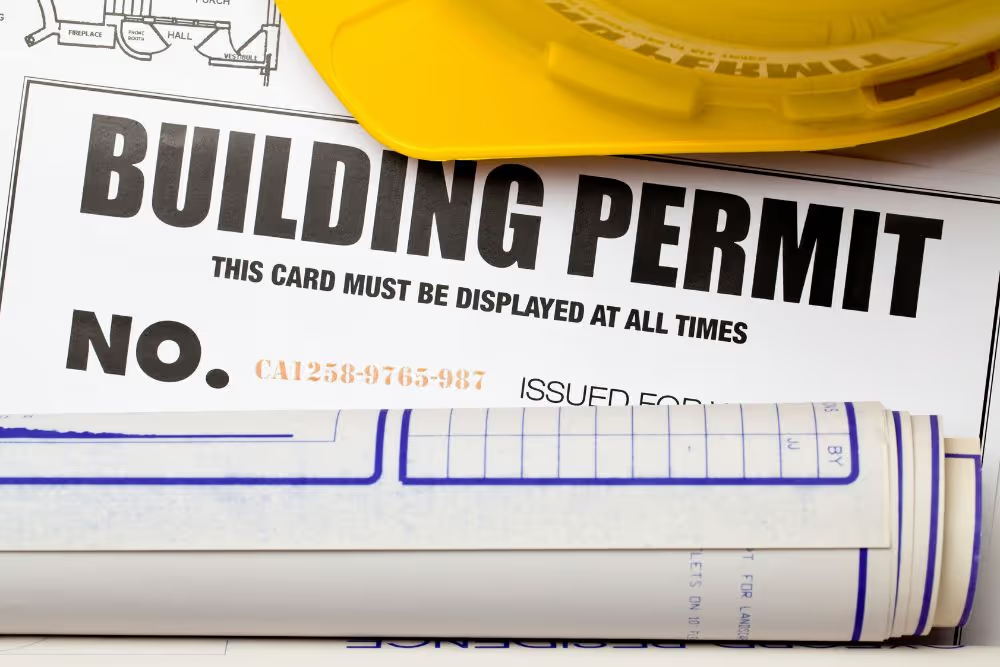
The City of Indio requires a building permit for virtually all fence and wall installations. Their Building and Safety FAQ is explicit: beyond very low retaining walls, all fences and walls require a building permit in Indio. Permit applications are submitted through the city's online Citizen Self-Service portal. The fence height, location on the property, and proximity to property lines all affect what the city will approve, and height limits can vary by zone and location on the lot.
Pool enclosure fencing in Indio must meet California pool barrier code requirements regardless of material. A wood fence used as a pool barrier needs to meet the same height, spacing, and gate requirements as any other pool safety fence. This is not optional and applies to existing fences that may have been built before current code was in place.
HOA communities in Indio have an additional layer of approval that operates separately from the city permit. Many of the planned communities in eastern Indio, including Sun City Shadow Hills and similar developments, specify allowable fence materials, colors, and heights in their CC&Rs. In some communities, wood fencing is not permitted at all for backyard or side yard applications. Verify HOA requirements before pulling a city permit to avoid approvals that conflict with each other.
Wood vs Vinyl vs Block Wall in Indio
Truly Tough Fencing Serving Indio and the Coachella Valley
Our fencing division at Truly Tough Fencing handles wood fence installation, repair, gate work, post replacement, and complete fence removal and replacement across Indio, Palm Desert, Palm Springs, La Quinta, Rancho Mirage, and throughout the Coachella Valley. We pull permits, understand Indio's HOA community requirements, and know how to set posts correctly for desert wind and soil conditions. Call us at 760-343-5785 or reach us at Fencing@TrulyTough.com.
Frequently Asked Questions
How much does wood fence installation cost in Indio?
Most residential wood fence installations in Indio run $25 to $45 per linear foot for a standard 6-foot cedar or pine privacy fence. Premium wood species, horizontal styles, difficult terrain, or significant old fence removal push cost toward $45 to $60 per linear foot. Gates are quoted separately. Always get a written scope that breaks out materials, labor, gates, and demolition so quotes are genuinely comparable.
Do I need a permit for a wood fence in Indio?
Yes. The City of Indio requires a building permit for virtually all fence installations beyond very low walls. Permits are applied for through the city's online Citizen Self-Service portal. Fence height limits vary by location on the property and zoning. Your contractor should pull the permit before any work begins. Unpermitted fences can create problems at resale and may require removal if they do not meet code.
How long does wood fence last in Indio?
Cedar or redwood with proper sealing and regular maintenance every two to three years realistically lasts 12 to 15 years in Indio's desert climate. Pressure-treated pine without consistent maintenance typically reaches end-of-life closer to 8 to 10 years. The single biggest factor in lifespan is whether the wood receives protective treatment before installation and on a consistent schedule afterward.
What is the best wood for a fence in Indio?
Cedar is the most popular choice for the right reasons. It has natural oils that resist rot and UV degradation better than pine, is widely available in Southern California, and performs well at a moderate cost. Redwood outperforms cedar and costs more upfront. Pressure-treated pine is the least expensive and the lowest-performing in desert UV conditions. For most Indio projects, cedar is the right balance of cost and performance.
Should I use steel posts for a wood fence in Indio?
For properties with consistent ground irrigation near the fence line, steel posts with wood rails and boards are worth the modest additional cost. Post rot at grade from repeated soil moisture is the most common cause of early wood fence failure in Indio. Steel posts eliminate that failure mode entirely while maintaining the appearance of a traditional wood fence.
Is wood fence good for Indio's wind and heat?
Wood handles wind loads adequately when posts are set correctly with sufficient depth and concrete volume. Heat and UV are the larger concerns. Extreme desert sun breaks down untreated wood significantly faster than in cooler climates. Choosing a quality species, treating before installation, and maintaining a sealing schedule every two to three years is what separates a wood fence that lasts 15 years from one that needs replacement in 8.
When should I repair vs replace my wood fence in Indio?
Repair when the damage is isolated, the posts are structurally sound, and fewer than a quarter of the fence's components are affected. Replace when posts are rotting at grade across most of the run, the fence is leaning throughout its length, or the boards are UV-degraded beyond sealing. Continuing to repair a fence that has reached systemic failure costs more over two to three years than replacement.
Can I install a wood fence in an HOA community in Indio?
It depends on the community. Some Indio HOA communities specify vinyl or block wall only and do not permit wood for backyard or side yard fencing. Others allow wood with restrictions on height and color. Check your CC&Rs before selecting a material. HOA approval typically needs to come before you pull a city permit to avoid conflicting approvals.







.svg)
