.svg)


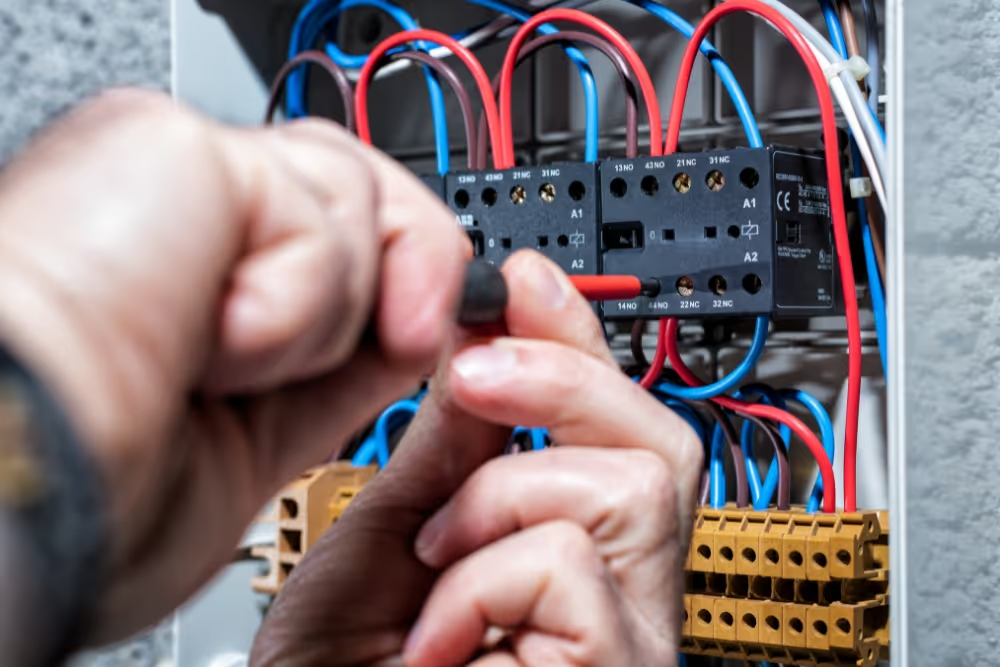
Most Palm Springs homes were built with 100-amp panels. That was enough back then. It is not enough now, and a lot of homeowners are starting to feel that in real, expensive ways.
Why So Many Palm Springs Homes Need an Electrical Panel Upgrade
The short answer is that the homes are old and the electrical demand is not. A lot of residential properties in Palm Springs were built in the 1960s, 70s, and 80s. Standard service at the time was 100 amps. That covered the basics: lights, a refrigerator, a window unit or two. But a typical household today runs central AC, electric water heaters, multiple mini-fridges, gaming setups, smart home devices, and increasingly, EV chargers. A 100-amp panel was not designed for any of that running at once.
The result is a system that is constantly pushed near its limit. Breakers trip. Lights flicker when the AC kicks on. Certain circuits stop working reliably. These are not random glitches. They are symptoms of a panel that is undersized for what the house actually needs.
Upgrading to a 200-amp panel in Palm Springs typically runs between $3,000 and $6,500 for a standard swap. If the work involves relocating the panel, upgrading the service from the utility, or adding EV charger circuits, the total can push closer to $8,000 to $10,000. It is a real number, but it is also a one-time fix that changes the electrical picture for the next 30-plus years.
By the Numbers
These are real-world numbers for the Coachella Valley, not ballpark figures from other markets. Costs vary based on panel location, existing wiring condition, and whether SCE needs to upgrade the utility-side service.
The Signs Your Panel Is Maxed Out
Some of the signs are obvious. Breakers that trip regularly, especially when you run the AC and microwave at the same time, are a clear indicator. Lights that dim or flicker when a large appliance kicks on means the circuit is being pulled too hard. Those are the easy ones.
Others are less obvious. Outlets that feel warm to the touch. A burning smell near the panel. Breakers that you have to reset constantly. If you have older fuse-based equipment or a Federal Pacific or Zinsco panel, that is a more urgent situation. Those brands have a documented history of failing to trip under overload conditions, which is a fire risk.
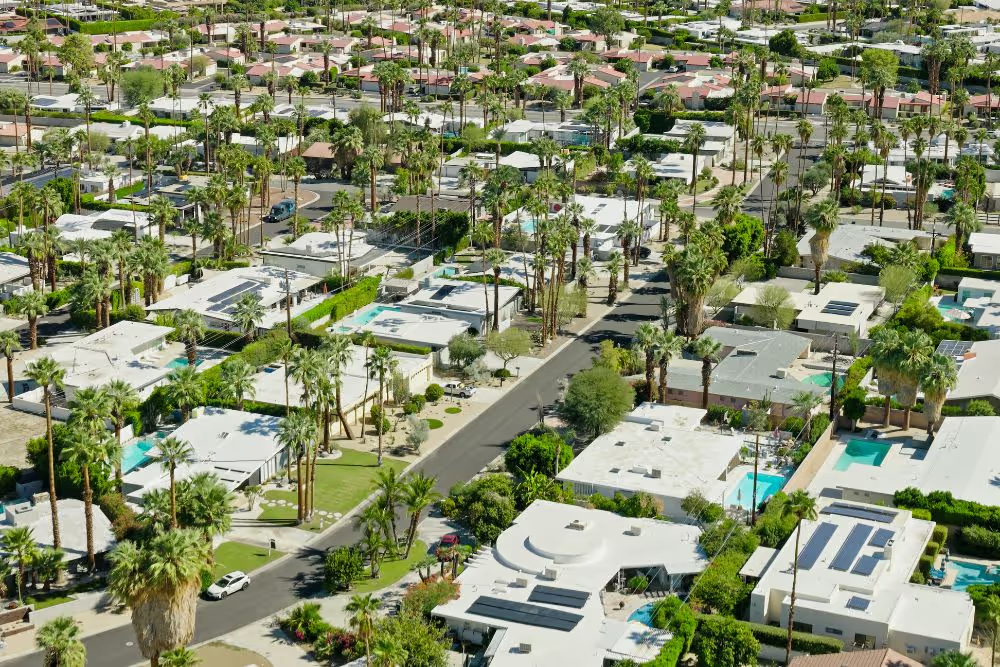
We get calls from homeowners at Vista Las Palmas and other older Palm Springs neighborhoods pretty regularly. The home looks great, it has been updated cosmetically, but the electrical system is still running on original equipment from decades ago. That mismatch is common and worth addressing before it becomes an emergency.
- Frequent breaker trips when running multiple appliances at once
- Lights dimming or flickering when the HVAC system cycles on
- Warm outlets or covers that should be room temperature
- Burning or plastic smell near the panel or outlets
- Federal Pacific or Zinsco panel still in service
- Panel older than 25 to 30 years without any upgrades
Solar and EV Chargers Are the Biggest Drivers Right Now
If you are planning to add solar or an electric vehicle charger, your panel situation matters a lot. A Level 2 home charger draws 30 to 50 amps on a dedicated 240V circuit. On a 100-amp panel that is already handling an AC system and water heater, you simply do not have the headroom.
Solar is the same story. The NEC 120% rule limits how much solar backfeed a panel can accept based on its bus rating. On a 100-amp panel, you might only be able to support a 3 to 4 kilowatt system, which is small by Coachella Valley standards. Most homeowners here want systems in the 8 to 12 kilowatt range. That requires a 200-amp panel.
If you are already looking at solar installation, bundling the panel upgrade at the same time is almost always the right call. The electrician is already there. The permit process is already in motion. Doing them separately means two rounds of permits, two inspection visits, and duplicate labor costs. We see homeowners skip the bundle, then call back six months later for the upgrade they should have done the first time.
What the Upgrade Process Actually Looks Like in Palm Springs
Most straightforward 100-amp to 200-amp upgrades finish in one to two days. If SCE needs to swap the meter base or upgrade the service drop, that can add a few days depending on their scheduling. Your electrician should coordinate that on your behalf.
California Rebates Can Offset a Significant Chunk of the Cost
A lot of homeowners do not know this exists. California has rebate programs for electrical panel upgrades when the upgrade is tied to electrification work like an EV charger, heat pump, or solar system. Through programs connected to SCE and the state's TECH Clean California initiative, income-qualified households can receive up to $4,200. Geographic-based rebates for disadvantaged communities can reach $2,100.
Even if you do not qualify for the income-based tier, there are still incentive pathways worth exploring. The key requirement is that the panel upgrade has to be connected to an approved electrification project, not just a standalone swap. Your electrician or solar contractor should be able to walk you through eligibility when they put together your quote.
The rebate funds are first-come, first-served. They run out. So if a panel upgrade is on your list and you are also adding solar or an EV charger, it is worth checking availability sooner rather than waiting until fall or winter when the queue gets long.
How Upgrading Your Panel in Palm Springs Affects Home Value
When a buyer or inspector looks at a home with an original 100-amp panel, it goes on the list of things that need to be done. It is a negotiating point. It can delay a sale or knock money off the offer. A 200-amp panel with a clean permit history signals that the home has been maintained and is ready for modern use.
For anyone planning to sell in the next few years, the upgrade math is straightforward. The cost of the panel upgrade is significantly less than a price reduction or concession during escrow. And for homes in the Coachella Valley where solar and EV charging are increasingly standard expectations, a properly sized panel is becoming a baseline, not a bonus.
Our electrical team handles panel upgrades across Palm Springs and the full valley. If you want to talk through what your current panel situation looks like and what an upgrade would actually involve for your home, you can reach us at 760-343-5854 or at Electrical@TrulyTough.com.
100-Amp vs. 200-Amp vs. 400-Amp: Which One Do You Actually Need
For most single-family homes in Palm Springs, 200 amps is the right answer. It gives you enough headroom for central AC, an electric water heater, standard appliances, a solar system, and one EV charger running simultaneously without pushing the panel to its limit.
400-amp service is typically for larger properties, homes with multiple EV chargers, whole-home battery backup systems, or vacation rentals with heavy electrical loads running around the clock. It is more expensive and requires a bigger utility-side service, but for the right situation it is the correct size to spec from the start.
Going from 100 to 150 amps is generally not worth it. The cost difference between 150 and 200 is minimal, and the capacity difference is significant. Most electricians will push you toward 200 for that reason. I have never seen a homeowner regret going to 200 amps. I have seen plenty who wished they had done it sooner.
Frequently Asked Questions
How much does it cost to upgrade an electrical panel in Palm Springs?
A standard 100-amp to 200-amp upgrade in Palm Springs typically runs between $3,000 and $6,500. Projects that involve panel relocation, utility service upgrades, or adding EV charger circuits can push costs to $8,000 to $10,000 or more.
Do I need a permit to upgrade my electrical panel in Palm Springs?
Yes. Panel upgrades require a permit from the City of Palm Springs building department and a final inspection before power is restored. Any contractor who skips the permit is doing unpermitted work, which creates problems when you sell or make an insurance claim.
How long does an electrical panel upgrade take?
Most standard upgrades take one to two days. If Southern California Edison needs to disconnect and reconnect the utility service, that coordination can add a few days depending on their schedule.
Will I need a panel upgrade to add solar in Palm Springs?
Very likely, yes. If your home has a 100-amp panel and you want a solar system larger than 3 to 4 kilowatts, a 200-amp upgrade is required to meet the NEC 120% rule. Your solar contractor should flag this during the design phase.
Can I get a rebate for upgrading my electrical panel in California?
Yes, in certain cases. Through SCE and TECH Clean California programs, income-qualified households can receive up to $4,200 when the panel upgrade is tied to an approved electrification project like an EV charger or solar install. Funds are limited and first-come, first-served.
Is a 200-amp panel enough for an EV charger and solar together?
For most homes, yes. A 200-amp panel can handle a solar system and a Level 2 EV charger running alongside normal household loads. Homes with two EVs, battery backup, or very high overall electrical demand may want to evaluate 400-amp service.
What happens if I do not upgrade my panel and just keep resetting breakers?
Consistently overloaded panels create heat at connections and inside the panel box. Over time that leads to wiring degradation, arc faults, and a real fire risk. Frequent tripping is the panel telling you it is past its limit, not a quirk you can just live with.






.svg)
