.svg)


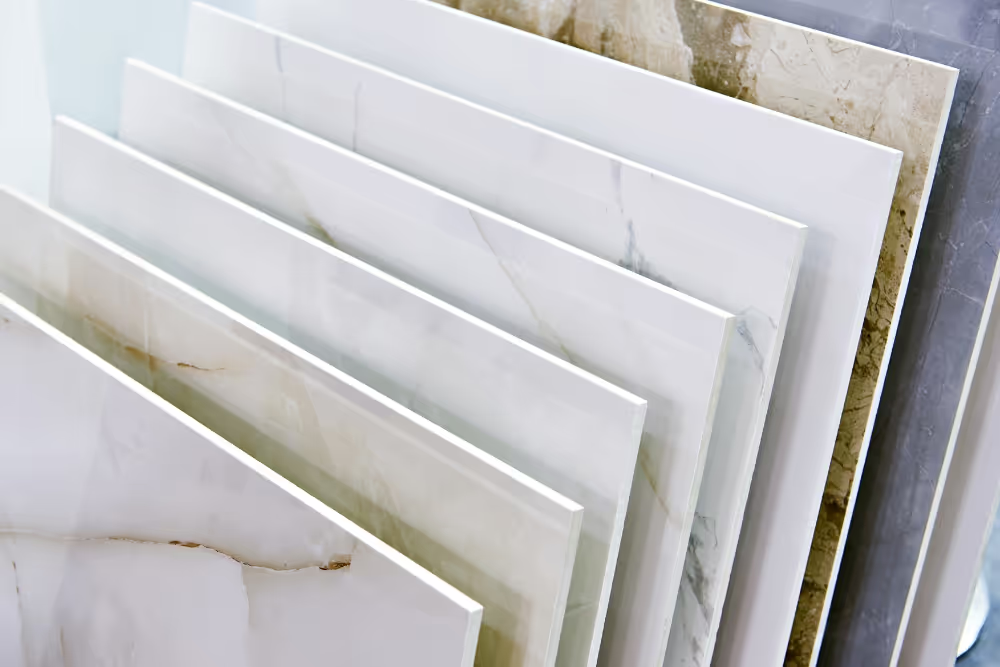
Picking between travertine and porcelain tile is one of the most common decisions homeowners face on flooring and pool deck projects here in the desert, and the right answer is genuinely different depending on where the tile is going and how much upkeep you are willing to do.
Travertine vs Porcelain Tile in Palm Springs
For outdoor pool decks and patios in Palm Springs, travertine stays cooler underfoot than most alternatives and gives you a natural, earthy look that fits the desert landscape. For indoor floors and any application where you want zero maintenance, porcelain is harder, denser, and never needs sealing. Travertine runs $17 to $35 per square foot installed for standard grade. Porcelain typically comes in at $15 to $30 per square foot installed, making the two materials competitive on price depending on grade and project scope.
The climate here changes the calculation compared to most of California. We get UV exposure and surface temperatures that push past what most tile products are even tested against. That matters a lot for color retention, thermal comfort barefoot, and how fast sealer breaks down on porous materials like travertine.
Neither material is universally better. The right one depends on where it is going, how the space is used, and whether you want to seal a floor every couple of years or never think about it again.
Cost Comparison at a Glance
These ranges reflect Southern California pricing as of 2025. Premium travertine grades, large-format tiles, complex patterns like Versailles, or projects requiring significant subfloor prep will push costs toward or beyond the high end. Always factor in resealing costs for travertine, which adds $1 to $2 per square foot every one to two years outdoors.
How Palm Springs Heat Affects Both Materials
This is where the desert context really separates the two options. Surface temperatures on a Palm Springs pool deck in July are not the same as what you would experience in San Diego or Los Angeles. Dark-colored porcelain in direct sun can get uncomfortably hot underfoot well before air temperatures peak. Light travertine, because of its natural mineral composition and lighter tones, reflects more radiant heat and stays noticeably cooler than most other hard surfaces in the same conditions.
That single factor is why travertine has dominated outdoor pool deck installations in hot desert markets for decades. If you are barefoot around a pool in 110-degree heat, what the surface feels like matters more than almost anything else on your spec sheet. Travertine consistently performs better here than darker porcelain options.
The caveat is finish and color. Light, honed, or tumbled travertine stays coolest. A dark walnut travertine or a highly polished finish will absorb more heat than a standard ivory or cream honed slab. If you are going outdoors with travertine, stick to lighter tones and avoid high-polish finishes that create glare and heat retention.
For porcelain outdoors, the same logic applies to color, but the material itself runs hotter than travertine at equivalent tones. If you are committed to porcelain for a pool deck, choose the lightest available matte or lightly textured finish and set it with light-colored grout. Some newer large-format porcelain pavers are engineered with a slightly higher albedo specifically for hot climates, but barefoot comfort still does not match travertine.
Side-by-Side Comparison: Travertine vs Porcelain
Travertine for Pool Decks and Patios in Palm Springs
Travertine has been the go-to pool deck material in desert communities across the Southwest for good reason. The thermal properties are genuinely different from other tile and paver options, and in a climate where your pool deck sees daily use from May through October, that comfort factor matters every single day.
The typical finish for an outdoor pool deck is honed or tumbled. Honed gives a smooth but matte surface. Tumbled has a slightly rougher, more worn texture that provides better grip underfoot. Both are appropriate for wet pool environments. Avoid polished travertine outdoors entirely. It is slippery when wet and reflects enough glare to be genuinely unpleasant in direct desert sun.
The maintenance piece is real and worth being honest about. An unsealed travertine pool deck in Palm Springs will absorb sunscreen, tanning oils, and pool splash within months and show staining that is difficult to remove. A properly sealed deck, resealed on schedule, avoids all of that. It is not a complicated task, but it is a recurring one. If you want a pool deck that requires nothing from you maintenance-wise, travertine is not the right choice.
One thing people do not always think about before a tile project like this is the condition of the concrete slab underneath. Our concrete team regularly handles slab prep, leveling, and repairs ahead of tile installations. Travertine in particular has zero tolerance for an uneven or cracked substrate. Getting the slab right before any tile goes down is not optional, and it is worth having it assessed before any materials are ordered.
We installed travertine around a pool at a home in Palm Valley Country Club a couple of years back. The owner had previously tried a light-colored concrete paver and was not happy with the heat retention. The travertine made a noticeable difference for their barefoot comfort. Our pools team was already on site handling a separate scope of work, so we were able to coordinate the tile install alongside it and save the homeowner a second mobilization charge.
Porcelain Tile for Indoor Flooring in Palm Springs Homes
For interior floors, porcelain is a very strong option, especially in a desert home where you are tracking in dust, sand, and sunscreen constantly. The non-porous surface does not absorb any of that, and a quick mop brings it back to clean. It never needs sealing. It does not react to spills. You can use virtually any cleaner on it without worrying about damaging the surface.
Large-format porcelain, 24-by-24 or larger, has become increasingly popular in Palm Springs homes over the past few years. Fewer grout lines create a cleaner visual, and wider tiles work well with the open floor plans common in mid-century modern and contemporary desert homes. The installation is more demanding because a perfectly flat subfloor is required, but the result is a very seamless, high-end look.
Subfloor condition is where flooring and concrete work overlap directly. Large-format porcelain on a slab with dips or high spots will crack within a year. We always assess the floor flatness before any large tile goes down and correct what needs correcting before a single tile is set. Skipping that step is the most common reason tile floors fail prematurely.
Porcelain that mimics travertine has also improved significantly. The current generation of digital-print porcelain with realistic surface texture is genuinely convincing in most residential applications. You get the look of natural stone without the porosity, the sealing schedule, or the sensitivity to pool chemicals.
After any new tile floor goes in, it is worth thinking about the walls. Our painting team frequently steps in right after flooring projects to freshen up baseboards, walls, and trim that look worn once the new floor draws the eye. New flooring and fresh paint together make a much stronger impression than either one alone, and it is usually a natural sequence to coordinate.
If the space you are tiling also needs new drywall around a bathroom, laundry room, or any room that had water damage, our drywall team can handle that before tile goes up on the walls. Getting trades sequenced right the first time saves a lot of unnecessary disruption.
Which One Is Right for Your Palm Springs Project
If the tile is going on an outdoor pool deck or patio where barefoot comfort in summer heat is the primary concern, travertine is the better material for most homeowners. The thermal properties are not matched by standard porcelain, and the natural look fits the desert landscape and the earthy, warm palette that complements most Palm Springs architectural styles.
If you want zero maintenance and the installation is going somewhere that sees heavy foot traffic, food and drink spills, or pool chemicals on a regular basis, porcelain is the smarter call. No sealing, no staining risk, no worrying about the wrong cleaner. It will outlast travertine in high-abuse situations and give you a consistent look for decades.
For interior spaces, the choice really comes down to aesthetics and how much variation you want in your floor. If you want the authentic feel of natural stone in an entryway or bathroom, travertine is harder to replicate. If you want low maintenance and consistent color in a kitchen or living room, porcelain wins.
- Outdoor pool deck, barefoot comfort priority — travertine, honed or tumbled, light tone
- Outdoor patio, low maintenance priority — exterior-rated porcelain, light matte finish
- Indoor entry or bathroom, natural stone look — travertine, honed, with a sealing plan
- Kitchen or high-traffic living area — porcelain, large format, minimal grout lines
- HOA or rental property — porcelain wins for durability and zero-maintenance ownership
- Luxury resale value — premium travertine in the right rooms adds more perceived value
Our flooring team installs both travertine and porcelain throughout the Coachella Valley. If you want to talk through the right choice for your specific project, reach us at 760-343-5885 or at Flooring@TrulyTough.com.
Frequently Asked Questions
Is travertine or porcelain better for a Palm Springs pool deck?
Travertine is generally the better choice for barefoot comfort around pools in the desert. Light-colored honed or tumbled travertine stays significantly cooler underfoot in direct summer sun than most porcelain options. Porcelain is preferred for homeowners who want zero maintenance and do not want to seal the deck on a regular schedule.
How much does travertine tile installation cost in Palm Springs?
Standard-grade travertine installed runs $17 to $35 per square foot in the Coachella Valley. Premium first-grade travertine or complex patterns like Versailles can push costs to $40 or more per square foot. Material alone ranges from $7 to $30 per square foot depending on grade.
How much does porcelain tile installation cost in Palm Springs?
Most porcelain tile installations in the Palm Springs area run $15 to $30 per square foot including materials and labor. Large-format tiles and premium product lines push toward the high end. Porcelain is generally less expensive to install than travertine because it is easier to cut and handle.
Does travertine need to be sealed in the desert?
Yes, and more frequently than in cooler climates. Outdoors in Palm Springs, plan on resealing travertine every one to two years. The intense UV and heat accelerate sealer breakdown. Indoors the schedule relaxes to every two to four years depending on use. Unsealed travertine stains quickly, especially around pools.
Will porcelain tile fade in the Palm Springs sun?
Porcelain tile color runs through the body of the tile and will not fade from UV exposure. This is one of its clear advantages over natural stone in a desert environment. Dark-colored porcelain will still absorb heat, but the color itself is UV stable.
Can you use travertine indoors and porcelain outdoors in the same home?
Absolutely, and this combination is common in Palm Springs homes. A typical configuration is honed travertine in interior living spaces transitioning to porcelain or a different travertine finish on outdoor areas. The key is managing the transition detail between the two materials at the threshold.
Which tile is better for a Palm Springs home sale?
Premium travertine in the right locations, especially entryways, bathrooms, and pool decks, tends to add perceived value in a luxury desert market. Porcelain performs better in rentals and high-traffic spaces because buyers and property managers recognize the lower maintenance burden. The grade and condition of the tile matters more than the material choice at the point of sale.
How long does travertine last compared to porcelain?
Both materials are extremely long-lasting when properly installed. Well-maintained travertine can last 20 years or more. Porcelain is harder and more resistant to chipping under heavy use, and with no sealing requirements its appearance is generally easier to maintain over time. For outdoor applications in the desert, porcelain has fewer failure modes than travertine if maintenance is inconsistent.







.svg)
