.svg)



Tile roof inspection and repair in La Quinta is one of those maintenance decisions where the timing matters more than most homeowners realize. The tile itself almost never fails. What fails is what is underneath it.
Tile Roof Inspection and Repair in La Quinta
Tile roof repair in La Quinta runs $300 to $1,200 for minor isolated work: a handful of broken or slipped tiles, a failed pipe boot, or a small flashing repair at a penetration. Moderate repairs covering multiple problem areas, valley work, or a section of underlayment run $1,200 to $3,500. Underlayment replacement across a significant portion or the full roof, where all tile is removed, new felt or synthetic underlayment is installed, and tile is reset, runs $3,000 to $10,000 or more depending on roof size, pitch, and access.
Tile roof inspection in La Quinta is relevant for any home where the roof is ten or more years old, any property changing hands, and any time there is a visible ceiling stain or an active leak. The inspection itself is not a complex event if the contractor is thorough. It involves getting on the roof, walking carefully, looking at every penetration, valley, and edge, lifting representative tile sections to assess the underlayment, and checking flashing at every transition. What takes expertise is correctly reading what is found and distinguishing between a repair situation and a re-roof conversation.
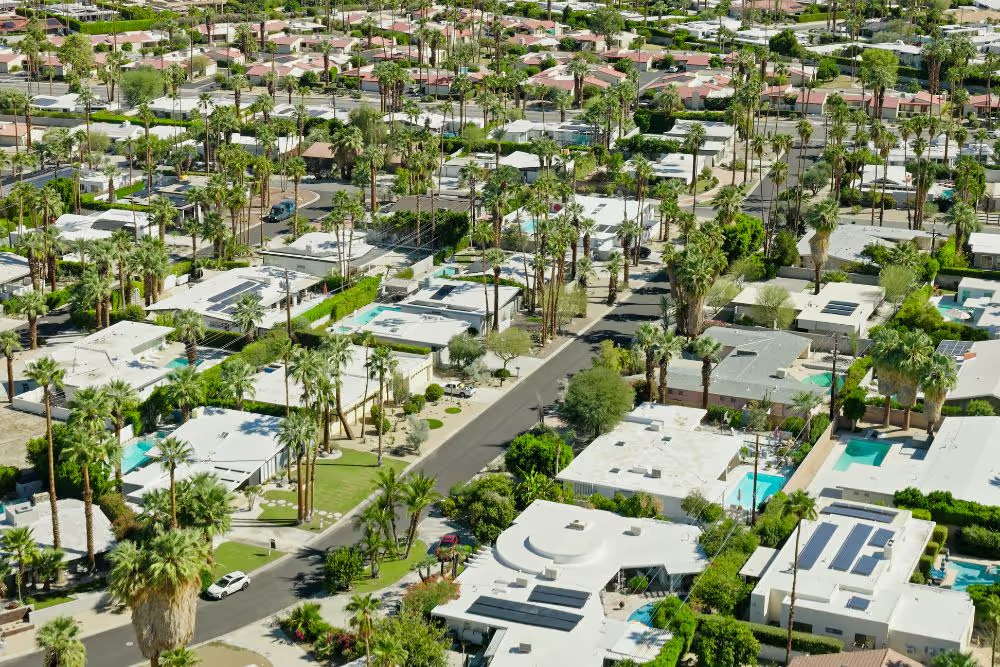
La Quinta's housing stock skews heavily toward Spanish, Mediterranean, and desert contemporary architecture, and the overwhelming majority of those homes have concrete or clay tile roofs. Tile is the right material for this climate in almost every way except one: the underlayment beneath it degrades faster than the tile itself. In desert conditions with extreme heat, UV, and thermal cycling, underlayment that would last 30 years in a moderate climate may reach the end of its practical life in 15 to 20 years. The tile looks fine from the driveway. The underlayment underneath it tells a different story.
Why Tile Lasts and Underlayment Does Not
This is the single most important thing to understand about tile roofing in La Quinta. The tile itself, whether concrete or clay, is rated to last 40 to 50-plus years. In the Coachella Valley's dry, low-humidity climate with minimal freeze-thaw stress, tile holds up extremely well. A roof that was tiled in 1995 very likely has tile that is still structurally sound.
The underlayment beneath that tile is a different situation. Traditional felt underlayment, which was standard through most of the 1990s and early 2000s, has a practical service life of 15 to 25 years under desert conditions. At year 20 or 25, that felt has dried out, become brittle, and cracked in ways that are not visible from above because the tile is covering it. The roof looks normal. But every time it rains, water that gets past the tile line, and some always does, is reaching the deck because the felt is no longer functioning as a barrier.
This is the source of the vast majority of tile roof leaks we investigate in La Quinta. The tile is fine. The underlayment has expired. The homeowner calls about a water stain on a ceiling after the first winter rain, and what looks like a localized problem turns out to be a roof that has been gradually letting water past the underlayment for one or two seasons already. By the time there is a ceiling stain, the felt underneath has been wet and drying repeatedly for a while.
Tile Roof Types Common in La Quinta
What a Proper Tile Roof Inspection Covers
A real tile roof inspection is not a contractor walking across the ridge for ten minutes. A thorough inspection takes time because every problem area on a tile roof requires hands-on investigation to assess correctly. The places where tile roofs fail most consistently in La Quinta are specific and predictable.
Desert Climate and Tile Roof Performance in La Quinta
La Quinta's climate is genuinely favorable for tile roofing in most respects. The extreme heat that makes it hard on other materials does not significantly degrade the tile itself. What it does affect is everything around and beneath the tile.
- Thermal cycling is the primary stressor. A La Quinta roof surface can reach 170 degrees on a summer afternoon and drop to 45 or 50 degrees on a winter night. That range of expansion and contraction is repeated thousands of times over the life of the roof. The tile handles it. The mortar at hip and ridge lines accumulates micro-cracking over years. The felt underlayment dries out, becomes brittle, and loses its ability to shed water. Flashing sealants harden and crack. Everything that is not inert ceramic or concrete is being stressed by thermal cycling constantly.
- Wind-driven sand and dust. Coachella Valley wind events drive fine abrasive particles across the roof surface and into every gap between tiles. That material accumulates in valleys, around penetrations, and against hip and ridge mortar lines, holding moisture and accelerating deterioration. Regular debris clearing from valleys and gutters extends the life of the flashing in those areas meaningfully. On many La Quinta properties we inspect, blocked valleys are contributing to standing water contact with flashing that would otherwise drain freely.
- UV degradation of accessories. Everything on the roof that is not tile, including pipe boots, sealants, flashing tape, and felt underlayment, is subject to UV degradation. In La Quinta's high UV index desert environment, rubber pipe boots that might last 25 years in a coastal climate may show significant cracking and hardening in 15 years. Any inspection should treat UV-sensitive components as the highest-priority items to assess on roofs over 12 to 15 years old.
- Monsoon-season rain on dry concrete. La Quinta's summer monsoon events, though infrequent, deliver concentrated rainfall on roofs that have been hot and dry for months. Concrete and clay tile that has been sitting at high temperatures sheds water differently than the same roof after a cool, wet winter. Thermal shock from cool rain on a very hot surface can accelerate micro-cracking in older mortar at ridge lines. Monsoon events are also when underlayment that has been silently degrading for years first shows up as a ceiling stain.
Cost of Tile Roof Repair in La Quinta
Roof size, pitch, tile type, and access all affect final cost. Two-piece barrel tile systems cost more to repair and re-set than single-piece S-tile because each tile must be individually handled. Roofs with steep pitches or limited access require more labor time. Always request a written scope that separates tile work, flashing, and underlayment so estimates are genuinely comparable across contractors.
Repair vs Re-Roof for La Quinta Tile Roofs
The repair vs re-roof decision on a tile roof comes down almost entirely to the condition of the underlayment, not the tile. Tile that is in good condition can be removed, stored, and re-set over new underlayment. A significant portion of the original tile can often be reused, which reduces material cost on a re-roof considerably compared to starting from scratch with all new tile.
Permits and Licensing for La Quinta Tile Roof Work
Minor tile repairs, replacing a few broken tiles, or fixing a single pipe boot, typically do not require a permit in La Quinta. Large-area underlayment replacement, full re-roofing, and any structural work require a permit through the City of La Quinta. All permit applications are submitted through the city's HUB online permit portal. Your contractor should pull the permit and schedule inspections on your behalf. An unpermitted re-roof creates complications at resale and may affect insurance coverage.
California requires all roofing contractors to hold an active C-39 Roofing Contractor license issued by the Contractors State License Board. Verify any contractor's license status through the CSLB website before signing a contract. License verification is free and takes about a minute. A contractor who cannot provide an active, verifiable C-39 license number should not be working on your roof.
Truly Tough Roofing Serving La Quinta and the Coachella Valley
Our roofing division at Truly Tough Roofing handles tile roof inspections, repairs, and full re-roofs across La Quinta, Palm Springs, Palm Desert, Rancho Mirage, Indio, and throughout the Coachella Valley. We inspect underlayment correctly, give straight assessments on repair vs re-roof decisions, and pull permits when the scope requires them. Our roofing work is led by Alber Melara, a Coachella Valley native with over 20 years of hands-on roofing experience. Call us at 760-343-5807 or reach us at Roofing@TrulyTough.com.
Frequently Asked Questions
How much does tile roof repair cost in La Quinta?
Minor repairs including broken tile replacement, a failed pipe boot, or isolated flashing work typically run $300 to $1,200. Moderate repairs covering multiple areas or valley flashing run $1,200 to $3,500. Partial or full underlayment replacement, where tile is removed and reset over new underlayment, runs $3,000 to $10,000 or more depending on roof size, tile type, and pitch.
How often should a tile roof in La Quinta be inspected?
Every two to three years is the right interval for a routine inspection on a tile roof in La Quinta. Additionally, any roof should be inspected after a significant wind event, after any trade work on the roof (HVAC service, solar installation), before buying or selling a home, and whenever a ceiling stain or active leak appears. Roofs over 15 years old should be inspected annually.
Why is my tile roof leaking if the tile looks fine?
Because the tile is almost never the cause of a tile roof leak in La Quinta. The tile looks fine from the driveway and often even from the roof surface. What fails is the underlayment beneath it, which is not visible without lifting the tile to inspect it. Traditional felt underlayment has a practical service life of 15 to 25 years in desert conditions. When it expires, water that gets past the tile line reaches the deck because the felt is no longer functioning as a water barrier.
Can the original tile be reused when replacing underlayment?
In most cases, yes. Concrete and clay tile that is in structurally sound condition can be carefully removed, stored, and re-set over the new underlayment. Reusing original tile is standard practice on La Quinta re-roofs and reduces material cost significantly. Some breakage occurs during removal, so additional matching tiles are typically ordered to supplement what survives. Clay tile from older installations can sometimes be harder to match exactly.
Do tile roof repairs require a permit in La Quinta?
Minor repairs generally do not. Large-area underlayment replacement, full re-roofing, and structural work require a permit through La Quinta's Building Division, applied through the city's online HUB portal. Your contractor should handle permitting and inspection scheduling. Always confirm with your contractor what is included in their scope regarding permit responsibility before work begins.
What are the most common problem areas on La Quinta tile roofs?
Roof valleys, pipe boots and vent penetrations, HVAC equipment curbs, ridge and hip mortar lines, and solar panel mounting penetrations are the most consistent failure points. Valleys accumulate debris that holds moisture against flashing. Pipe boots degrade in desert UV faster than surrounding tile. Ridge mortar develops micro-cracking through years of thermal cycling. Solar penetrations are only as reliable as the flashing detail that was installed when the panels went up.
Should I re-roof before adding solar panels in La Quinta?
Yes, if your tile roof is within five to eight years of needing underlayment replacement. Removing and reinstalling a solar array mid-life adds significant cost and scheduling delays on top of the re-roof itself. An inspection before solar permitting tells you where the roof stands. If the underlayment has 15 or more years of life remaining, solar installation on the existing roof is appropriate. If it is close to the end of its service life, sequence the re-roof first.
How do I find a licensed roofing contractor in La Quinta?
California roofing contractors must hold an active C-39 Roofing Contractor license issued by the Contractors State License Board. You can verify any contractor's license status at no cost through the CSLB website. Always verify before signing anything. A contractor who cannot provide a verifiable active C-39 license number should not be performing roofing work on your property.








.svg)
