.svg)



Tankless water heaters work well in the desert. But the desert creates a specific set of conditions that changes how you need to approach the installation, the sizing, and the maintenance. Knowing that upfront saves a lot of money and frustration.
Is a Tankless Water Heater Worth It in Palm Springs?
Yes, for most Palm Springs homeowners, a tankless water heater is worth it. You get on-demand hot water, a unit that lasts 20-plus years versus the 10 to 12 years you get from a standard tank, and real energy savings from not keeping 40 to 50 gallons of water hot around the clock. Installation typically runs $1,400 to $3,900 depending on the unit and whether gas line or venting modifications are needed.
The one thing that changes the math out here compared to most of the country is the water. Coachella Valley groundwater runs moderately to very hard depending on where you are in the valley. Palm Springs groundwater averages around 230 parts per million. That mineral load hits tankless systems hard if the unit is not sized right and the water is not treated. A tankless water heater that is not maintained in this climate is one that fails early.
So the honest answer is: yes, it is worth it, with the right setup. Our plumbing team installs and services tankless systems across Palm Springs and the full valley. We can size the unit correctly for your home and tell you exactly what the water quality means for your maintenance schedule.
By the Numbers
Installation cost varies based on gas or electric, whether the gas line needs upsizing, venting requirements, and unit capacity. Get a site-specific quote before budgeting.
How Hard Water in Palm Springs Affects Tankless Units
This is the part most people do not hear about when they are shopping for a tankless water heater and it is the most important factor for anyone in the Coachella Valley. Hard water and tankless heaters have a difficult relationship.
When water gets heated rapidly inside a tankless unit's heat exchanger, the calcium and magnesium dissolved in the water precipitate out and form a hard scale on the internal components. That scale builds up over time and acts like an insulating layer between the heating element and the water. The unit has to work harder to heat the same amount of water. Flow rates drop. Error codes start showing up. In severe cases the heat exchanger fails entirely.
Even a thin layer of scale causes problems. Research suggests that as little as a sixteenth of an inch of limescale buildup can cut heating efficiency significantly and shorten the life of the unit by years. In a climate where groundwater averages around 230 PPM, that buildup happens faster than in most parts of the country.
The fix is not complicated, but it is non-negotiable out here. Annual descaling at minimum, twice a year if your water is on the harder end or you are running the system hard. A whole-house water softener or an inline scale-prevention device before the unit makes a meaningful difference in how often maintenance is needed and how long the heat exchanger lasts.
Gas vs. Electric Tankless Water Heaters for Desert Homes
Most Palm Springs homes run on natural gas and for those homes, a gas tankless unit is almost always the better call. Gas heaters have higher flow rates, can handle multiple simultaneous hot water demands, and cost less to operate than electric in most California utility rate structures. Brands like Rinnai and Navien have proven track records in the desert climate and are the ones we see holding up well long term.
The catch with gas tankless is the installation. Gas units need proper venting to the outside, and the gas line feeding them often needs to be upsized from the original line that served a tank heater. That adds cost to the install. If the existing gas line is undersized and the venting location is not straightforward, the job gets more involved. A site assessment before buying the unit is worth doing.
Electric tankless units cost less upfront and are simpler to install since there is no venting requirement. They make sense for point-of-use applications, like a guest casita or a pool bathroom that is far from the main water heater. For whole-house hot water in a typical Palm Springs home, most of the time gas is the more practical and cost-effective choice over the long run.
Sizing a Tankless Water Heater for a Palm Springs Home
Sizing is where a lot of DIY installs and even some contractor installs go wrong. A tankless unit is rated by its flow rate in gallons per minute. You need to know your peak demand, meaning the maximum number of hot water fixtures that could run at the same time, and size the unit to handle that.
A typical two-bathroom Palm Springs home might need a unit rated at 7 to 9 GPM. A larger home with multiple showers, a soaking tub, and a dishwasher running simultaneously could need 10 to 12 GPM or more. If you undersize the unit, you get lukewarm water during peak demand. That is one of the most common complaints we hear from people who bought based on price rather than capacity.
In the desert specifically, one extra consideration is the incoming water temperature. Unlike colder climates where groundwater comes in at 45 to 55 degrees and requires a big temperature rise to reach 120 degrees, Coachella Valley ground water and the water sitting in supply lines in the summer can come in significantly warmer. That means the unit does not have to work as hard to hit target temperature in summer. In winter the gap closes. Size for the worst case, which is winter demand at peak flow.
We worked on a home recently near Mountain View Country Club where the previous installer had put in a unit that was one size too small. Two showers running at the same time dropped the output temperature noticeably. We swapped it for the correct capacity and the problem went away immediately. Get the sizing right the first time.
What a Tankless Water Heater Installation Actually Involves in Palm Springs
A straightforward swap from an old tank to a tankless unit typically takes one day. If the gas line needs upsizing or the venting path is more involved, add another half day. The permit inspection usually happens within a few days of the install.
Tankless vs. Tank Water Heaters in the Desert: A Straight Comparison
The desert creates some specific conditions that shift the comparison between tankless and tank heaters in ways that are worth understanding before you decide.
Maintenance Realities for Tankless Water Heaters in the Palm Springs Area
This is the part of the conversation that does not always happen at the point of sale. A tankless water heater in Palm Springs is not a set-it-and-forget-it appliance. The desert water demands a maintenance commitment.
Annual descaling is the baseline. That means connecting a pump to the service ports, circulating a descaling solution through the heat exchanger for 45 minutes or so, then flushing with clean water. The process removes the calcium scale that has built up over the year and restores the unit's heating efficiency. If you skip it for two or three years, the scale hardens and the flush is either much harder or no longer fully effective.
The inlet filter screen needs to be checked and cleaned periodically. In a dusty desert environment, air intake filters on the unit pick up debris faster than in other climates. If the airflow is restricted, the unit throws errors and performs poorly.
A whole-house water softener upstream of the tankless unit is the best investment you can make alongside the installation. It does not eliminate maintenance but it stretches the descaling interval significantly. Homeowners who have both a softener and a tankless unit and keep up with annual service are the ones hitting 20-year service lives without major repairs.
- Annual descaling is non-negotiable — twice a year if your water is on the harder end or you have no softener
- Inlet filter screen should be cleaned every few months in a dusty environment
- Air intake filter on the unit needs to be checked annually
- Water softener or scale inhibitor upstream of the unit dramatically extends the maintenance interval
- Professional service check every one to two years catches issues before they become failures
Frequently Asked Questions
Is a tankless water heater worth it in Palm Springs?
Yes, for most homes. You get continuous hot water, a 20-plus year lifespan, and meaningful energy savings. The key is proper sizing, correct installation, and a real maintenance plan that accounts for the Coachella Valley's hard water.
How much does tankless water heater installation cost in Palm Springs?
Most residential installations run between $1,400 and $3,900 including the unit and labor. If the gas line needs upsizing or the venting path requires additional work, cost increases from there. Get a site-specific quote rather than relying on general estimates.
How often does a tankless water heater need to be descaled in the desert?
At minimum once a year in Palm Springs. If your home does not have a water softener and your water hardness is on the higher end, twice a year is the smarter schedule. Skipping descaling is the fastest way to shorten the life of the unit.
Does hard water damage tankless water heaters?
Yes. Mineral scale builds up on the heat exchanger, reduces efficiency, causes error codes, and eventually leads to component failure if not addressed. Annual descaling and upstream scale prevention are essential for any tankless unit in the Coachella Valley.
Gas or electric tankless water heater for a Palm Springs home?
Gas is the right choice for most whole-house applications. Higher flow rates, lower operating cost, and better performance under peak demand. Electric units work well for point-of-use applications like a casita or remote bathroom.
Do I need a permit to install a tankless water heater in Palm Springs?
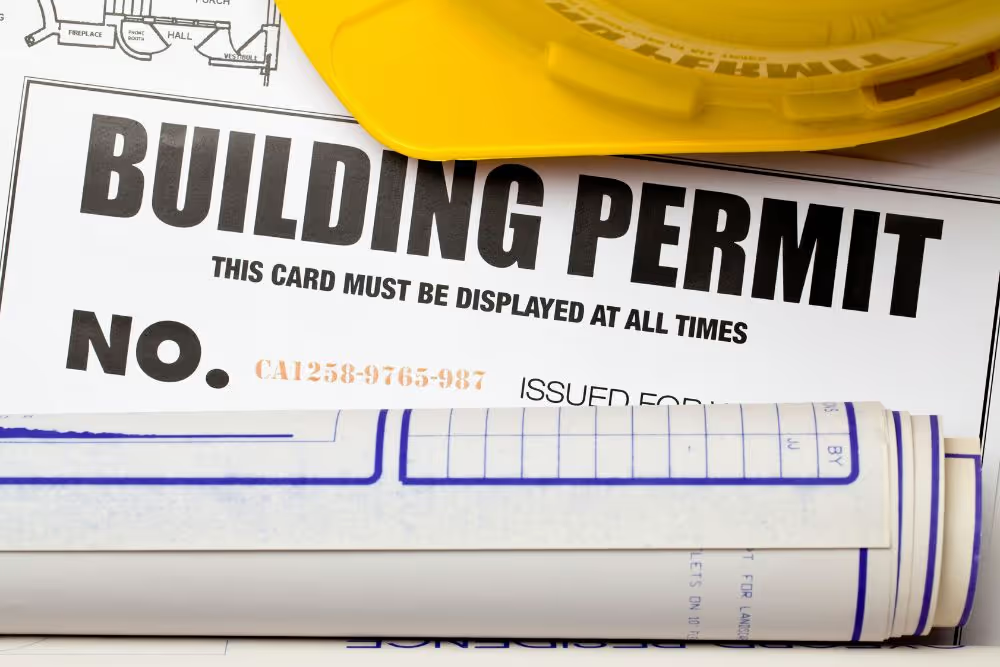
Yes. Water heater installations require a permit in California. A city inspector will verify the gas connection, venting, and seismic compliance before signing off. Any contractor offering to skip the permit should be declined.
How long do tankless water heaters last in the desert?
With annual descaling and some form of water treatment, 20 years or more is realistic. Without maintenance, hard water scale can cut that to 8 to 10 years or less. Maintenance is the variable that determines how long the investment lasts.
Can I install a tankless water heater myself in Palm Springs?
Not legally without a permit, and the gas line work and venting requirements are not DIY-friendly. Improper gas connections and undersized supply lines are safety risks and will cause performance problems from day one. Licensed installation is the right call.







.svg)
