.svg)



Shingle roof inspection and repair in Palm Desert is less common than tile or flat roof work, but the homes that do have shingle roofs face a specific set of challenges that the desert climate creates faster and more aggressively than in most other California markets.
Shingle Roof Inspection and Repair in Palm Desert
Shingle roof repair in Palm Desert runs $300 to $1,200 for minor isolated work: replacing a handful of damaged shingles, fixing a failed flashing detail, sealing a pipe boot, or addressing a small leak with a clear isolated cause. Moderate repairs covering more area, multiple problem spots, or valley work run $1,200 to $4,000. Major repairs involving widespread shingle damage, significant deck exposure, or large-area underlayment work can reach $4,000 to $10,000 or more depending on roof size and what is found during the work.
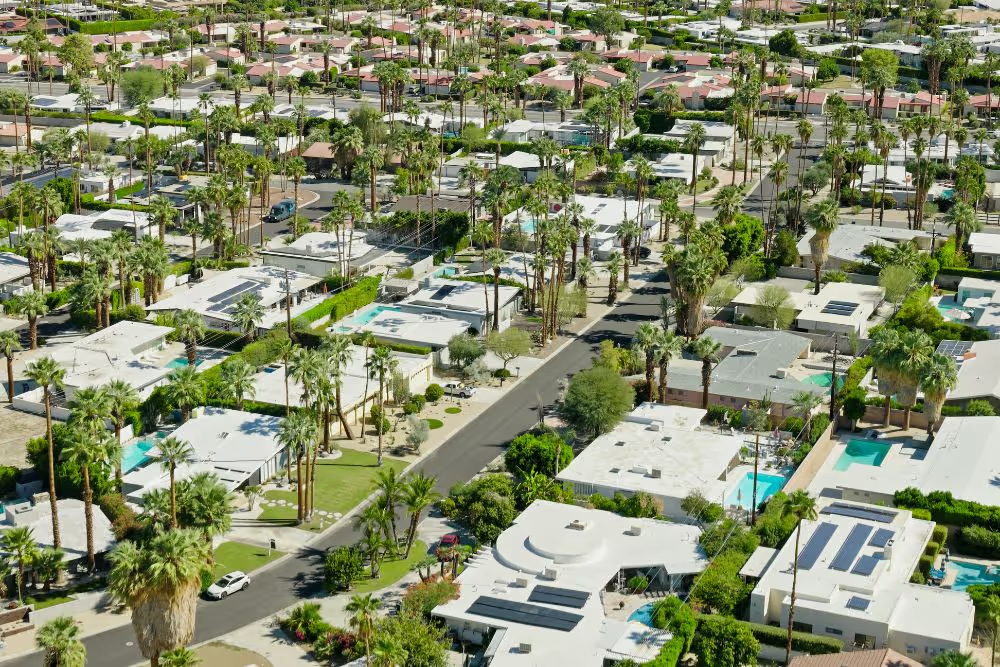
Shingle roofing in Palm Desert is most common on newer residential developments and HOA communities built from the 1990s onward where composition shingles were specified as an economical pitched roof system. The architecture throughout much of Palm Desert's newer development skews toward tile, but shingles are present across a meaningful portion of the city's residential stock, particularly in planned communities where budget and construction timeline drove the original material choice.
The honest challenge with shingle roofs in Palm Desert is lifespan. Asphalt shingles rated for 25 to 30 years in a temperate climate may realistically perform for 15 to 20 years in the Coachella Valley's UV and heat conditions. That is not a defect. It is physics. The asphalt binder and the granule adhesion in a shingle are both degraded by sustained UV radiation and extreme thermal cycling. Knowing this going in shapes how a Palm Desert homeowner should think about inspection schedules and repair vs replacement decisions differently than a homeowner in San Diego or the Bay Area.
Shingle Types Used on Palm Desert Roofs
How Desert Climate Shortens Shingle Roof Life in Palm Desert
Palm Desert is one of the more demanding environments for asphalt shingles in California. Understanding why helps set realistic expectations for lifespan, inspection frequency, and when to shift from repair to replacement thinking.
- UV granule loss. The mineral granules embedded in the top surface of asphalt shingles serve two functions: they protect the asphalt binder from UV radiation, and they contribute to the shingle's fire resistance rating. In Palm Desert's high UV index environment, the adhesive bond between granules and the asphalt mat degrades faster than in moderate climates. Granules loosen and wash off, typically accumulating in gutters. As granule coverage thins, the underlying asphalt layer is exposed directly to UV and oxidizes, causing the shingle to dry out, become brittle, and crack. Granule loss in gutters is one of the earliest visible indicators that a Palm Desert shingle roof is entering the final portion of its service life.
- Thermal cycling and cracking. Shingles expand when heated and contract when they cool. On a Palm Desert roof that reaches 160 to 170 degrees on summer afternoons and drops to 45 degrees on winter nights, that cycling is extreme compared to coastal California. Over years, repeated expansion and contraction stress the shingle's asphalt matrix and its adhesive bond to the nailing strip and the shingle below. This produces cracking, curling at the edges and corners, and eventually shingle separation. Curling and cracking that appears uniformly across a roof surface is thermal cycling damage rather than an isolated failure, and it is a sign that the roof as a system is nearing end of life.
- Wind damage in Coachella Valley wind events. The valley corridor experiences significant seasonal wind events that can lift and displace shingles that have lost their sealed tab adhesion. Asphalt shingles have a factory-applied sealant strip that bonds the tabs of overlapping shingles together once the roof has had a few days of warm sun after installation. As shingles age in the desert, that sealant hardens and loses its flexibility. Older shingles with compromised sealant are the most vulnerable to wind displacement during high-wind periods.
- Underlayment degradation. The synthetic felt or fiberglass underlayment beneath the shingles is the secondary water barrier. It experiences the same UV and thermal stress as the shingles above it, though at lower intensity since the shingles provide some protection. On a roof where shingles have degraded significantly and are no longer providing full coverage, the underlayment may be receiving direct sun exposure in gaps. Underlayment that has dried out and cracked is no longer functioning as a reliable secondary barrier, which means the deck itself is at risk once a shingle fails.
What a Shingle Roof Inspection Covers in Palm Desert
A proper shingle roof inspection for a Palm Desert home covers the full surface and all transition points. The goal is to find problems while they are still repairs rather than replacement drivers.
Cost of Shingle Roof Repair in Palm Desert
Full shingle re-roofing in Palm Desert runs $6 to $9 per square foot installed for standard architectural shingles. Premium or impact-resistant products run higher. Always request a written scope that separates material, labor, old roof removal, and any deck work, since those items vary significantly between bids on the same project.
Repair vs Replacement for Palm Desert Shingle Roofs
Permits and Licensing for Shingle Roof Work in Palm Desert
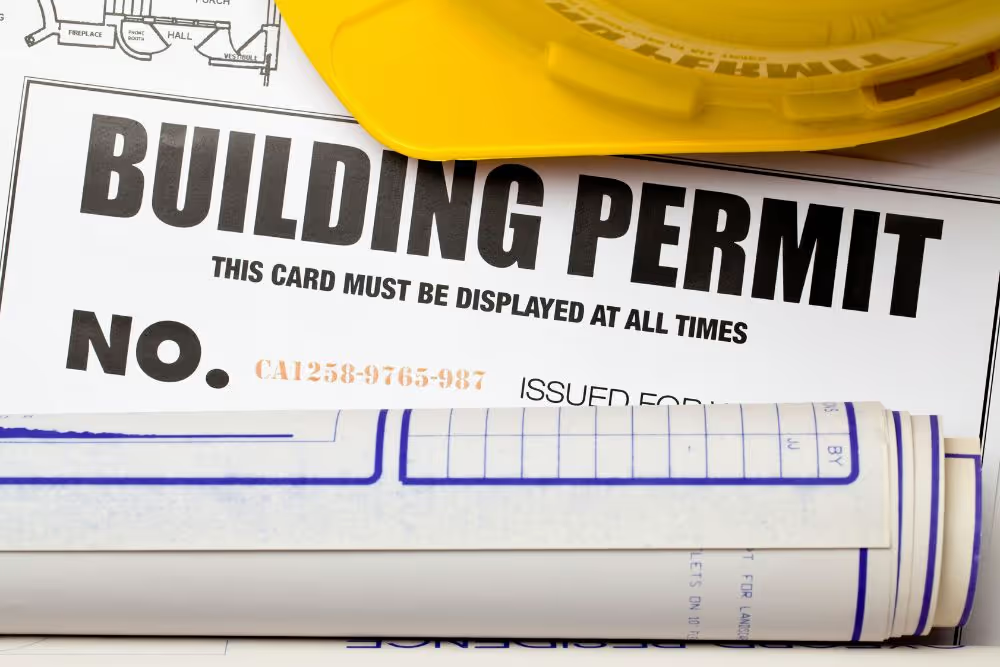
Minor shingle repairs replacing a few shingles or resealing a pipe boot generally do not require a permit in Palm Desert. Full re-roofing requires a permit. The City of Palm Desert lists "Reroof" as a specific permit type through its online permit portal. Your contractor should apply for the re-roof permit and schedule the required inspections on your behalf before work begins. An unpermitted re-roof creates complications at resale and may affect insurance coverage on future claims.
All California roofing contractors must hold an active C-39 Roofing Contractor license from the Contractors State License Board. Verify any contractor's license status through the CSLB website before signing anything. A contractor offering to skip the permit to save time or money is not performing the job in a way that protects you as the homeowner.
Truly Tough Roofing Serving Palm Desert and the Coachella Valley
Our roofing division at Truly Tough Roofing handles shingle roof inspections, repairs, and full re-roofing across Palm Desert, Palm Springs, La Quinta, Rancho Mirage, Indio, and throughout the Coachella Valley. We assess shingle condition correctly for desert conditions, give straight assessments on repair vs replacement, and pull permits on every re-roof. Our roofing work is led by Alber Melara, a Coachella Valley native with over 20 years of hands-on roofing experience. Call us at 760-343-5807 or reach us at Roofing@TrulyTough.com.
Frequently Asked Questions
How much does shingle roof repair cost in Palm Desert?
Minor repairs including a few shingle replacements, a pipe boot, or isolated flashing work typically run $300 to $1,200. Moderate repairs covering multiple areas or valley flashing work run $1,200 to $4,000. Major repairs involving widespread shingle damage or deck exposure can reach $4,000 to $10,000 or more. Full re-roofing with architectural shingles runs $6 to $9 per square foot installed in the Palm Desert market.
How long do asphalt shingles last in Palm Desert?
Realistically, 15 to 20 years for standard 3-tab shingles and 18 to 25 years for quality architectural shingles. Both figures are meaningfully shorter than the rated lifespan the manufacturer assigns, because those ratings are based on temperate climate conditions. Palm Desert's combination of extreme UV, sustained heat, and significant thermal cycling accelerates every degradation mechanism in asphalt shingles relative to a moderate climate. Planning for a shorter desert-adjusted service life leads to better maintenance decisions.
What are the signs my shingle roof needs repair or replacement in Palm Desert?
Granules accumulating in gutters after rain is an early sign. Visible curling at shingle edges or corners, cracking across the shingle surface, and exposed dark asphalt mat beneath areas of granule loss all indicate advancing UV and thermal damage. Missing shingles after a wind event, ceiling stains inside the home, and soft spots detected in an attic inspection are more immediate warning signs requiring attention without delay.
Can individual shingles be replaced without re-roofing the whole roof?
Yes, as long as the surrounding shingles are in good condition and there is matching material available. The challenge in Palm Desert is that shingle replacement on an older roof can produce a visible mismatch because the existing shingles have faded and aged differently from new material. This is cosmetic rather than structural, but it is worth discussing with the contractor before committing to isolated shingle replacement on a roof that is visibly aged.
Is a shingle roof a good choice for a Palm Desert home?
It is a viable choice, particularly for pitched roofs in HOA communities where tile would be more expensive and the architecture does not require it. The trade-off is a shorter service life in desert conditions compared to tile or metal. For a homeowner planning to stay in the home for 20-plus years, tile roofing's 40 to 50-year service life offers better long-term value. For a shorter ownership horizon or a tight installation budget, quality architectural shingles are a reasonable and widely available option.
Does shingle roof work require a permit in Palm Desert?
Minor repairs generally do not. Full re-roofing requires a permit, and Palm Desert specifically lists "Reroof" as a permit type in its online portal. Your contractor should pull the permit before work starts and schedule the required inspection when the job is complete. Unpermitted re-roofs complicate resale title searches and can affect insurance coverage.
How often should a shingle roof be inspected in Palm Desert?
Every one to two years is the right interval for a Palm Desert shingle roof. The accelerated UV and heat degradation in this climate means problems that would take four or five years to develop in a moderate climate can show up in two to three years here. Shingle roofs over ten years old should be inspected annually. Any significant wind event, storm, or rooftop work should also trigger an inspection regardless of the regular schedule.
What is the difference between composition shingles and architectural shingles?
Composition shingles and asphalt shingles are the same thing. Both terms describe shingles made from a fiberglass mat coated in asphalt and embedded with mineral granules. Architectural shingles (also called dimensional shingles) are a specific type of composition shingle with a laminated, multi-layer construction that creates a thicker, textured appearance. Architectural shingles outperform standard 3-tab shingles in UV resistance, wind resistance, and longevity, and they are the standard specification for most Palm Desert re-roof projects today.







.svg)
