.svg)


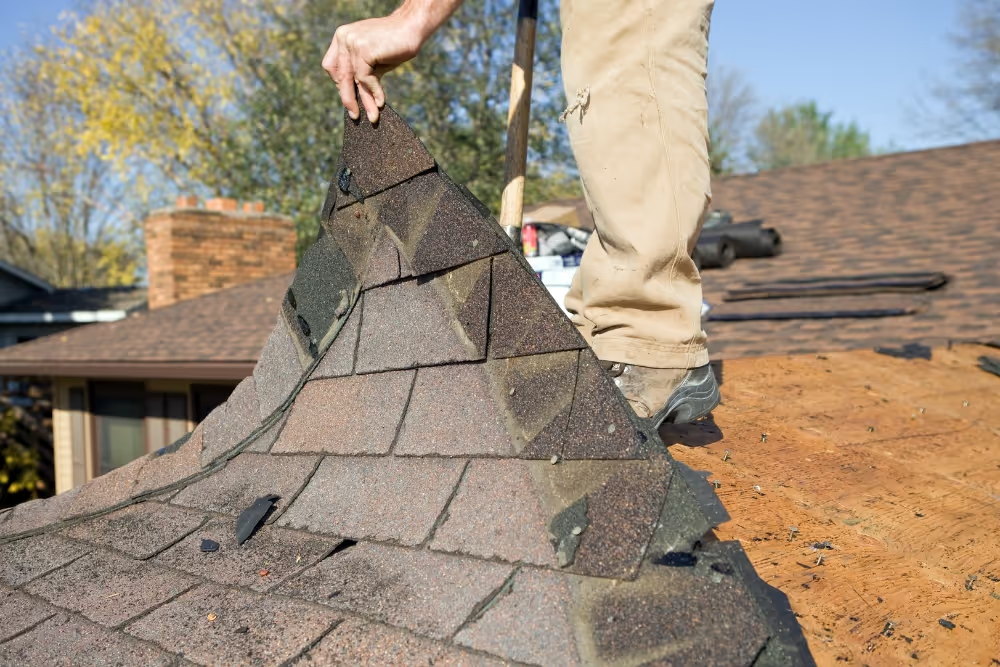
Most Palm Springs homeowners facing a roof issue want to know one thing fast, is this a repair or a full replacement? Getting that answer right is worth tens of thousands of dollars.
How Palm Springs Homeowners Should Frame This Decision
Deciding between roof repair and roof replacement in Palm Springs comes down to three things: how old the roof is, how widespread the damage is, and what the deck looks like underneath. If all three point in the same direction, the answer is usually clear. When they point in different directions, that is when you need a contractor who will actually get into the attic and use a moisture meter before giving you a number.
Most of the time homeowners are asking this question after a visible leak or after a home inspection turns something up. The mistake I see most often is making the decision based on what the surface looks like from the ground. That tells you almost nothing. A tile roof can look perfect from the driveway and have completely failed underlayment underneath. A foam roof can look rough on the surface but still have a solid dry deck that only needs a recoat. The surface is the last place to start.
Here is the framework we use on every call. If the roof has meaningful service life left and the problem is isolated to one cause in one location, repair makes sense. If the damage is widespread, recurring, or the deck is compromised, replacement is the financially sound decision every time. Spending money to patch a roof that is fundamentally done is not maintenance. It is just delaying a larger bill while the damage spreads.
Cost Benchmarks for Palm Springs Roof Work
These ranges reflect real Coachella Valley project costs. Final numbers depend on roof type, pitch, access, deck condition, and whether structural repairs are required. A written scope of work before any project starts is non-negotiable.
Four Questions to Answer Before Getting a Bid
Before anyone opens a ladder on your property, these four questions should already be answered. The answers will tell you 80 percent of what you need to know before a formal inspection even happens.
Why Palm Springs Roofs Age Differently
General roofing advice does not apply here without some adjustment. Most of what gets written about roofing assumes a moderate climate. The Coachella Valley is not that. UV radiation at this elevation and latitude is severe. Roof surface temperatures hit 170 degrees on summer afternoons. Overnight temperatures in winter drop dramatically. That constant thermal cycling, expanding and contracting every single day for years, degrades sealants, flashing joints, and membrane edges in ways that just do not happen in coastal or northern California.
The San Gorgonio Pass funnels wind through the valley regularly, and those sustained gusts work on every loose edge, every aging flashing detail, every spot where the roofing material is starting to lift. We see it on flat roofs and sloped roofs alike. A detail that would hold for 20 years in San Diego might need attention after 10 years here.
What this means practically is that life expectancy estimates for roofing materials need to be adjusted down for this climate. Asphalt shingles rated for 30 years in the manufacturer's documentation might realistically last 20 to 22 years here under full desert sun. Foam roofs without regular elastomeric recoating fail much faster than the product specs suggest. When evaluating repair vs. replacement, the local aging curve matters as much as the roof's age on paper.
Flat and Low-Slope Roof Decisions in Palm Springs
Palm Springs has a lot of flat and low-slope roofs. Mid-century modern architecture, ranch-style homes, and custom builds from the 1960s through the 1990s all favored flat or nearly flat rooflines. That means foam and membrane systems are very common here, and the repair vs. replacement question on those roofs has its own specific logic.
On a foam roof, the critical question is whether the foam itself is intact or whether water has gotten below the coating and into the foam substrate. A foam roof that just needs a fresh elastomeric recoat is a maintenance repair. A foam roof where the foam has delaminated, blistered across a large section, or absorbed moisture is a replacement. You can coat over failing foam, but the water underneath will keep working and you will be back to the same conversation within a season or two.
We worked on a home in Tahquitz Creek Golf, Palm Springs recently where the owner had been having the roof recoated on a regular schedule. It looked fine from the outside. When we pulled up a blistered section near the parapet, the foam underneath was saturated in two spots. The coating had developed pinhole cracks that were invisible without getting on the roof and probing the surface. That roof needed replacement, not another coat.
On TPO or modified bitumen membrane roofs, look for seam failures, shrinkage cracking at terminations, and any bubbling in the field. Small seam repairs on an otherwise sound membrane are reasonable. Widespread shrinkage or field cracking across a 15-plus-year-old membrane is not.
Tile Roofs in Palm Springs and Where Failure Actually Starts
Concrete and clay tile is one of the best roofing materials for this climate. Tile handles UV, heat, and thermal cycling better than almost anything else. The problem is that people confuse the tile with the roof system. The tile is only part of it. Underneath the tile is an underlayment, usually 30-pound felt on older homes or a synthetic product on newer ones, and that is what actually keeps water out.
Tile underlayment in the Coachella Valley dries out, becomes brittle, and eventually cracks. When it does, the tiles sitting on top can still look perfect from the street. The roof leaks not because the tile failed but because the underlayment beneath it gave out. That is almost always a full re-roof job. You have to remove every tile, replace the underlayment, and reset everything. The tile can usually be reused if it is in good shape, which keeps costs lower than a full material replacement, but it is still a significant project.
A tile repair situation looks different. A cracked or slipped individual tile, a damaged section around a skylight or chimney, a failed flashing detail at a valley. Those are isolated and fixable without disturbing the whole roof. But if a tile roof is over 20 years old and leaking in multiple spots, assume the underlayment is the culprit until proven otherwise.
Warning Signs Worth Acting On Before Getting a Bid
Some of what homeowners notice from inside the house is more telling than anything visible from the roof surface. These are signs I would not wait on before getting someone out to look.
- Ceiling staining that changes size after rain. This means active water movement through the structure, not just an old mark from a past event.
- Soft or springy ceiling drywall. Moisture has been sitting in the material long enough to weaken it structurally.
- Musty smell in a room that only appears after warm rain. Moisture is trapped in insulation or framing above, not immediately visible but actively degrading material.
- Attic insulation that is compressed, matted, or discolored in patches. Water has moved through the deck and soaked into insulation below, which is never a minor issue.
- Visible daylight through the attic from any angle. This means gaps in the roof deck, not just poor ventilation detailing.
- Multiple past repairs that have not held. The underlying problem was never fully identified or the scope of damage is larger than any single repair addressed.
- Foam that sounds hollow or feels soft when walked. This indicates delamination or moisture sitting beneath the coating.
None of these automatically means replacement. They mean the inspection needs to be thorough, not a five-minute walk across the surface. If a contractor wants to give you a number without going into the attic, find a different contractor.
What a Thorough Palm Springs Roof Inspection Covers
A real inspection is diagnostic work, not a visual pass. The goal is to isolate the cause of the problem, not just confirm that a problem exists. Here is what that process actually looks like.
Permits, Licensing, and Code Requirements for Palm Springs Roof Work
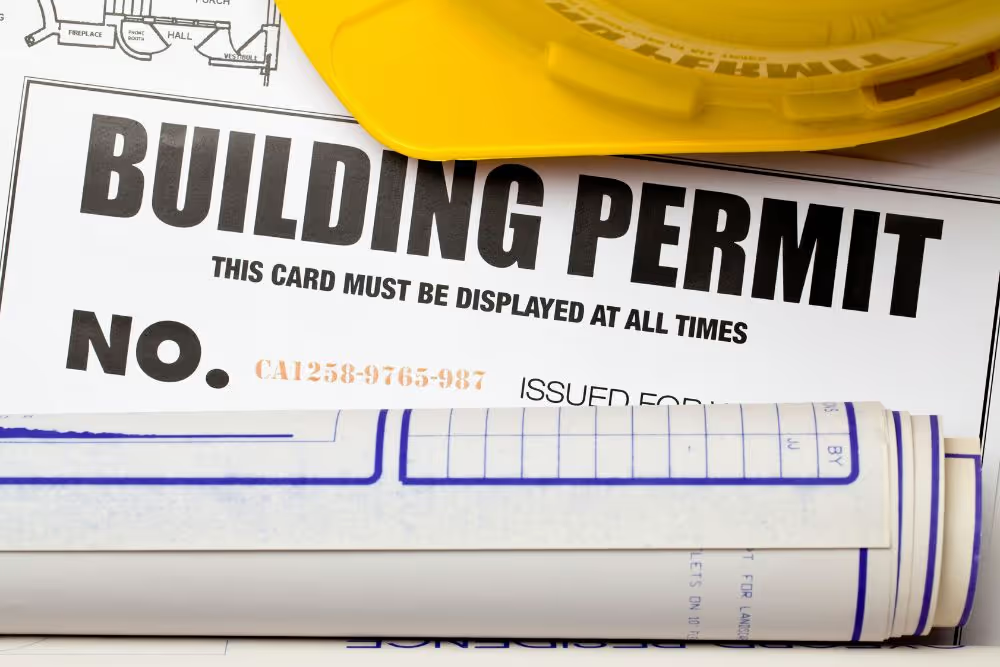
Full re-roofs in Palm Springs require a permit. Isolated spot repairs typically do not. The distinction matters because an unpermitted re-roof creates real problems when you sell the home or file an insurance claim. The City of Palm Springs Building Department permit page outlines what triggers a permit and how to apply through the Palm Springs Online portal. As of January 2026, the city requires all new permit applications to comply with the 2025 California Building Standards Codes. Your contractor should be handling permit applications and inspection scheduling. If they are suggesting you skip the permit to save time, that is a red flag, not a convenience.
California also has specific cool roof requirements for desert climate zones under Title 24. When replacing a roof in Palm Springs, the new roofing product must meet minimum solar reflectance and thermal emittance ratings as defined by the California Energy Commission's building energy efficiency standards. Products that carry a CRRC label showing their rated values are the right ones to specify. Choosing a non-compliant product can fail the permit inspection and require a costly tear-off.
Every roofing contractor working in California must hold an active C-39 Roofing Contractor license issued by the Contractors State License Board. The CSLB website lets you look up any contractor's current license status, bond, and complaint history at no cost. Do this before signing anything.
If a project goes sideways and you need to understand your options, Nolo's plain-language guide on disputes with home improvement contractors explains how California homeowners can document problems, send demand letters, and pursue small claims court without needing an attorney for every step.
Roofing Material Options for Coachella Valley Replacements
Once inspection confirms replacement, material selection is the next real decision. The desert climate rules out some materials and makes others the obvious choice.
Concrete and clay tile is the highest-performing material for sloped desert roofs over the long term. It handles UV, heat, and the daily thermal cycling better than any other option. A well-installed tile roof in the Coachella Valley can last 40 to 50 years. The labor cost to install is real, especially on complex rooflines with multiple hips, valleys, and custom cuts, and that is what drives the higher end of replacement costs. The lifespan math works strongly in tile's favor for homeowners planning to stay long-term.
Foam (SPF) roofing remains the best option for flat and low-slope roofs in this climate. It is seamless, well-insulated, and highly effective in UV when the elastomeric coating is maintained on a five to seven year cycle. A foam roof that has been let go too long and has substrate damage is a replacement. One with a solid deck and degraded coating is a recoat.
TPO and modified bitumen membranes are common on flat commercial and some residential roofs. Both have strong desert track records when installed correctly with proper termination details at edges and penetrations.
Asphalt shingles are the most affordable upfront option but degrade faster in the Coachella Valley than their rated lifespan suggests. A 30-year shingle might realistically deliver 20 to 22 years here. Still a viable choice for the right project and budget, but go in with adjusted expectations.
Truly Tough Roofing Serving Palm Springs and the Coachella Valley
Our roofing division at Truly Tough Roofing handles inspections, spot repairs, foam recoats, underlayment replacement on tile roofs, flat membrane work, and full re-roofs across Palm Springs, Palm Desert, La Quinta, Indio, and the rest of the Coachella Valley. Every inspection includes the attic, moisture meter readings on suspect areas, and a written assessment that tells you exactly what we found and why we are recommending what we are. Our roofing work is led by Alber Melara, a Coachella Valley native with over 20 years of hands-on roofing experience and a Best of the Desert track record.
If you want a straight read on whether your roof needs repair or replacement, we will come out and give you an honest answer. Call us at 760-343-5807 or reach us at Roofing@TrulyTough.com.
Frequently Asked Questions
How do I decide between roof repair and replacement on my Palm Springs home?
Start with the roof's age, whether the damage is isolated or showing up in multiple areas, and what the deck looks like under the surface material. A thorough inspection that includes the attic and moisture meter readings will give you a clear answer faster than anything visible from the ground.
At what age should a Palm Springs roof be replaced rather than repaired?
Roofs over 20 years old with recurring leaks or widespread deterioration are almost always better candidates for replacement than repair. Between 12 and 20 years, the answer depends on the scope of damage and deck condition. Under 12 years with quality materials and an isolated problem, repair is usually the right call.
How much does a roof repair cost in Palm Springs?
Isolated repairs typically run $800 to $2,500. More involved repairs covering multiple penetrations or a partial deck replacement can reach $3,000 to $6,000. Get a written scope of work before agreeing to anything.
How much does a full roof replacement cost in Palm Springs?
Most residential re-roofs in the Coachella Valley run $15,000 to $35,000. Larger homes, steep or complex rooflines, structural deck replacement, or premium tile and metal materials can push costs well past $50,000. Material choice, roof size, pitch, and access all affect the final number significantly.
Does a re-roof in Palm Springs require a permit?
Yes. Full re-roofs require a permit from the City of Palm Springs Building Department. Spot repairs on isolated areas typically do not. Your contractor should be pulling the permit and scheduling inspections as part of the job.
How do I know if my foam roof needs a recoat or full replacement?
A foam roof with an intact dry deck that has coating failure or surface cracking is a recoat situation. If the foam itself has delaminated, blistered in multiple large sections, or absorbed moisture into the substrate, it needs replacement. You cannot assess this reliably from the surface alone.
Why do tile roofs leak if the tile itself looks fine?
The underlayment beneath the tile is what keeps water out, and that material dries out and cracks in the desert over time. When it fails, the tile above can still look perfect while the roof leaks. On a tile roof that is 15 or more years old, underlayment condition is always the first thing to check.
How do I verify a roofing contractor's license in California?
Use the CSLB website to look up the contractor's license number directly. Roofing work in California requires an active C-39 Roofing Contractor classification. Checking license status, bond status, and complaint history costs nothing and takes two minutes. Never sign a roofing contract without doing this first.








.svg)
