.svg)



Whether you need an inspection, tune-up, repair, maintenance visit, upgrade, new installation, or full replacement, here is what honest HVAC service looks like in Palm Desert. We work out here every day.
HVAC Inspection, Maintenance & Repair in Palm Desert
Palm Desert heating, ventilation, and air conditioning equipment runs from May through October in some of the most punishing heat in the country. Daytime highs regularly push past 110 degrees, and your system is on most of that time. A pre-season inspection and tune-up runs $150 to $300. Skipping it and landing a compressor failure in August can cost $1,500 to $3,500 or more, plus whatever it costs to be without air conditioning while you wait on parts.
We handle the full range of HVAC work in Palm Desert: inspections, maintenance, repairs, installation, replacement, and system upgrades. If something is wrong with your heating or air conditioning, we can find it and fix it in a single visit.
Palm Desert HVAC Costs
These are what jobs actually cost in the Palm Desert area. Final price depends on system type, size, brand, accessibility, and scope of work. Every job is different.
What Makes Palm Desert Hard on HVAC Equipment
Palm Desert gets hotter than Palm Springs on most summer days. The city sits further east in the valley where afternoon heat builds and holds longer. Daytime highs can reach 125 degrees in the peak of summer. Your heating and air conditioning system is not taking a break during that stretch. It is running almost continuously to keep up.
The heat degrades components faster than in any other climate in California. Capacitors are small electrical parts that help start and run your compressor and fan motors. They wear out quickly in extreme heat. A capacitor that tests fine in April can be significantly weakened by September. When it fails, the compressor tries to start without enough power, draws excess amperage, overheats, and in the worst cases burns out entirely. A capacitor replacement caught early costs around $200. A compressor that burned out because of a failed capacitor costs many times that.
Dust is the other constant issue. The Coachella Valley's wind events push fine sand through everything: condenser coils, return air grilles, and air filters. A condenser coil caked with debris cannot shed heat properly. The system runs hotter, works harder, and wears out faster. Cleaning a coil during a tune-up takes 20 minutes. Replacing a compressor that failed because of sustained high head pressure takes a lot longer and costs a lot more.
What We Check During a Palm Desert HVAC Inspection
We did a full inspection on a home in Bighorn Golf Club, Palm Desert a while back where the homeowner said the system seemed fine, just a little slow to cool. It took about 45 minutes to find a contactor with burned contacts, a drain pan with standing water, and refrigerant pressure readings that pointed to a slow leak at the evaporator coil. None of it would have shown up from the outside. All three needed attention before the system could run right again.
Here is what a proper inspection actually covers:
Common HVAC Problems in Palm Desert Homes
Some of these are desert-specific. Others happen everywhere but show up faster here because of how hard the equipment runs. These are the problems we run into most on service calls across Palm Desert:
- Capacitor failure leading to no cooling, no startup, or short cycling. It is the single most common repair call we get in this climate.
- Dirty condenser coil loaded with dust and sand, raising system pressures and forcing the compressor to overwork every cycle
- Refrigerant leaks at line set connections or the evaporator coil, slowly reducing cooling capacity until the system can barely keep up
- Clogged drain line backing condensate into the drain pan, which overflows and can cause ceiling or wall water damage
- Frozen evaporator coil caused by a dirty air filter, low refrigerant, or restricted airflow. Common even when it is 125 degrees outside.
- Contactor failure where burned contacts cut power to the compressor or condenser fan motor, causing a no-cooling situation
- Blower motor failure producing weak or no airflow from the air handler even when the compressor is running fine
- Ductwork leaks in attic-run flexible duct or at duct boot connections, dumping conditioned air before it reaches the living space
- System constantly running without reaching the set temperature, usually a sign of a refrigerant issue, duct leakage, or undersized equipment
- Thermostat problems from bad low voltage wiring, a failed control board, or a misconfigured smart thermostat affecting all system stages
Equipment Types We Service in Palm Desert
Palm Desert has a broad range of home styles and HVAC setups. Mid-century homes with original package units on the roof, newer builds with split systems, gated community estates with multi-zone systems, and everything in between. We work on all of it.
Package units and rooftop units are extremely common in Palm Desert, especially on homes built before the 2000s. The compressor, condenser coil, evaporator coil, and air handler all sit in one cabinet on the roof. They are built tough, but direct sun exposure and heat accelerate wear on every component. We service and replace package units from Carrier, Trane, Lennox, Rheem, Ruud, Goodman, Amana, Bryant, and York.
Split system air conditioners with a separate outdoor condenser unit and indoor air handler or fan coil unit are standard on newer construction and remodels. They tend to be more energy efficient than comparable package units and are easier to pair with zone control systems, smart thermostats, and variable speed motors for better comfort management.
Ductless mini splits and multi zone mini split systems are a strong fit for Palm Desert homes with additions, casitas, garages, or rooms that the central system cannot reach well. A ceiling cassette mini split or floor mounted mini split delivers conditioned air directly to the space without running ductwork. Multi zone setups serve multiple rooms from a single outdoor condenser unit and let you manage each area independently.
Heat pumps and dual fuel systems are worth looking at if you are replacing an older gas furnace setup. Palm Desert winters are mild enough that a heat pump handles heating efficiently almost all season, with a gas furnace as backup on the few nights that get cold enough to matter.
Swamp coolers and evaporative coolers still exist on older Palm Desert properties. They work in April and early May when humidity is low, but once the monsoon pattern sets in they lose most of their effectiveness. Many homeowners have upgraded to refrigerated systems for reliable year-round comfort.
HVAC Replacement in Palm Desert
A system over 15 years old that keeps needing repairs is usually past the point where patching makes sense. You're spending money on parts and labor that do not carry over toward a new system, and another component is typically waiting in line behind the one you just fixed.
When replacement is the right call, proper sizing matters more than brand. An oversized system short cycles. It cools the air quickly, shuts off, and never runs long enough to pull humidity out of the house. An undersized system runs constantly and still can't keep up on the hottest days. We size every system using Manual J load calculations that account for your home's insulation, window orientation, ceiling height, and the specific climate conditions in Palm Desert.
New system installations in Palm Desert must meet California's Title 24 HVAC energy efficiency requirements, including minimum SEER2 ratings and duct leakage testing when major components are replaced. We handle all documentation and HERS verification as part of the installation.
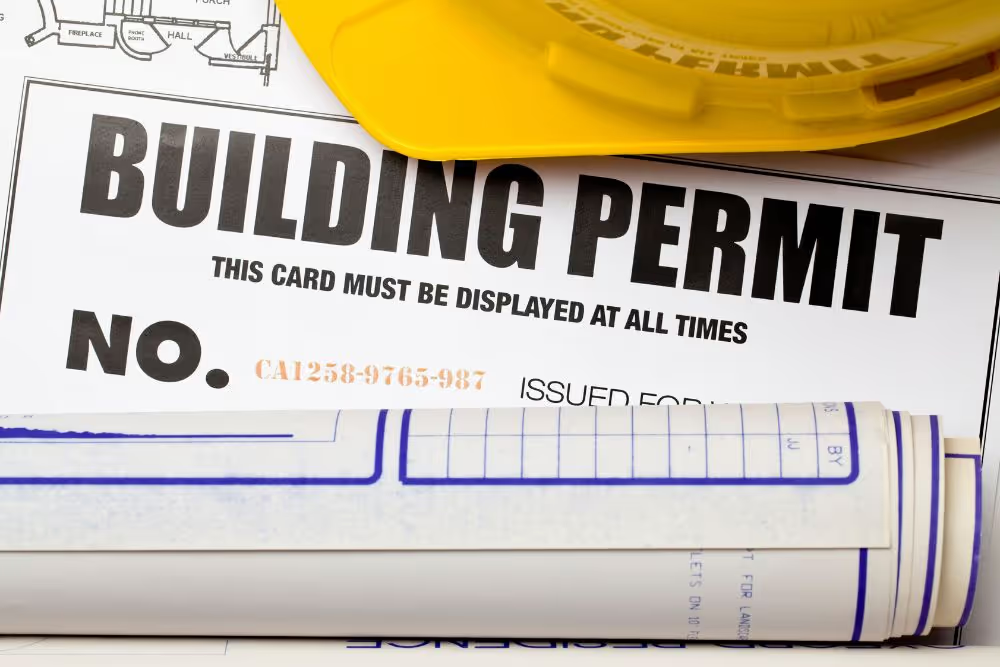
Every replacement also requires a mechanical permit. Palm Desert falls under Riverside County for building permits, and the Riverside County Building and Safety Department handles HVAC permit applications through their online portal. We pull permits and schedule inspections on every replacement job.
Duct Repair and Sealing in Palm Desert
Ducts in Palm Desert attics sit in unconditioned space that hits 150 degrees or more on summer afternoons. Flexible duct without proper duct insulation is basically a cold-air pipe running through a furnace. Any gap at a duct boot, duct transition, or duct takeoff is pushing your cooled air straight into the attic where it does nothing for anybody inside the house.
Duct leakage of 20 to 30% is common in older homes throughout the valley. That means as much as a third of what your system produces never reaches a living space. Sealing those gaps and upgrading duct insulation can improve comfort and cut energy bills without touching the air conditioning equipment at all.
California's energy code requires duct leakage testing any time an air handler or condenser unit is replaced. We do this testing on every qualifying installation and can also run it as a standalone diagnostic when uneven temperatures or high bills suggest ductwork is the problem.
Indoor Air Quality in Palm Desert
Palm Desert's dry desert air, dust, and long stretches of closed windows make indoor air quality a real concern. Standard throwaway air filters catch the big stuff but miss fine particulates, mold spores, and airborne bacteria that build up in a home that runs sealed up for months at a time.
We install and service UV air purifiers and UV lights mounted inside the air handler that kill mold and bacteria at the coil. Electronic air cleaners and media filters are a significant step up from a basic fiberglass filter for homes where air quality matters. For properties that feel stuffy or have elevated indoor CO2, fresh air ventilation, ERV systems, and HRV systems bring in controlled outside air without turning your home into a convection oven. A whole house dehumidifier handles monsoon season moisture independently of the thermostat, so the system is not fighting humidity and temperature at the same time.
Licensing and Permits: What to Verify Before You Hire
California HVAC work requires a C-20 Warm-Air Heating, Ventilating, and Air-Conditioning contractor license from the CSLB. It covers installation, service, repair, and maintenance of heating and cooling systems including ductwork, thermostats, and controls. Look up any contractor's license number on the CSLB website before you agree to anything. It takes 30 seconds and shows you active license status, bond, and insurance in one place.
Any full system swap, whether a condenser unit, air handler, or package unit, requires a mechanical permit. Tune-ups and repairs typically do not. If a contractor offers to skip the permit to move faster or save money, that is a problem. An unpermitted installation can void your equipment warranty and create complications when you sell the home.
We are fully licensed, bonded, and insured. We pull every permit, schedule every inspection, and handle all the paperwork that comes with a permitted installation.
Truly Tough HVAC: Serving Palm Desert and the Coachella Valley
Our Truly Tough HVAC division handles inspections, tune-ups, maintenance, repairs, and full system replacement across Palm Desert, Palm Springs, La Quinta, Indio, and throughout the Coachella Valley. We work on central air conditioners, package units, split systems, ductless mini splits, multi zone systems, heat pumps, dual fuel systems, and everything in between. We service all major brands including Carrier, Trane, Lennox, Rheem, Ruud, Goodman, Amana, Bryant, and York. We also do duct sealing, duct replacement, thermostat and smart thermostat upgrades, and indoor air quality installations.
If your system is underperforming, making noise, running your bills up, or you just have not had it looked at in a while, call us. We will come out, tell you what is actually going on, and give you a straight answer on what it takes to fix it. Reach us at 760-343-5728 or HVAC@TrulyTough.com.
Frequently Asked Questions
How often should I service my HVAC system in Palm Desert?
At least once a year, and ideally before the summer cooling season starts. Palm Desert systems run harder and longer than almost anywhere else in California, so annual tune-ups matter more here than they do in cooler climates.
What does HVAC repair cost in Palm Desert?
Minor repairs like a capacitor or contactor run $200 to $600. Larger repairs involving the compressor or evaporator coil range from $1,200 to $3,500 or more. A written estimate before any work starts is standard practice.
How much does HVAC replacement cost in Palm Desert?
Most full residential system replacements run $8,000 to $20,000 installed and permitted, depending on system type, brand, size, and whether any ductwork needs attention. Get a few estimates and make sure each one includes permitting.
Do I need a permit to replace my AC unit in Palm Desert?
Yes. Replacing a condenser unit, air handler, or package unit requires a mechanical permit. Your contractor should pull it and schedule the inspection. Skipping the permit can void your warranty and create problems at resale.
Why is my AC running but not cooling the house?
The most common causes are a failed capacitor, a dirty condenser coil, low refrigerant from a leak, a frozen evaporator coil, or a failed contactor. A technician can diagnose the cause in a single visit.
How long do HVAC systems last in Palm Desert?
Most well-maintained systems last 12 to 16 years in the desert. The high annual runtime here wears equipment faster than in cooler climates. Systems that skip maintenance tend to fail earlier, often at the worst time of year.
Is a ductless mini split a good option for Palm Desert?
Yes, especially for casitas, additions, garages, or any room your central system struggles to cool. Mini splits eliminate duct losses entirely and are very efficient in desert heat when properly sized for the space.
How do I verify my HVAC contractor is licensed in California?
Go to the CSLB website and search by license number or company name. HVAC contractors need a C-20 classification. The search also shows current bond and insurance status. Do this before signing anything.







.svg)
