.svg)

Palm Springs solar installations run harder than almost anywhere in California. The inverter choice you make on day one affects how much power you actually harvest for the next 25 years.
Microinverters vs String Inverters for Palm Springs Solar
For most Palm Springs solar installations, microinverters are the stronger choice, and the desert environment is a big reason why. Roofs here face extreme UV, surface temperatures that regularly exceed 150 degrees, and partial shading from palm trees, chimneys, HVAC equipment, and neighboring structures. Microinverters handle all of those conditions better than a string inverter can.
That said, string inverters are not wrong for every situation. A clean, south-facing roof with no shade obstructions and a straightforward panel layout can do well with a quality string inverter at a lower upfront cost. The issue is that those ideal conditions are less common in the Coachella Valley than most homeowners assume when they are getting initial quotes.
The inverter is the piece of your solar system that determines how much of the power your panels generate actually reaches your home. Most people spend a lot of time comparing panel brands and almost no time comparing inverter types. That is backwards. Get this decision right and the system runs quietly and efficiently for decades. Get it wrong and you lose production every single day.
How Each Inverter Type Works
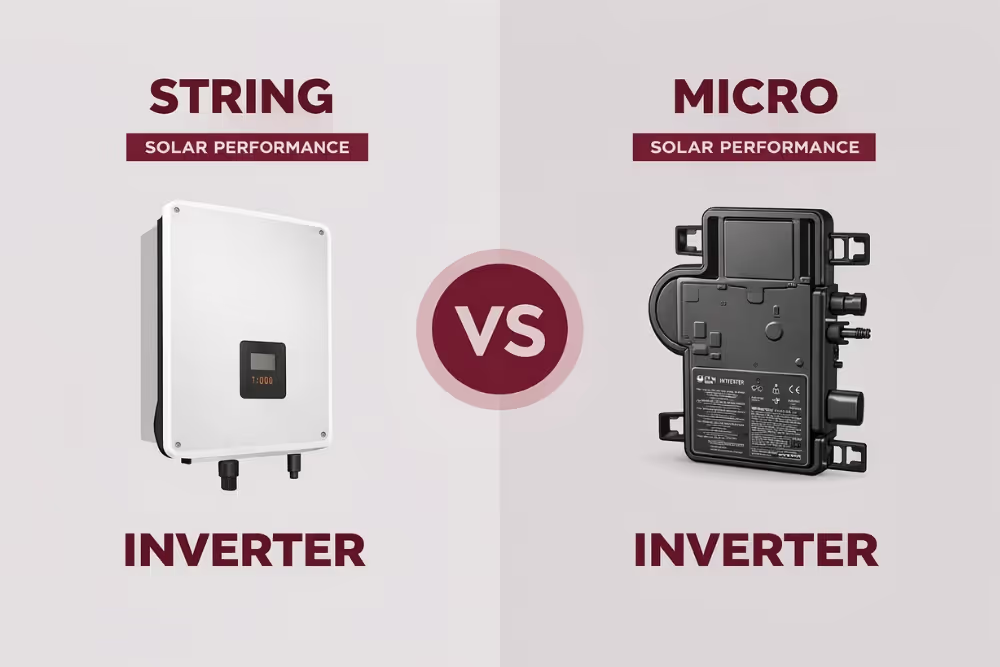
A string inverter connects all your solar panels together in a series circuit and converts the combined DC power into usable AC electricity at one central unit, typically mounted near your main electrical panel. The whole system is treated as one. If one panel underperforms because of shade, soiling, or age, it drags down the output of every panel on that string. Installers call this the Christmas light effect. One weak link limits the whole string.
A microinverter attaches to the back of each individual panel and does the DC-to-AC conversion right there on the roof. Each panel operates independently. If one panel is shaded by a palm frond for two hours in the morning, it performs at whatever level it can while every other panel on the roof runs at full capacity. There is no chain effect.
The practical result in a desert environment with complex rooflines, multiple roof planes, and common shading from HVAC units and palm trees is that microinverters tend to deliver meaningfully more production over the life of the system. Research suggests microinverters can produce 5 to 25 percent more energy than string inverters in real-world conditions with any shading or panel mismatch at all.
Quick Comparison for Coachella Valley Homeowners
Why Desert Heat Changes the Math
There is a persistent myth in the solar industry that microinverters struggle in extreme heat. The logic sounds reasonable at first: more electronics on the roof means more exposure to high temperatures. But independent data does not support it.
Studies of Enphase microinverters across tens of thousands of installations in the hottest locations in the United States, including the desert Southwest, found that internal temperatures never exceeded the maximum allowable threshold during the product's rated lifespan. Microinverters are mounted on the underside of the panels and benefit from the panel itself providing shade. They also operate at lower voltage than string inverters, which reduces heat generation internally.
The more relevant heat consideration in Palm Springs is what the desert does to string inverter components mounted in direct sunlight on the exterior wall of the home. A string inverter installed on a south- or west-facing wall here can see ambient temperatures that shorten the life of its capacitors and other components faster than the warranty period would suggest. Mounting location matters a lot for string inverter longevity in this climate.
For any inverter type, installation quality and location determine how well it handles the desert. An experienced local installer who has put equipment on hundreds of Coachella Valley roofs is going to know the right mounting practices. A company that mostly works in coastal markets may not.
When String Inverters Still Make Sense in Palm Springs
There are situations where a string inverter is the right call, even in a desert market. If a roof is completely unobstructed, faces true south, and has all panels on a single plane with no shading at any point during the day, a quality string inverter will perform well at a lower total system cost.
We see this sometimes on newer construction in the valley where the roofline is simple, flat or low-slope, the panels are positioned on the ideal face, and there is nothing nearby to cast shade. In those cases, the performance advantage of microinverters narrows significantly and the cost difference becomes a real consideration.
String inverters with power optimizers are also worth mentioning. A power optimizer is a module-level device that attaches to each panel and maximizes its output before sending power to the string inverter. This setup captures much of the shading benefit of microinverters while keeping the central inverter architecture. SolarEdge is the dominant brand in this category. It is a middle-ground option worth discussing with your installer if cost is a constraint and the roof has moderate shading challenges.
Cost Numbers for Palm Springs Solar Installations
String inverter replacement at the 10 to 12 year mark typically costs $1,500 to $3,000 including labor. When you factor that in, the lifetime cost difference between microinverters and string inverters is smaller than the upfront quote comparison suggests.
SCE Interconnection and What It Means for Your Inverter Choice
Most Palm Springs homes are served by Southern California Edison. SCE requires that all solar inverters connected to its grid comply with UL 1741 SB smart inverter requirements under Rule 21. Both microinverters and string inverters from major manufacturers meet this standard, but it is worth confirming with your installer before the equipment is specified.
SCE's residential solar basics page outlines the full process from application through Permission to Operate. Your installer is responsible for submitting the interconnection application and coordinating the inspection process. A system that is installed without proper interconnection approval cannot legally operate, and turning it on before Permission to Operate is issued puts you at risk with both SCE and your homeowner's insurance.
One practical note on microinverters and interconnection: because each panel has its own inverter, the system shows up to SCE as a distributed AC system rather than a single DC source feeding one inverter. This is actually simpler from a grid management standpoint and aligns well with how SCE's Rule 21 smart inverter requirements are structured.
Neighborhoods That Favor Microinverters in Palm Springs
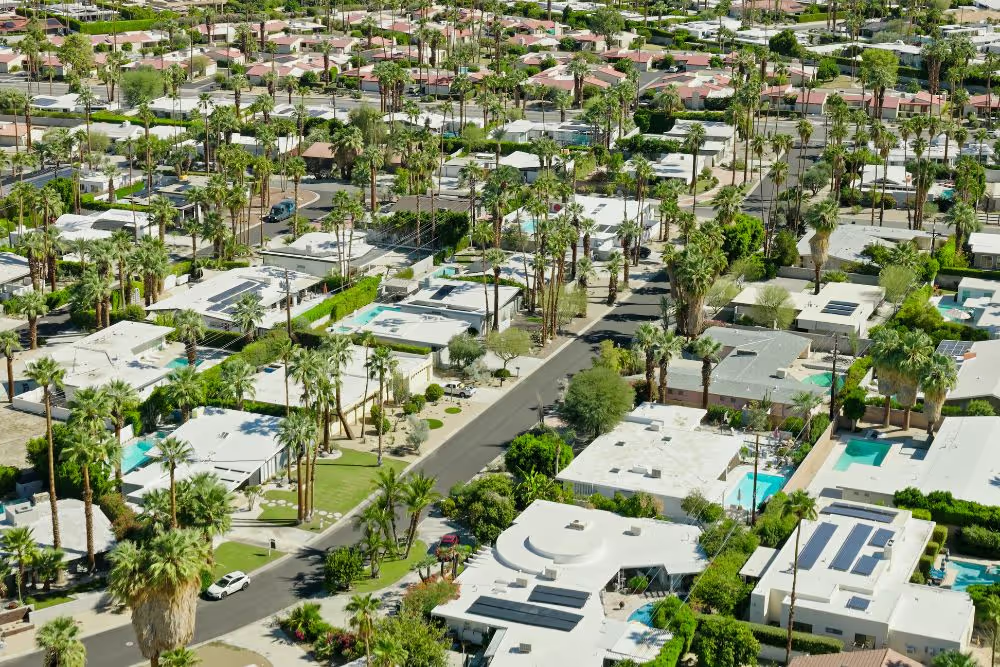
Complex rooflines, multiple roof planes, and mature landscaping all push the inverter decision toward microinverters. Palm Springs has plenty of all three.
Mid-century modern homes, which are common throughout the city, often have flat or low-slope roofs with multiple levels, equipment curbs for HVAC units, and parapet walls that can cast shade across panels at certain times of day. Older neighborhoods with mature palm tree canopies present real shading challenges that a string inverter handles poorly.
On a recent solar installation in Old Las Palmas, Palm Springs, the homeowner had been quoted string inverters by two other companies. When we ran the shade analysis, we found that mature palms along the property line were casting shade across three panels for about 90 minutes every morning during summer. On a string system, those three panels would have pulled down the output of the entire array during those hours. With microinverters, those three panels produce what they can and the rest of the system runs at full capacity the whole time. That difference adds up to real kilowatt-hours over 25 years.
Newer developments in the valley with clean, unobstructed south-facing roof planes are where the string inverter case gets stronger. If your roof was designed with solar in mind and nothing is going to shade it, the math looks different.
Licensing and Permits for Solar in Palm Springs
Every solar installation in Palm Springs requires a permit from the City of Palm Springs Building Department. Your contractor pulls the permit and schedules inspections. The system cannot legally operate until SCE issues Permission to Operate following a successful inspection. Any company offering to skip that process is not one you want installing equipment on your home.
California requires solar contractors to hold an active license. The most relevant classifications are the C-46 Solar Contractor license, which covers photovoltaic system installation, and the C-10 Electrical Contractor license. Both authorize solar work. You can verify any contractor's license status, bond, and complaint history on the CSLB website at no cost. Do that before signing anything.
The CSLB also maintains a Solar Smart consumer guide that walks California homeowners through what to ask before hiring a solar company, what must appear in any solar contract, and what to do if problems arise after installation. It is worth reading before you sit down with any installer.
Truly Tough Solar Serving Palm Springs and the Coachella Valley
Our solar division at Truly Tough Solar handles system design, permitting, installation, and interconnection across Palm Springs, Palm Desert, La Quinta, Indio, and throughout the Coachella Valley. We work with both microinverter and string inverter systems and will give you an honest recommendation based on your actual roof conditions, not on whichever product has the better installer margin. Every design starts with a shade analysis specific to your address before anything gets specified.
Call us at 760-343-5837 or reach us at Solar@TrulyTough.com.
Frequently Asked Questions
Are microinverters better than string inverters for Palm Springs homes?
For most Palm Springs homes, yes. The combination of complex rooflines, HVAC equipment on roofs, and shade from palm trees and neighboring structures makes microinverters the stronger performer in the majority of Coachella Valley installations. The main exception is a simple, shade-free roof with all panels on one plane.
Do microinverters hold up in desert heat?
Yes. Independent studies of Enphase microinverters across thousands of installations in the desert Southwest found no elevated failure rates compared to cooler climates. Microinverters run at lower voltage and are shaded by the panels above them, which helps manage heat. Installation quality matters more than the climate itself.
How much more do microinverters cost than a string inverter?
Microinverters typically add $800 to $1,500 to a residential system compared to a string inverter. When you factor in that string inverters usually need replacement around the 10 to 12 year mark at a cost of $1,500 to $3,000, the lifetime cost difference is smaller than the upfront quote comparison suggests.
What happens if one microinverter fails?
Only that individual panel goes offline. The rest of the system continues producing at full capacity. With a string inverter failure, the entire system stops producing until the inverter is repaired or replaced.
Can I add more solar panels later if I start with microinverters?
Yes, and it is straightforward. You add a panel and a corresponding microinverter. With a string inverter, expansion may require redesigning the string or replacing the inverter if the existing unit is at capacity.
Does SCE have requirements for which inverter type I use?
SCE requires all grid-connected inverters to comply with UL 1741 SB smart inverter standards under Rule 21. Both major microinverter and string inverter brands meet this requirement. Your installer is responsible for confirming compliance before specifying equipment.
Do I need a permit to install solar panels in Palm Springs?
Yes. All solar installations in Palm Springs require a permit from the city's Building Department and Permission to Operate from SCE before the system can be legally turned on. Your contractor handles both. Never hire a company that suggests bypassing this process.
How do I verify a solar contractor is licensed in California?
Look up the contractor's license number on the CSLB website before signing anything. Solar installation requires an active C-46 Solar Contractor license or a C-10 Electrical Contractor license. The search is free and shows bond status and any complaint history as well.






.svg)
