.svg)



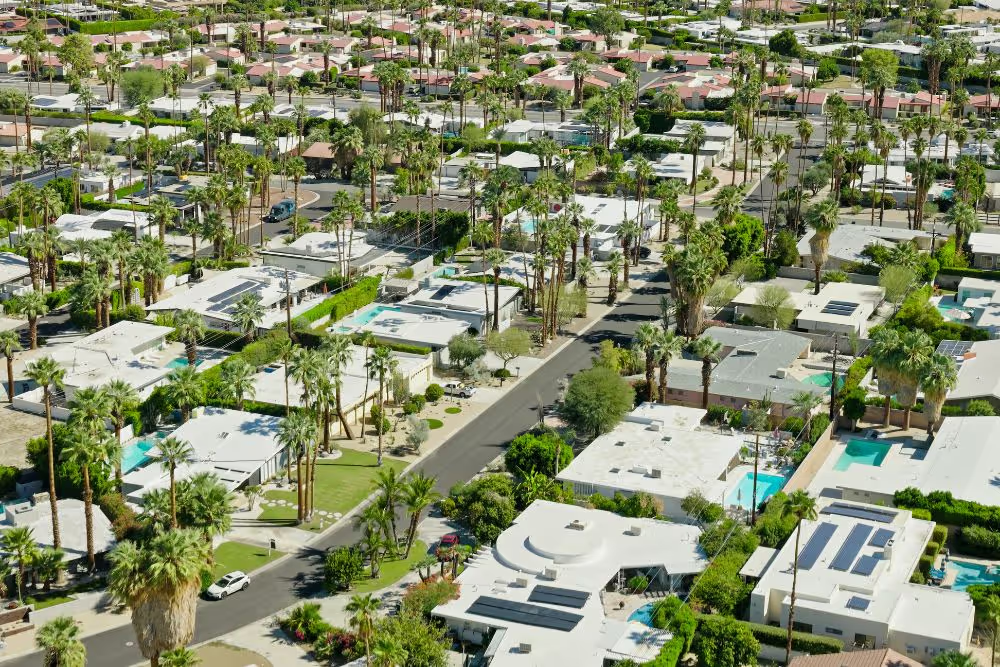
Metal roof inspection and repair in Palm Springs covers a surprisingly diverse range of properties, from the standing seam systems on mid-century modern homes that define the city's architectural identity to corrugated panels on patio covers, garages, and commercial buildings throughout the valley.
Metal Roof Inspection and Repair in Palm Springs
Metal roof repair in Palm Springs runs $300 to $1,500 for minor work: replacing failed fasteners and washers, resealing open seams, fixing a pipe boot or flashing detail, or addressing a small section of panel separation. Moderate repairs covering multiple problem areas, a larger flashing replacement, or a section of panel work run $1,500 to $5,000. Major repairs involving panel replacement, widespread fastener failure, structural flashing issues, or preparation for a coating application can reach $5,000 to $15,000 or more depending on roof type, size, and access.
Metal roofing in Palm Springs falls into three distinct categories that behave very differently under the desert climate and require different inspection and repair approaches. Standing seam systems on mid-century modern and contemporary homes are the most architecturally significant and longest-lived. Exposed fastener metal panel systems are common on commercial buildings and some residential applications. Corrugated metal is found widely on patio covers, accessory structures, garages, and older residential builds throughout the city.
On a recent project at a home in Vista Las Palmas, Palm Springs, we inspected a standing seam roof on a mid-century modern residence that had not been assessed in over a decade. The concealed clip system was performing well, but three of the four HVAC curb flashings had sealant that had hardened and pulled away from the curb base, and there were two sections of panel seam at the roof's lower edge where the factory sealant had dried out and the seam was partially open. Neither had leaked yet. Both were minor repairs that would have become moderate ones through the next rain season if they had been left another year.
Metal Roof Types Common in Palm Springs
Why Thermal Expansion Is the Primary Metal Roof Issue in Palm Springs
Every metal roof problem that is not corrosion-related traces back, in some way, to thermal movement. Metal expands when heated and contracts when cooled. In Palm Springs, a metal roof surface can reach 160 to 170 degrees on a summer afternoon and drop below 50 degrees on a winter night. That temperature range is extreme by California standards, and the cycling happens every single day across decades of service life.
The engineering response to thermal movement differs between roof types, which is the central difference between standing seam and exposed fastener systems. Standing seam handles thermal movement correctly by design: the floating clip system allows each panel to expand and contract freely along its length without any fastener in the weather surface resisting that movement. The panels ride on the clips. The clips handle the stress. The seam remains intact.
Exposed fastener systems handle thermal movement incorrectly by nature: each screw is a fixed point that resists panel movement. The expansion force is absorbed at that fixed point over thousands of cycles until the fastener loosens, the hole enlarges, and the washer seal fails. There is no design solution to this fundamental problem in a screw-down system other than frequent inspection and fastener maintenance.
Sealants at any penetration on either system type degrade under UV and thermal cycling. Even the best silicone or butyl sealants have a finite service life in Palm Springs conditions that is shorter than the metal panels they protect. Keeping the sealant at penetrations functional is the ongoing maintenance task that keeps an otherwise sound metal roof watertight.
What a Metal Roof Inspection Covers in Palm Springs
Cost of Metal Roof Repair in Palm Springs
Metal roof repair cost is heavily influenced by roof height, access complexity, and panel type. A second-story standing seam roof on a steep mid-century modern roofline requires more time and equipment than a single-story corrugated patio cover. New standing seam installation runs $10 to $16 per square foot. Corrugated and exposed fastener panel systems run $7 to $12 per square foot. Always get a written scope that separates fastener work, sealant work, panel work, and any deck or structural items, since these line items vary significantly between quotes on the same project.
Repair vs Replacement for Palm Springs Metal Roofs
Permits and Licensing for Metal Roof Work in Palm Springs
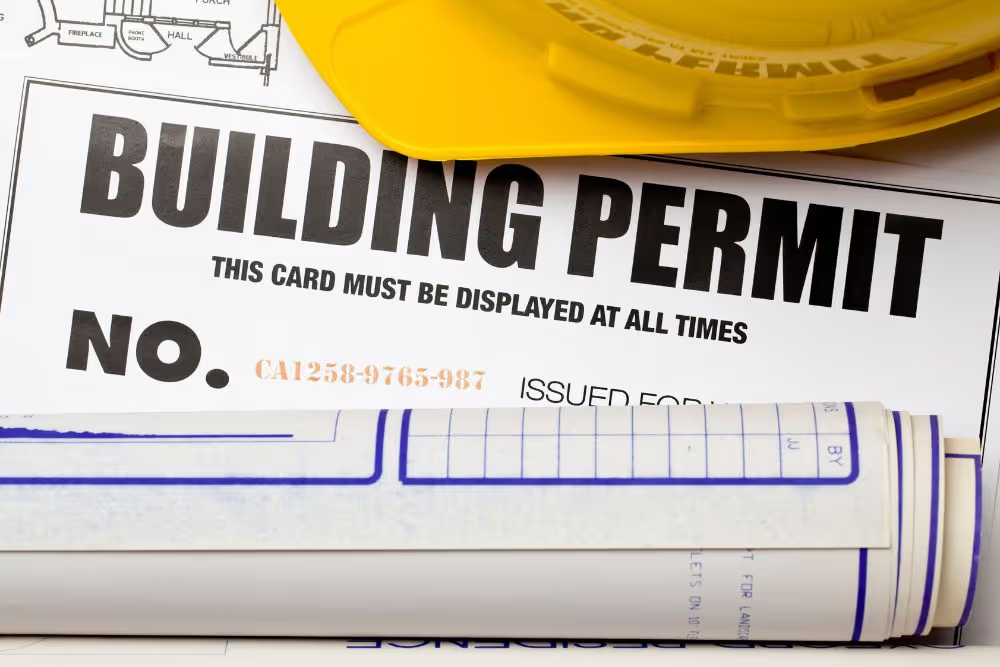
Minor metal roof repairs including fastener replacement, sealant work, and isolated flashing repair generally do not require a permit in Palm Springs. Full re-roofing and large-area panel replacement require a permit through the City of Palm Springs Building Department. Your contractor should pull the permit and schedule required inspections on your behalf.
All California roofing contractors must hold an active C-39 Roofing Contractor license from the Contractors State License Board. Verify license status before signing anything. Metal roofing work on architecturally significant mid-century modern homes in Palm Springs can sometimes involve historic district considerations. If the property is in a designated historic district, confirm with the Planning Department whether the proposed roofing material or color requires any additional review before pulling a building permit.
Truly Tough Roofing Serving Palm Springs and the Coachella Valley
Our roofing division at Truly Tough Roofing handles metal roof inspections, fastener replacement, sealant and flashing repairs, panel work, and full metal re-roofing across Palm Springs, Palm Desert, La Quinta, Rancho Mirage, Indio, and throughout the Coachella Valley. We work on standing seam systems, exposed fastener panels, and corrugated metal roofs across residential, commercial, and mid-century modern properties. Our roofing work is led by Alber Melara, a Coachella Valley native with over 20 years of hands-on roofing experience. Call us at 760-343-5807 or reach us at Roofing@TrulyTough.com.
Frequently Asked Questions
How much does metal roof repair cost in Palm Springs?
Minor repairs including fastener replacement, sealant at penetrations, or isolated flashing work typically run $300 to $1,500. Moderate repairs covering multiple problem areas or a flashing section run $1,500 to $5,000. Major repairs involving panel replacement, full-surface coating, or structural flashing overhaul can reach $5,000 to $15,000 or more. New standing seam installation runs $10 to $16 per square foot; corrugated and panel systems run $7 to $12 per square foot.
How long does a metal roof last in Palm Springs?
Standing seam metal roofing, properly installed and maintained, can last 40 to 70 years in Palm Springs. Exposed fastener metal panel systems typically last 30 to 50 years with active fastener maintenance. Corrugated metal roofing lasts 20 to 40 years depending on material quality, with basic galvanized steel on the shorter end and quality Galvalume or aluminum systems on the longer end. Metal is the longest-lived roofing system commonly installed in Palm Springs other than clay or concrete tile.
Why is my metal roof leaking around the screws?
Fastener backout. On exposed fastener and corrugated metal roofs, the daily thermal cycling of Palm Springs summers and winters works the screws back and forth over years until the neoprene washer beneath the screw head lifts away from the panel surface. Once the washer no longer seals the penetration, the fastener hole becomes a leak point. This is the most common metal roof leak cause in the valley and is addressed by replacing the failed fasteners with new screws and fresh neoprene washers.
What is oil-canning on a metal roof and should I be concerned?
Oil-canning is the wavy or rippled appearance in the flat sections of metal panels caused by thermal expansion stress that is not fully accommodated by the fastener system. It is primarily an aesthetic issue on most roofs and does not indicate a structural failure or an active leak. On standing seam systems it is almost always cosmetic. On exposed fastener systems it can be a sign that the panels are under more thermal stress than the fasteners are managing, which warrants a fastener inspection even if no leak is present yet.
Is standing seam metal roofing good for Palm Springs mid-century modern homes?
It is one of the best roofing systems available for that application. The concealed fastener clip system manages thermal expansion correctly, eliminating the fastener backout problem that affects screw-down systems. The clean seam-to-seam profile is architecturally consistent with mid-century modern design. The material itself reflects UV and handles extreme heat far better than asphalt shingles. And the 40 to 70-year service life makes it a long-term solution rather than a material that needs to be replaced within the ownership tenure of most homeowners.
How often should a metal roof be inspected in Palm Springs?
Every two to three years is the right interval for most metal roofs in Palm Springs, and annually for exposed fastener and corrugated systems over 10 years old. Always inspect after significant wind events, after any HVAC or solar work has been performed on the roof, and before listing the property for sale. The sealants at penetrations on any metal roof system are the components with the shortest service life, and catching sealant failures before they become leaks is the primary value of a regular inspection cycle.
Can solar panels be installed on a standing seam metal roof?
Yes, and standing seam is one of the preferred substrates for solar installation precisely because clamp-on mounting hardware can attach directly to the standing seams without any penetration through the metal surface. No holes, no penetration sealant to fail, no compromise to the weatherproofing of the roof. The solar array simply clamps to the seams. This makes standing seam metal roofs particularly well-suited for solar in Palm Springs compared to shingle or tile systems where every mounting point is a penetration that must be sealed.
How do I know if my metal roof needs repair or full replacement?
Isolated failures at penetrations, sealants, and fasteners on a structurally intact roof are repair situations regardless of age. Metal panels themselves rarely fail before the rest of the system. Replacement is warranted when rust has penetrated through the panel thickness across a significant portion of the roof, when multiple simultaneous failure modes make the cumulative repair cost approach replacement cost, or when the system is within a few years of end of life and a major investment like solar is being planned. A proper inspection gives you the specific condition of each component so the repair vs replacement decision is based on actual roof condition rather than age alone.







.svg)
