.svg)


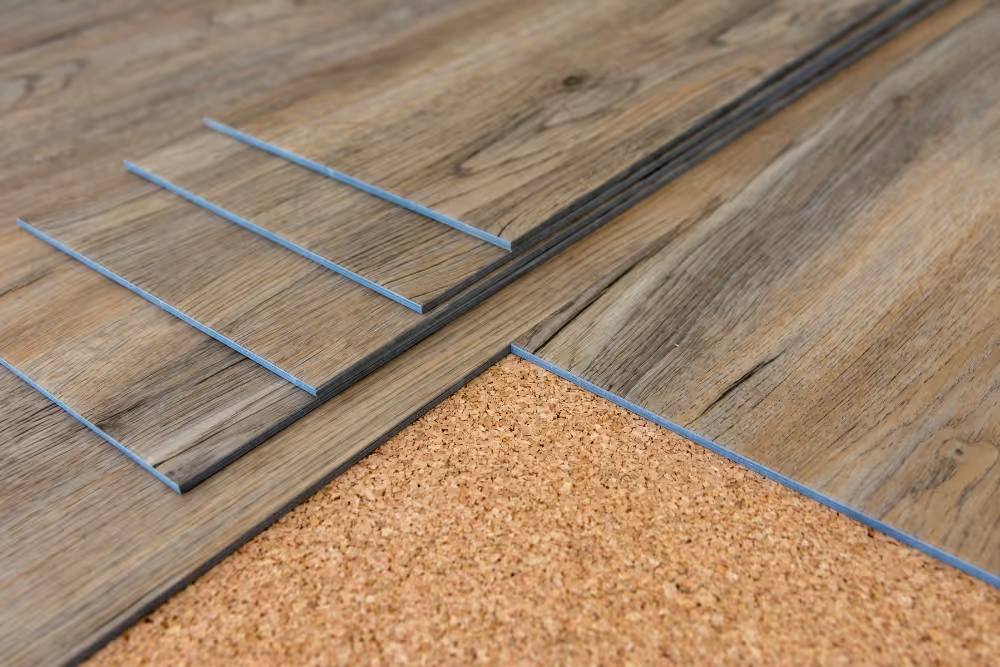
Luxury vinyl plank has become the most requested flooring upgrade across La Quinta over the past several years, and for good reason. It handles concrete slabs, pool homes, pets, and rental turnover better than almost any other product at its price point.
Luxury Vinyl Plank Installation and Repair in La Quinta
Luxury vinyl plank installation in La Quinta runs $5 to $12 per square foot installed for most residential projects. Standard click-lock products on a flat slab with minimal prep land at the lower end. Premium SPC products, subfloor leveling work, glue-down installations, or complex room layouts push cost toward the higher end. Repair work covering isolated plank replacement, loose planks, or minor water damage typically runs $200 to $2,000 depending on scope.
LVP fits the La Quinta market well because it addresses the two most common flooring challenges here simultaneously. First, almost every home in the area sits on a concrete slab, and LVP installs cleanly over concrete without the plywood subfloor system that solid hardwood requires. Second, La Quinta has a significant concentration of vacation homes, short-term rentals, and pool properties where waterproof flooring is not a preference but a practical necessity. LVP delivers both advantages at a cost well below tile or hardwood.
We recently completed a whole-home LVP installation in Griffin Ranch, La Quinta for a homeowner converting from carpet and tile throughout the main living areas. The concrete slab had one section near the laundry room that needed leveling before the floor could go down. Once that was addressed, the wide-plank light oak product the homeowner selected went wall to wall across roughly 1,800 square feet in just under two days. The finished floor photographs well and reads as a meaningful upgrade to the property's value and appeal.
SPC vs WPC vs Standard LVP for La Quinta Homes
Not all luxury vinyl plank is built the same. The core construction determines how the product performs in the specific conditions of a desert home, and it matters more than most homeowners realize when they first start shopping.
Wear Layer and Thickness Matter More Than Brand Name
The two numbers that determine how long LVP actually holds up in a La Quinta home are total thickness and wear layer thickness. These are the specifications to ask for when comparing products, not just the marketing name or price point.
Cost of LVP Installation and Repair in La Quinta
Old flooring removal adds $0.50 to $2.00 per square foot depending on what is being removed. Carpet comes out fast. Glued-down tile requires more time and effort and typically lands at the higher end of that range. Subfloor leveling, when needed, adds $1 to $3 per square foot. Always get an itemized quote separating materials, subfloor prep, old floor removal, installation, and trim work.
Desert Climate Considerations for LVP in La Quinta
Manufacturer installation guidelines for LVP specify that the product must remain in a climate-controlled environment between 60 and 90 degrees for its service life. That guideline is relevant in La Quinta in a specific way that does not apply in most other California markets.
- Vacant home temperature swings. Many La Quinta properties sit unoccupied for part of the year with HVAC systems set to energy-saving temperatures rather than full comfort settings. A home that reaches 95 to 100 degrees indoors during summer when the system is set to 85 or turned off entirely creates thermal stress on LVP, particularly flexible products. SPC rigid-core products handle these conditions significantly better than flexible LVP. If the home will regularly experience unoccupied periods during summer, SPC is the correct specification and the system should be set to keep indoor temperatures below 90 degrees even when unoccupied.
- Direct sun through large windows. LVP installation guidelines explicitly state that direct exposure to sunlight can cause expansion and discoloration, and that window coverings are required to prevent it. In La Quinta homes with large south and west-facing windows, this is a real installation consideration, not a footnote. UV-blocking window film, solar shades, or motorized blinds on heavily exposed windows protect the floor and are worth factoring into the project budget when LVP is going into a sun-exposed space.
- Concrete slab moisture. Even in the desert, concrete slabs emit moisture vapor. LVP installation over concrete requires a vapor barrier and a slab moisture reading within the manufacturer's specified range before installation begins. Skipping moisture testing on the assumption that the desert climate eliminates the concern is the cause of a number of LVP failures we see in homes throughout the valley where a previous installer did not perform this step.
- Expansion gaps at every wall. LVP requires a perimeter expansion gap to allow for the movement that occurs with temperature and humidity changes. In desert conditions where temperature swings between seasons are significant, those gaps matter. Floors installed tight to walls or without proper transitions at doorways can buckle during periods of expansion. Proper installation technique includes consistent gap spacing at every perimeter edge and correct transition strip specification at all room thresholds.
- Pool area proximity. LVP is waterproof from above, but it is not intended for outdoor installation or areas where water pooling, standing moisture, or sustained outdoor exposure occurs. For covered patio areas adjacent to pools, LVP in a protected indoor space stops at the threshold. Outdoor-rated materials handle what is beyond that point. If water regularly tracks into the home from the pool area, LVP in the adjacent indoor space handles that traffic without damage, which is one of the reasons it is the preferred material in La Quinta pool homes.
Installation Methods for La Quinta Homes
LVP vs Tile vs Hardwood for La Quinta Homes
Truly Tough Flooring Serving La Quinta and the Coachella Valley
Our flooring division at Truly Tough Flooring handles luxury vinyl plank installation, repair, and replacement across La Quinta, Palm Desert, Palm Springs, Rancho Mirage, Indio, and throughout the Coachella Valley. We assess slab conditions before recommending a product, manage subfloor leveling and vapor barrier installation as part of the project, and specify the right core and wear layer for each application. Call us at 760-343-5885 or reach us at Flooring@TrulyTough.com.
Frequently Asked Questions
How much does luxury vinyl plank installation cost in La Quinta?
Most LVP installations in La Quinta run $5 to $9 per square foot for standard to mid-range projects including materials and labor. Premium SPC products, significant subfloor leveling, glue-down method, or complex layouts push cost toward $9 to $12 per square foot. Old flooring removal and disposal is typically a separate line item at $0.50 to $2.00 per square foot depending on what is being removed.
What type of LVP is best for La Quinta conditions?
SPC rigid-core LVP is the strongest specification for La Quinta homes, particularly vacation rentals and pool properties. Its stone-plastic composite core handles temperature variation between occupied and unoccupied periods significantly better than flexible LVP, resists denting under heavy traffic, and is more forgiving of minor subfloor imperfections. A 20 mil wear layer is recommended for high-traffic or rental applications.
Can LVP be installed over a concrete slab in La Quinta?
Yes, and it is the most common installation scenario in La Quinta given that most homes are slab on grade. The slab must be flat to within three-sixteenths of an inch over a ten-foot span, within the manufacturer's moisture vapor emission limits, and clean before installation. A 6 mil vapor barrier is required over concrete regardless of the desert climate. Moisture testing is not optional.
How does the desert heat affect LVP flooring?
LVP must remain in a climate-controlled environment between 60 and 90 degrees for its service life per manufacturer guidelines. Homes that sit unoccupied with HVAC set above 90 degrees or turned off entirely during summer create thermal stress on flexible LVP products. SPC rigid-core handles these conditions significantly better. Direct sun through large south or west-facing windows also causes expansion and discoloration, making UV-blocking window film or solar shades a worthwhile addition in heavily sun-exposed rooms.
Is LVP waterproof enough for a pool home in La Quinta?
Yes, for indoor areas. LVP is fully waterproof from above, making it ideal for pool homes where wet feet tracking in from the pool are routine. It is not rated for outdoor or semi-outdoor installation where standing water, direct rain, or extreme outdoor temperatures are present. The floor stops at the indoor threshold. For covered outdoor patio areas, outdoor-rated materials are appropriate.
How long does LVP last in the Coachella Valley?
Quality SPC LVP with a 20 mil wear layer installed and maintained correctly lasts 15 to 25 years in most residential applications. Lower-grade products with thin wear layers in high-traffic rental properties may show surface wear in five to eight years. The specification decisions made at installation, particularly core type and wear layer thickness, determine the replacement timeline more than any other factor.
Can LVP be repaired without replacing the whole floor?
Yes, for click-lock floating installations. Individual planks can be removed and replaced by working from the nearest wall or a seam back to the damaged section. The main challenge is finding a matching replacement plank, particularly on older floors where the product may be discontinued. Saving a box of flooring from the original installation eliminates this problem entirely. Glue-down installations are harder to repair without affecting adjacent planks.
Does LVP add value to a La Quinta home for resale?
Fresh, high-quality LVP throughout the main living areas of a La Quinta home is a meaningful upgrade relative to worn carpet or dated tile. It photographs well, reads as a modern improvement, and appeals to buyers who do not want to immediately replace flooring after purchasing. For vacation rental properties specifically, updated flooring is one of the most visible property improvements and directly affects listing photo quality and guest perception of value.







.svg)
