.svg)


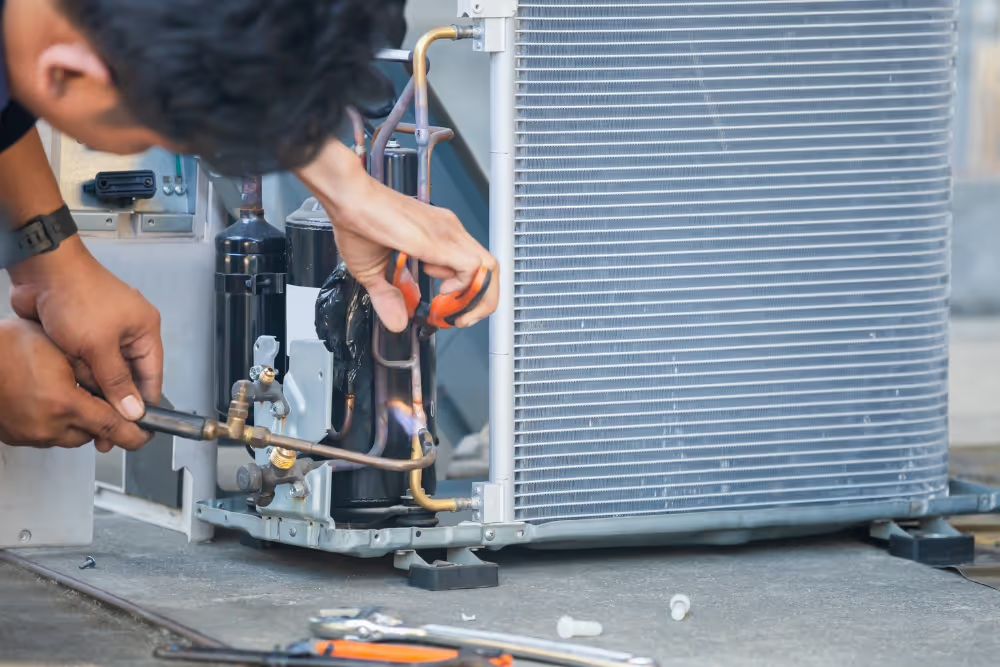
Whether you need an inspection, tune-up, repair, maintenance visit, upgrade, new installation, or full replacement, here is what honest HVAC service looks like in La Quinta from people who work this valley every day.
HVAC Maintenance, Inspection & Repair in La Quinta
La Quinta heating, ventilation, and air conditioning systems run in one of the hottest climates in the United States. Summer temperatures push past 115 and can reach 125 degrees on the worst days. Your system is on most of the time from May through October, and a lot of La Quinta homes are larger properties with bigger square footage to condition, multiple zones to manage, and higher equipment costs when something goes wrong. A pre-season inspection and tune-up runs $150 to $300. Skipping it and landing a compressor failure in the middle of summer can cost $1,500 to $3,500 or more. Whether you need maintenance, a repair, a system inspection, a full replacement installation, or an upgrade to more efficient equipment, getting ahead of problems is always the better call.
We handle the full range of HVAC work across La Quinta and the Coachella Valley. We work on all equipment types and all major brands. If something is not right with your heating or air conditioning, we can find it and fix it in a single visit.
La Quinta HVAC Costs
These are what jobs actually cost in the La Quinta area. Final price depends on system type, size, brand, accessibility, and scope of work. Every job is different.
What La Quinta Does to HVAC Equipment
La Quinta sits at the southeast end of the valley where heat builds and holds through long summer afternoons. The Santa Rosa Mountains trap warm air and the city sees some of the highest sustained temperatures in the region. Systems here do not get much of a break. From late May through September, your air conditioning is running most of the day just to keep indoor temperatures manageable.
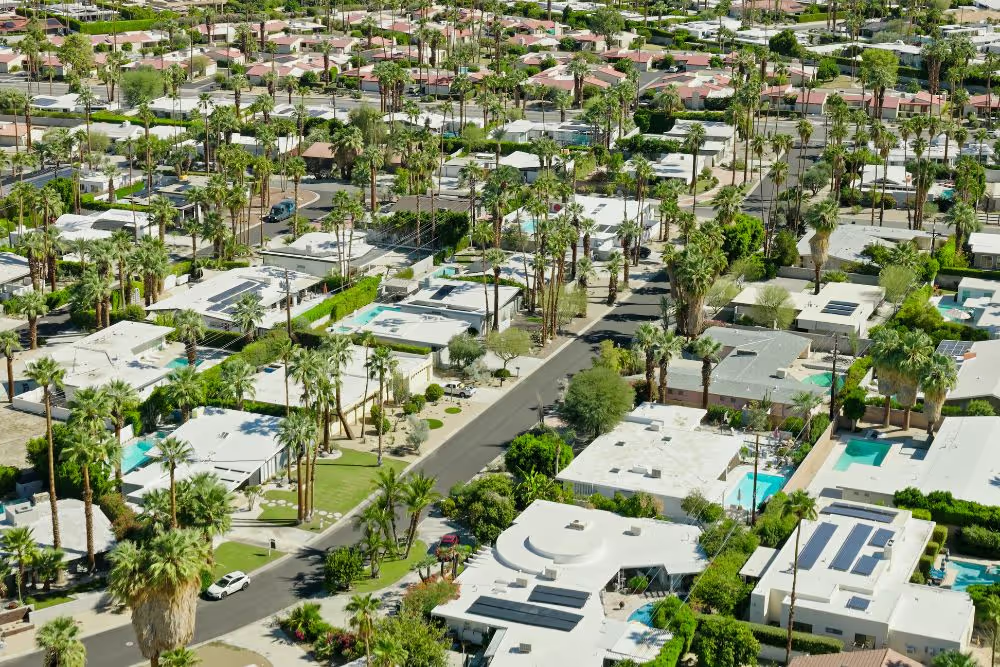
A lot of La Quinta properties are in gated golf communities with larger homes and higher-end HVAC setups. That tends to mean more square footage to cool, more zones to manage, and more expensive components when something wears out. It also means the cost of having no air conditioning for even one or two days is a bigger problem than it would be in a smaller home.
The most consistent failure we see in La Quinta on emergency calls is a capacitor that weakened over the summer and finally gave out. Capacitors are small electrical parts that help start and run the compressor and condenser fan motor. Heat shortens their life faster than almost anything else. A failed capacitor can leave a compressor trying to start without enough power, drawing too much current, and burning itself out if the problem goes unnoticed. Catching a weak capacitor during a tune-up costs around $200. Replacing a burned-out compressor costs five to fifteen times that depending on the system.
What We Check During a La Quinta HVAC Inspection
On a recent job at a home in PGA West, La Quinta, the homeowner called because the system was running more than usual but not quite keeping up. We got there and found a condenser coil packed with dust and debris, a drain line that had partially blocked and was backing up into the pan, and a blower motor drawing higher amperage than it should. None of it had caused a full shutdown yet. All three issues were adding up to reduced efficiency and extra strain on the compressor. We handled it in one visit before any of it became an emergency.
Here is what a proper inspection and tune-up covers:
Most Common HVAC Problems We See in La Quinta
These are the issues that come up most often on maintenance, inspection, and repair calls across La Quinta. Some are driven by the desert heat. All of them are more likely when a system goes a year or more without being looked at.
- Capacitor failure causing the system not to start, short cycling, or no cooling at all. The most common single repair we make across La Quinta.
- Dirty condenser coil loaded with dust and fine sand, raising system head pressure and forcing the compressor to work harder on every cooling cycle.
- Refrigerant leaks at line set connections, evaporator coil fittings, or the TXV valve slowly cutting cooling capacity until the home cannot reach setpoint.
- Clogged drain line backing up into the drain pan until it overflows and causes water damage inside the home. Common in La Quinta homes that run AC heavily for months without a service visit.
- Frozen evaporator coil from a dirty air filter, low refrigerant charge, or a weak blower motor reducing airflow across the coil. Can happen even when outdoor temps are over 110 degrees.
- Blower motor failure causing weak airflow or no airflow from the air handler even when the compressor and condenser unit are running fine.
- Contactor failure where burned or pitted contacts prevent the compressor or condenser fan motor from getting power, leaving the system unable to cool.
- Ductwork leaks at duct boot connections, flexible duct joints, or duct transitions in hot attic spaces, losing conditioned air before it reaches the living areas.
- Thermostat not working correctly due to bad low voltage wiring, a failed control board, or a smart thermostat that has lost communication with the system.
- System constantly running without hitting setpoint, pointing to a refrigerant issue, significant duct leakage, or equipment that was not sized right for the home's cooling load.
Equipment Types We Service and Replace in La Quinta
La Quinta has a mix of older homes with original package units and newer construction in golf communities with more complex split systems and multi-zone setups. We work on all of it.
Package units and rooftop units are common throughout La Quinta, particularly in homes built before the late 1990s. The compressor, condenser coil, evaporator coil, and air handler all sit in one cabinet on the roof. Direct sun exposure and extreme heat accelerate wear on every component in a package unit. We service and replace units from Carrier, Trane, Lennox, Rheem, Ruud, Goodman, Amana, Bryant, and York.
Split system air conditioners with a separate outdoor condenser unit and indoor air handler or fan coil unit are standard on newer La Quinta builds. They are generally more efficient than comparable package units and easier to pair with zone control systems, smart thermostats, and variable speed motors for better comfort and lower energy use.
Ductless mini splits and multi zone mini split systems are a practical solution for La Quinta casitas, guesthouses, garages, and any room the central system does not condition well. A ceiling cassette mini split or floor mounted mini split delivers cooling directly to the space without needing ductwork. Multi zone setups serve several areas from one outdoor unit, making them popular on properties with detached structures.
Heat pumps and dual fuel systems are worth considering if you are replacing an older gas furnace setup. La Quinta winters are mild enough for a heat pump to handle heating efficiently most of the season. A dual fuel system adds a gas furnace for backup when overnight temperatures drop low enough to reduce heat pump efficiency.
High efficiency furnaces and electric furnaces serve La Quinta homes that use the heating side of a split system through the mild winter months. Whether you have a gas furnace, electric furnace, or air handler with heat strips, we inspect, repair, and replace all of them.
HVAC Replacement in La Quinta
When a system is past 15 years old and has been requiring repeated repairs, replacement usually makes more financial sense than continuing to patch it. The money spent on individual component repairs does not carry over toward a new system, and in a desert climate, each repair season tends to bring a new failure right behind the last one.
We size every replacement correctly using Manual J load calculations that account for your home's specific insulation, window exposure, ceiling height, and the heat loads in La Quinta's climate zone. An oversized system short cycles, never runs long enough to manage humidity, and wears out faster than a correctly sized one. An undersized system runs without stopping and still cannot keep the home cool on the worst summer days.
New installations in La Quinta must comply with California's Title 24 HVAC energy efficiency requirements, which include minimum SEER2 equipment ratings and duct leakage testing when major components are replaced. We handle all compliance documentation and HERS verification on every installation job.
The City of La Quinta requires a building permit for AC replacement. According to the La Quinta Building Division FAQ, replacing an air conditioning unit requires a permit to confirm state energy requirements are met and to protect your homeowner's insurance coverage. A fire resulting from an unpermitted installation can give your insurer grounds to deny the claim. We pull every permit and schedule every inspection as part of our replacement process.
Duct Sealing and Repair in La Quinta
La Quinta attics get extremely hot in summer. Flexible duct running through an unconditioned attic space without proper duct insulation is delivering conditioned air through a hot pipe. Any gap at a duct boot, duct transition, or duct takeoff means the cool air your system just produced is going straight into that attic instead of into the room you are trying to cool.
Duct leakage of 20 to 30% is something we see on a lot of older La Quinta homes, particularly in communities built in the 1980s and 1990s where original ductwork has never been addressed. Sealing duct connections with mastic, replacing deteriorated flexible duct, and upgrading duct insulation can improve room-by-room comfort and reduce energy costs without touching the air conditioning equipment at all.
California's energy code requires duct leakage testing any time an air handler or outdoor condenser unit is replaced. We perform this testing on every qualifying installation and offer it as a standalone service when uneven temperatures across rooms or unexplained high bills point to ductwork as the problem.
Indoor Air Quality for La Quinta Homes
La Quinta homeowners spend a lot of time indoors with windows closed and the same air recirculating through the system. Desert dust gets pulled in through every gap in the building envelope. Standard throwaway air filters catch visible particles but do little for fine dust, mold spores, and bacteria that build up over months of continuous operation.
We install UV air purifiers and UV lights inside the air handler that destroy mold and bacteria at the coil before they get pushed through the ductwork. Electronic air cleaners and media filters are a meaningful upgrade for homes where dust or allergies are a concern. For properties that feel stale or have elevated indoor CO2 from limited fresh air exchange, ERV systems and HRV systems bring in filtered outside air without overloading the cooling system. A whole house dehumidifier handles monsoon season moisture separately from the thermostat setting so the system does not have to fight both problems at once.
Many La Quinta homeowners also use their properties as second homes or vacation rentals. A UV air purifier and good filtration make a real difference in the indoor air quality of a home that sits closed for weeks at a time between visits.
Licensing and Permits: What to Verify in La Quinta
California HVAC contractors must hold a C-20 Warm-Air Heating, Ventilating, and Air-Conditioning license from the CSLB. This covers installation, maintenance, service, and repair of all heating and cooling systems including ductwork, controls, and thermostats. Look up any contractor's license number on the CSLB website before agreeing to any work. The search takes 30 seconds and tells you whether the license is active, bonded, and insured.
La Quinta requires a building permit for any air conditioning replacement. The city's building division FAQ makes clear that this protects you on two fronts. It ensures your new system meets California energy code requirements. It also protects your homeowner's insurance coverage. An unpermitted installation can give your insurer grounds to deny a claim if a fire or other incident is tied to the work. We handle permitting and inspection on every replacement job we do in La Quinta.
Truly Tough HVAC: Serving La Quinta and the Coachella Valley
Our Truly Tough HVAC division handles maintenance, inspections, tune-ups, repairs, and full system replacement across La Quinta, Palm Springs, Palm Desert, Rancho Mirage, Indio, and throughout the Coachella Valley. We work on central air conditioners, package units, rooftop units, split systems, ductless mini splits, multi zone systems, heat pumps, dual fuel systems, gas furnaces, and electric furnaces. We service all major brands including Carrier, Trane, Lennox, Rheem, Ruud, Goodman, Amana, Bryant, and York. We also do duct sealing, duct replacement, thermostat and smart thermostat upgrades, and indoor air quality installations.
If your system is not cooling like it should, running your bills up, making noise, or has not been serviced in a while, give us a call. We come out, tell you what is actually going on, and give you a straight answer. Reach us at 760-343-5728 or HVAC@TrulyTough.com.
Frequently Asked Questions
How often should I service my HVAC system in La Quinta?
At least once a year, and ideally before the summer cooling season. La Quinta systems run hard for six or more months out of the year. That kind of runtime means annual maintenance is not optional, it is how you protect the equipment and avoid emergency calls in peak heat.
What does HVAC maintenance cost in La Quinta?
A standard inspection and tune-up runs $150 to $300 per system. If repairs are needed, those are quoted separately after the inspection. Get a written scope before agreeing to anything.
What does HVAC repair cost in La Quinta?
Common repairs like a capacitor, contactor, or drain line service run $200 to $600. Larger repairs involving the compressor, evaporator coil, or blower motor range from $1,200 to $3,500 or more. A written estimate before any work starts is standard.
Do I need a permit to replace my AC in La Quinta?
Yes. The City of La Quinta requires a building permit for air conditioning replacement. Your contractor should pull it and handle all inspections on your behalf. An unpermitted installation can void your equipment warranty and affect your homeowner's insurance coverage.
Why is my AC not keeping up in La Quinta summer heat?
The most common causes are a dirty condenser coil, low refrigerant from a leak, a weak capacitor, duct leakage, or equipment that was undersized for the home's actual cooling load. A proper inspection will find the cause in a single visit.
How long does an HVAC system last in La Quinta?
Most well-maintained systems run 12 to 16 years in desert climates. High annual runtime shortens equipment life faster than age alone. Systems that go without maintenance tend to reach the end of their useful life sooner and break down more expensively when they do.
Is a ductless mini split a good option for a La Quinta casita or guesthouse?
Yes. Ductless mini splits are a strong choice for detached casitas, guesthouses, and garages in La Quinta where running ductwork is not practical. They eliminate duct losses entirely and can be very efficient in desert heat when properly sized.
How do I verify my HVAC contractor is licensed in California?
Search the CSLB website by contractor name or license number. HVAC contractors need a C-20 classification. The search also shows bond and insurance status. Always verify before signing any contract or authorizing any work.








.svg)
