.svg)



Whether you need an inspection, repair, tune-up, maintenance visit, upgrade, new installation, or full replacement, here is what professional HVAC service looks like in Indian Wells from a team that works the valley every day.
HVAC Inspection, Repair & Tune-Up Services in Indian Wells
Indian Wells heating, ventilation, and air conditioning systems carry one of the highest expectations for performance of any community in the Coachella Valley. This is one of the smallest and most exclusive cities in California, with large private estates, resort-adjacent properties, and a significant number of seasonal residents who need their systems to work flawlessly whether they are here or not. Summer temperatures push past 115 degrees and can hit 125 on the worst days. A pre-season inspection and tune-up runs $150 to $300. A system failure in a home that is occupied by guests, returning owners, or managed on a short-term basis is a problem that costs more than just the repair. Whether you need an inspection, a repair, a tune-up, routine maintenance, an upgrade, a new installation, or a full replacement, we handle all of it across Indian Wells and the Coachella Valley.
We work on all equipment types and all major brands. If your heating or air conditioning is not performing the way it should, we will find the problem and give you a clear answer on what it takes to fix it.
Indian Wells HVAC Costs
These are what jobs actually cost in the Indian Wells area. Final price depends on system type, size, brand, accessibility, and scope of work. Every job is different.
What Makes Indian Wells Different
Indian Wells is one of the smallest cities in California by population, with fewer than 6,000 full-time residents. But the homes here are large, the properties are well maintained, and the expectations for every service that touches a home are high. Many homeowners in Indian Wells are seasonal residents who spend spring and fall here and may be away for months at a time. A system that develops a problem in July while the owner is in another state is not just an inconvenience. It can damage interiors, affect managed properties, and create liability on homes that are occupied by guests or managed for short-term rental.
Indian Wells also has a significant number of luxury estate properties with custom HVAC configurations. Multi-zone systems, VRF setups, high-efficiency equipment from premium brands, and integrated smart home controls are common here in a way they are not throughout the rest of the valley. These systems deliver exceptional comfort when they are properly maintained and properly serviced. When they are neglected, the failures are more complex and the repairs are more expensive than on standard residential equipment.
The desert conditions are the same as everywhere else in the valley. Summer heat, dust accumulation in condenser coils, capacitor degradation from sustained high temperatures, and drain line blockages from months of continuous operation are the same problems we find across every city we serve. The difference in Indian Wells is the stakes attached to those problems and the standard of care the homes and their owners expect.
What a Full HVAC Inspection and Tune-Up Covers
We did a full pre-season inspection and tune-up at a home in The Vintage Club, Indian Wells ahead of the summer season for a homeowner who would be away from April through October. The system had three zones, two condenser units, and smart thermostats on each zone. We found a capacitor on the second condenser reading below spec, a condensate drain line that had partially clogged on the primary air handler, and a zone damper on the east wing that was not fully closing when commanded by the thermostat. None of it would have caused an immediate failure. All three would have either triggered a breakdown or caused the system to run inefficiently all summer with nobody in the house to notice. We addressed everything in one visit and confirmed the smart thermostats were correctly programmed for the away schedule before leaving.
Here is what a thorough HVAC inspection and tune-up covers:
Most Common HVAC Problems in Indian Wells
The same desert conditions that affect every valley city affect Indian Wells. What is different here is that the homes often have multiple systems and more complex configurations, which means more opportunities for one thing to go wrong quietly while the owner is away.
- Capacitor failure on one condenser unit in a multi-system home while the other unit carries the full load. The system that is running seems fine. The zone served by the failed unit slowly heats up and nobody notices until there is real interior damage.
- Dirty condenser coil from a full desert summer of dust accumulation, raising head pressure and wearing on compressors that are already running in extreme heat.
- Zone damper failure causing one wing or level of a larger home to lose independent temperature control. A stuck-open damper wastes conditioned air. A stuck-closed damper leaves a zone with no cooling at all.
- Refrigerant leaks at line set connections or evaporator coil fittings reducing cooling capacity slowly until the system cannot maintain setpoint temperatures on the hottest days.
- Clogged drain line on a secondary air handler overflowing into a ceiling or wall in a part of the home that is not regularly occupied. Drain pan overflow damage in an unoccupied area can be extensive before anyone discovers it.
- Smart thermostat misconfiguration causing systems to run incorrectly during an extended absence, either running too much and driving up the SCE bill or not running enough and allowing the home to overheat.
- Frozen evaporator coil from a dirty air filter, low refrigerant, or a weak blower motor. Common on systems that run all summer without a filter change while the home is vacant.
- Blower motor failure resulting in weak or no airflow from one air handler in a multi-unit home, affecting comfort in that zone while the rest of the system appears to run normally.
- Ductwork leaks in attic spaces losing conditioned air into an unconditioned attic on every system in the home, adding up significantly on larger Indian Wells properties with more total duct run.
- Contactor failure leaving one compressor unable to start, with no advance warning and no obvious indicator until that zone stops cooling.
Equipment Types We Service in Indian Wells
Indian Wells homes tend toward larger, more sophisticated HVAC configurations than most of the valley. We have the experience to work on all of it correctly.
Multi-zone split systems with multiple outdoor condenser units, multiple air handlers, zone control systems, and individual smart thermostats for each zone are common throughout Indian Wells. These systems deliver precise comfort across large homes when they are properly maintained. They require technicians who understand zone damper operation, zone control board diagnostics, and how to balance multiple systems against each other for even comfort and efficient operation.
Package units and rooftop units still appear on some older and mid-range Indian Wells properties. The compressor, condenser coil, evaporator coil, and air handler all sit in one cabinet on the roof. We service and replace package units from Carrier, Trane, Lennox, Rheem, Ruud, Goodman, Amana, Bryant, and York.
High-efficiency split systems with variable speed compressors and ECM motors are well suited to Indian Wells homes where occupants spend money on premium equipment and expect it to perform. Variable speed systems run quieter, manage humidity better, and use less electricity than single-stage units. They do require technicians who know how to diagnose and service the variable speed controls and inverter boards, not just the refrigerant circuit.
Ductless mini splits and multi zone mini split systems work well for guest casitas, standalone guesthouses, pool houses, and any space that benefits from independent climate control. A ceiling cassette mini split or floor mounted mini split delivers cooling directly to the space without ductwork. Multi zone setups are common on Indian Wells properties with multiple detached structures.
Heat pumps and dual fuel systems make sense on replacement in Indian Wells, where mild winters mean a heat pump handles the heating load efficiently for most of the season. A dual fuel system adds gas furnace backup for the coldest nights.
Pre-Season and Pre-Arrival Inspections for Indian Wells Homeowners
A significant number of Indian Wells homeowners are not in residence year round. Some arrive for the winter season. Others use the property for a few weeks in spring and fall. Some have their homes managed by a property manager or caretaker during extended absences. In any of these situations, having someone inspect and verify the HVAC systems before you arrive, or before guests arrive, is worth doing.
A pre-arrival inspection covers everything in the full tune-up checklist above. We confirm every system is operational, every thermostat is correctly programmed, every filter is fresh, and every drain line is clear. If anything needs attention, we address it before you get there rather than after you arrive to a house that has not been cooling properly for a week.
We coordinate with property managers and caretakers directly when the owner is not in residence. We show up, do the work, document what was found and what was done, and leave a clear report. If anything warrants a call to the owner before we proceed, we make that call. No surprises.
HVAC Replacement in Indian Wells
When a system is past its useful life in Indian Wells, replacement is an investment in the property, not just in comfort. Premium homes benefit from premium equipment: high-efficiency systems with variable speed compressors, integrated smart controls, and proper zoning produce better comfort, lower bills, and quieter operation than aging single-stage equipment that has been patched through too many summers.
We size every replacement correctly using Manual J load calculations based on the home's specific insulation, ceiling height, window orientation, and the heat loads in Indian Wells's desert climate. For multi-system homes we size and balance each system and zone to work together rather than fighting each other.
All new installations must comply with California's Title 24 HVAC energy efficiency requirements, including minimum SEER2 equipment ratings and duct leakage testing when major components are replaced. We handle all compliance documentation and HERS verification on every installation.
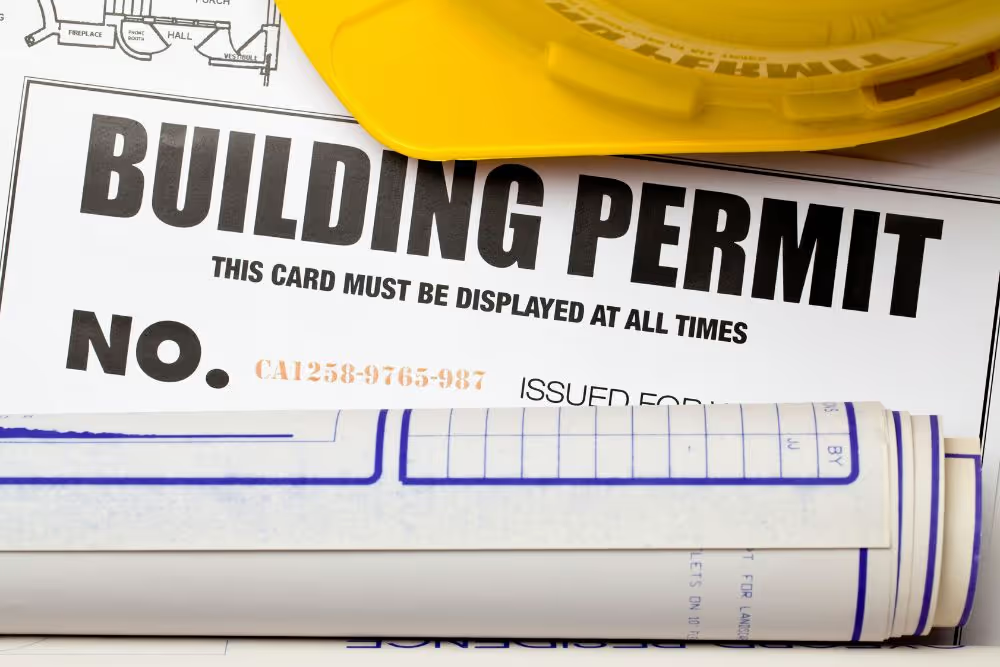
The City of Indian Wells has its own Building Department that issues permits and performs inspections for all construction and mechanical work. The Indian Wells Building Department handles permit applications online through the city's Permit Hub. All HVAC replacement work requires a mechanical permit before work begins. We pull every permit and manage every inspection on every replacement job.
Indoor Air Quality in Indian Wells
Indian Wells homes that sit vacant for extended periods accumulate dust in the ductwork, harbor mold growth on evaporator coils that run through high-humidity monsoon months without regular cleaning, and recirculate stale air through systems that have not had filter changes in months. When owners or guests arrive, the first few days of operation pull that accumulated buildup through the living space.
We install UV air purifiers and UV lights inside the air handler that kill mold, bacteria, and airborne pathogens at the coil. On homes that sit vacant for extended stretches, a UV system running on the coil through those months keeps the indoor air environment clean and the coil surface free of biological growth. Electronic air cleaners and media filters provide a meaningful upgrade over standard filters for fine dust and allergen control. Whole house dehumidifiers manage monsoon season moisture independently of the thermostat, protecting finishes, furnishings, and electronics in a closed home during the most humid weeks of the year.
Licensing and Permits: What to Verify in Indian Wells
California HVAC contractors must hold a C-20 Warm-Air Heating, Ventilating, and Air-Conditioning contractor license from the CSLB. This covers installation, maintenance, service, and repair of heating and cooling systems, including ductwork, controls, and thermostats. Before you agree to any HVAC work in Indian Wells, look up the contractor's license number on the CSLB website. The search takes 30 seconds and shows whether the license is active, bonded, and insured.
Any replacement of a condenser unit, air handler, or package unit in Indian Wells requires a mechanical permit through the city's Building Department. Tune-ups and repairs generally do not. A contractor who suggests skipping the permit to save time or money is not someone you want working on a home at this level. An unpermitted installation voids equipment warranties and creates real problems if a claim is ever tied to the work.
We are fully licensed, bonded, and insured. We pull every permit and handle every inspection as part of the job.
Truly Tough HVAC: Serving Indian Wells and the Coachella Valley
Our Truly Tough HVAC division handles inspections, tune-ups, repairs, pre-season and pre-arrival service, and full system replacement across Indian Wells, Palm Desert, Rancho Mirage, La Quinta, Palm Springs, and throughout the Coachella Valley. We work on multi-zone split systems, central air conditioners, package units, rooftop units, high-efficiency variable speed systems, ductless mini splits, heat pumps, dual fuel systems, and all associated ductwork, zone controls, and smart thermostats. We service all major brands including Carrier, Trane, Lennox, Rheem, Ruud, Goodman, Amana, Bryant, and York. We also handle duct sealing, duct replacement, smart thermostat upgrades, and indoor air quality installations.
Whether you are in residence, preparing for arrival, or managing the property from out of state, call us. We will take care of the system and report back clearly on what was done and what was found. Reach us at 760-343-5728 or HVAC@TrulyTough.com.
Frequently Asked Questions
How often should I tune up my HVAC system in Indian Wells?
At least once a year, and ideally before the summer season starts if your home is a seasonal residence. If the property sits unoccupied for extended periods, a pre-arrival inspection before you return ensures everything is operating correctly when you get there.
What does an HVAC inspection and tune-up cost in Indian Wells?
A standard inspection and tune-up runs $150 to $300 per system. Multi-system homes are priced per system. Any repairs found are quoted separately before any work is done. Always get a written scope upfront.
Can you service my Indian Wells home while I am away?
Yes. We coordinate directly with property managers, caretakers, or gate staff. We complete the inspection and service, document what was found and what was done, and provide a clear report. If anything warrants owner approval before proceeding, we contact you first.
Do I need a permit to replace my AC in Indian Wells?
Yes. The City of Indian Wells Building Department requires a mechanical permit for HVAC system replacement. The city handles permits through its online Permit Hub. Your contractor should pull the permit and manage all inspections on your behalf.
My home has multiple HVAC systems and zones. Do you service those?
Yes. Multi-zone systems with multiple condensers, air handlers, zone dampers, zone control boards, and smart thermostats are standard work for us across Indian Wells. We test every component of every zone, not just the primary system.
What should I set my thermostats to when my Indian Wells home is unoccupied?
Most HVAC technicians recommend 85 to 88 degrees as an unoccupied setback temperature in the desert. Low enough to prevent damage to finishes, furnishings, and electronics from extreme interior heat, but not so low that you are cooling an empty house to comfortable temperatures all summer. We can verify and program your smart thermostats for the correct away schedule during any service visit.
How long does an HVAC system last in Indian Wells?
Well-maintained systems typically run 12 to 16 years in the desert. Premium variable speed and multi-stage equipment often lasts toward the higher end of that range when properly serviced. Equipment that runs all summer unattended without service tends to fail sooner and more expensively.
How do I verify my HVAC contractor is licensed in California?
Search the CSLB website by license number or company name. HVAC contractors need a C-20 classification. The search also shows bond and insurance status. Do this before signing any contract or approving any work.







.svg)
