.svg)


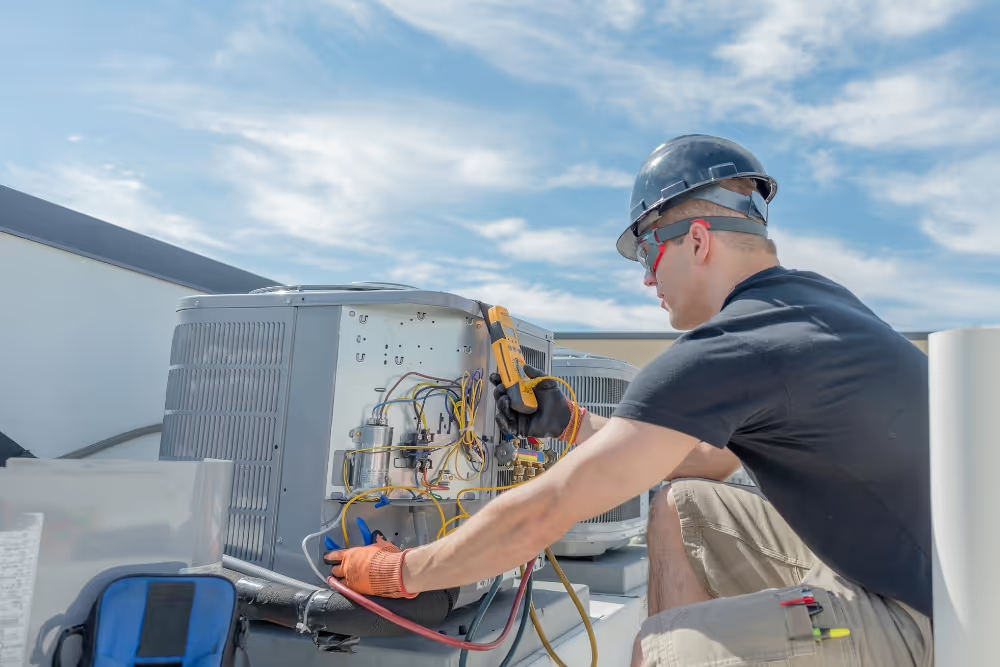
Whether you need an inspection, tune-up, repair, maintenance visit, upgrade, new installation, or full replacement, here is what honest HVAC service looks like in Coachella from a team that works the valley every day.
HVAC Inspection, Maintenance & Repair Services in Coachella
Coachella heating, ventilation, and air conditioning systems work in one of the hottest stretches of the valley. The city sits at the far eastern edge where temperatures regularly push past 115 degrees and can hit 125 on the worst summer days. Your system runs from May through October with very little rest, and in Coachella a lot of that equipment is older and has never been professionally serviced. A pre-season inspection and tune-up runs $150 to $300. A blown compressor in the middle of August runs $1,500 to $3,500 or more, and nobody wants to be without air conditioning in this heat while they wait for parts. Whether you need a routine inspection, a repair, ongoing maintenance, a system upgrade, a fresh installation, or a full replacement, we handle all of it across Coachella and the Coachella Valley.
We work on all equipment types and all major brands. If your heating or cooling is not doing what it should, we will find the problem and tell you exactly what it takes to fix it.
Coachella HVAC Costs
These are what jobs actually cost in the Coachella area. Final price depends on system type, size, brand, accessibility, and scope of work. Every job is different.
What Coachella Does to HVAC Equipment
Coachella is one of the easternmost cities in the valley and one of the hottest. It sits where the desert opens up fully and heat builds without much to interrupt it. Summer afternoons are brutal and the heat stays late into the night, which means equipment that would get a few hours of relief in a cooler climate is running almost straight through in Coachella.
A lot of the housing stock in Coachella is older. Many homes have original package units or aging split systems that have never had a professional inspection, let alone a tune-up. An HVAC system that has run for ten or fifteen summers in this climate without any maintenance is not just less efficient, it is sitting close to a failure on one of several fronts at once. A weak capacitor, a partially blocked condenser coil, a drain line that has never been flushed, and a low refrigerant charge are all problems that build quietly until something finally gives out on a 118-degree afternoon.
We do a lot of first-time inspection calls in Coachella where the homeowner knows the system is struggling but does not know why. Most of the time there are two or three things that need attention, none of which would have been expensive on their own if they had been caught earlier. That is what a proper inspection is for.
What a Full HVAC Inspection Covers in Coachella
We were called out to a home in Oasis Palms, Coachella on a service call where the owner said the system had been running longer than usual and the house was not getting as cool as it used to. The condenser coil was caked solid with dust and had not been cleaned in years. The capacitor was reading about 30% below rated spec. The refrigerant charge was low from a slow leak at the line set. Three problems, all of them contributing to the same symptom. Cleaning the coil, replacing the capacitor, and finding and repairing the refrigerant leak put the system back where it needed to be. None of it required new equipment.
Here is what a thorough HVAC inspection and tune-up covers:
Most Common HVAC Problems We Find in Coachella
These are the issues that come up most on service and repair calls across Coachella. Deferred maintenance drives most of them. The desert heat makes every one of them worse.
- Capacitor failure causing no cooling, no startup, or short cycling. In Coachella's heat, capacitors degrade faster than almost any other component in the system and often fail without warning.
- Dirty condenser coil loaded with years of dust and debris. A coated coil cannot release heat properly, which drives system pressures up and wears on the compressor every single cycle.
- Refrigerant leaks at line set connections, the evaporator coil, or the TXV valve that have gone undetected for years, slowly cutting cooling capacity until the home can barely reach setpoint on the hottest days.
- Clogged drain line backing condensate into the drain pan until it overflows and causes water damage to ceilings or walls inside the home. Extremely common in Coachella on systems that run all season with no maintenance visits.
- Frozen evaporator coil from a dirty air filter, low refrigerant, or a weak blower motor cutting airflow across the coil. Ice forms on the coil and shuts down cooling even when it is 115 degrees outside.
- Contactor failure where burned or pitted contacts prevent the compressor or condenser fan motor from receiving power, leaving the system completely unable to cool.
- Blower motor failure resulting in weak or no airflow from the air handler even when the compressor is running and the outdoor unit sounds fine.
- Ductwork leaks at duct boot connections, flexible duct joints, or unsealed duct transitions in the attic, sending conditioned air into a 150-degree attic instead of into the living space.
- System constantly running without reaching the set temperature, usually pointing to refrigerant loss, significant duct leakage, or equipment that was undersized when it was installed.
- Thermostat or control board failure causing erratic staging, no response to temperature calls, or loss of communication between the thermostat and the air handler or outdoor unit.
Equipment Types We Service and Replace in Coachella
Coachella has a wide range of housing ages and HVAC setups. Older neighborhoods with original package units share the city with newer developments that have modern split systems and heat pumps. We work on everything across all of it.
Package units and rooftop units are the dominant equipment type in Coachella, particularly on homes built in the 1980s and 1990s. The compressor, condenser coil, evaporator coil, and air handler all sit together in one cabinet on the roof. Package units are simple and serviceable, but years of sun exposure and heat wear on every component. Many of the package units we inspect in Coachella have original capacitors, original contactors, and drain lines that have never been flushed. We inspect, repair, and replace units from Carrier, Trane, Lennox, Rheem, Ruud, Goodman, Amana, Bryant, and York.
Split system air conditioners with a separate outdoor condenser unit and indoor air handler or fan coil unit are more common on newer Coachella construction. They tend to run more efficiently than older package units and are easier to upgrade with smart thermostats, variable speed motors, and zone control systems when the time comes.
Ductless mini splits and multi zone mini split systems are a practical option for Coachella homes where adding a room, converting a garage, or conditioning a space that the central system cannot reach is the goal. A ceiling cassette mini split or floor mounted mini split delivers cooling directly to the space without ductwork. Multi zone setups handle several areas from one outdoor unit.
Heat pumps and dual fuel systems are worth considering when replacing older equipment. Coachella winters are mild and a heat pump handles heating efficiently through most of the season. A dual fuel system pairs a heat pump with a gas furnace for backup on the coldest nights when heat pump output starts to drop.
Evaporative coolers and swamp coolers still show up on older Coachella properties. They can take the edge off in April and May when humidity is low, but by the time July monsoon moisture arrives they lose most of their effectiveness. Many Coachella homeowners have upgraded to refrigerated air conditioning for consistent cooling through the full summer season.
HVAC Replacement in Coachella
When an older system keeps needing repairs, it is usually time to have an honest conversation about replacement. In Coachella we see a lot of systems that are 15 to 20-plus years old, have been running in extreme heat without service, and are on their second or third repair in a short window. Putting money into those systems is rarely the right call. The same conditions that wore the equipment down will wear out the next component just as fast.
When we recommend replacement, sizing the new system correctly is the first priority. Oversized equipment short cycles, shuts off before it can manage humidity, and wears itself out faster than a correctly sized unit. Undersized equipment runs without stopping and still cannot keep the home cool on the hottest afternoons. We calculate the right size using Manual J load calculations that account for your home's insulation, ceiling height, window exposure, and the specific heat loads in Coachella's climate.
All new installations must comply with California's Title 24 HVAC energy efficiency requirements, including minimum SEER2 equipment ratings and duct leakage testing when major components are replaced. We handle all compliance documentation and HERS verification on every installation.
The City of Coachella requires a mechanical permit for HVAC replacement. The Coachella Building Division handles plan check, permitting, and inspection services for all mechanical work in the city. We pull every permit and schedule every inspection on every replacement job we do in Coachella.
Duct Repair and Sealing in Coachella
Coachella attic temperatures hit 150 degrees and above on summer afternoons. Flexible duct running through that space without solid duct insulation is working against every dollar the system spends cooling the air. A disconnected duct boot or a failed duct seal at a transition joint is sending cooled air directly into the attic on days when you need it most inside the house.
In older Coachella homes we frequently find duct boots that have pulled loose, flexible duct runs that have collapsed or disconnected at the duct plenum, and original duct insulation that has deteriorated to the point where it offers almost no thermal protection. Sealing and re-insulating ductwork can make a noticeable difference in how well the system cools and what it costs to run, without any change to the air conditioning equipment itself.
California's energy code requires duct leakage testing when an air handler or outdoor condenser unit is replaced. We perform this testing on every qualifying installation and offer it as a standalone diagnostic when high bills or uneven room temperatures point to ductwork as the problem.
Indoor Air Quality in Coachella Homes
Coachella sees a lot of airborne dust. The city is close to open agricultural land and open desert, and wind events push fine particulates into homes through every gap in the building envelope. A standard throwaway filter catches the big stuff but not the fine dust, mold spores, and bacteria that recirculate through a closed home running on the same air for months at a time.
We install UV air purifiers and UV lights inside the air handler to kill mold and bacteria at the coil before they move through the ductwork. Electronic air cleaners and media filters give homes with dust or allergy concerns a meaningful upgrade over basic filters. For homes that feel stale, ERV systems and HRV systems bring in controlled outside air without overwhelming the cooling system. A whole house dehumidifier manages monsoon season moisture separately from the thermostat so the system is not trying to fight two problems at once during the hottest and most humid weeks of the year.
Licensing and Permits: What to Verify Before You Hire in Coachella
California requires HVAC contractors to hold a C-20 Warm-Air Heating, Ventilating, and Air-Conditioning contractor license from the CSLB. This classification covers installation, maintenance, service, and repair of heating and cooling systems including ductwork, controls, and thermostats. Before you agree to any HVAC work in Coachella, pull the contractor's license number and verify it on the CSLB website. The search takes 30 seconds and tells you whether the license is active, bonded, and insured.
Any replacement of a condenser unit, air handler, or full package unit requires a mechanical permit through the City of Coachella. Tune-ups and repairs generally do not. If a contractor tells you the permit can be skipped to save money or time, that is a red flag. An unpermitted installation voids most equipment warranties and creates real problems if there is ever an insurance claim tied to the work.
We are fully licensed, bonded, and insured. We pull every permit and handle every inspection as part of the job.
Truly Tough HVAC: Serving Coachella and the Valley
Our Truly Tough HVAC division handles inspections, tune-ups, maintenance, repairs, and full system replacement across Coachella, Indio, La Quinta, Palm Desert, Palm Springs, and throughout the Coachella Valley. We work on central air conditioners, package units, rooftop units, split systems, ductless mini splits, multi zone systems, heat pumps, dual fuel systems, and all associated ductwork, controls, and thermostats. We service all major brands including Carrier, Trane, Lennox, Rheem, Ruud, Goodman, Amana, Bryant, and York. We also handle duct sealing, duct replacement, smart thermostat upgrades, and indoor air quality installations.
If your system is not keeping up, making noise, running your IID bill up, or has not been serviced in a while, call us. We will come out, tell you what is going on, and give you a straight answer on what it takes to fix it. Reach us at 760-343-5728 or HVAC@TrulyTough.com.
Frequently Asked Questions
How often should I have my HVAC system serviced in Coachella?
At least once a year, and ideally before the summer cooling season. Coachella systems run some of the longest hours in the valley. The longer the annual runtime, the more a missed maintenance visit costs you down the road.
What does an HVAC tune-up cost in Coachella?
A standard inspection and tune-up runs $150 to $300 per system. If any repairs are found during the inspection, those are quoted separately before any work is done. Always get a written scope.
What does HVAC repair cost in Coachella?
Common repairs like a capacitor, contactor, or drain line service run $200 to $600. Larger repairs involving the compressor, evaporator coil, or blower motor range from $1,200 to $3,500 or more. Get a written estimate before approving anything.
Do I need a permit to replace my AC in Coachella?
Yes. The City of Coachella Building Division handles mechanical permits for HVAC replacement. Your contractor should pull the permit and manage all inspections. Skipping the permit can void your equipment warranty and affect your homeowner's insurance coverage on any related claim.
Why is my AC not cooling my Coachella home?
The most common causes are a failed capacitor, a dirty condenser coil, low refrigerant from a leak, a frozen evaporator coil, or a failed contactor. In many cases it is more than one issue at the same time. A proper inspection will find all of them in a single visit.
How long does an HVAC system last in Coachella?
Most well-maintained systems last 12 to 15 years in this climate. Systems that run for years without any service often fail sooner and cost more when they do. High annual runtime in extreme heat is harder on equipment than the calendar year alone.
My system is old and has never been serviced. Where do I start?
Start with a full inspection. We will go through the entire system, tell you what is worn or failing, and give you a clear picture of whether the system is worth repairing and maintaining or whether replacement makes more sense financially. No obligation, just a straight assessment.
How do I verify my HVAC contractor is licensed in California?
Search the CSLB website by license number or company name. HVAC contractors need a C-20 classification. The search shows whether the license is active, bonded, and insured. Do this before agreeing to any work.









.svg)
