.svg)


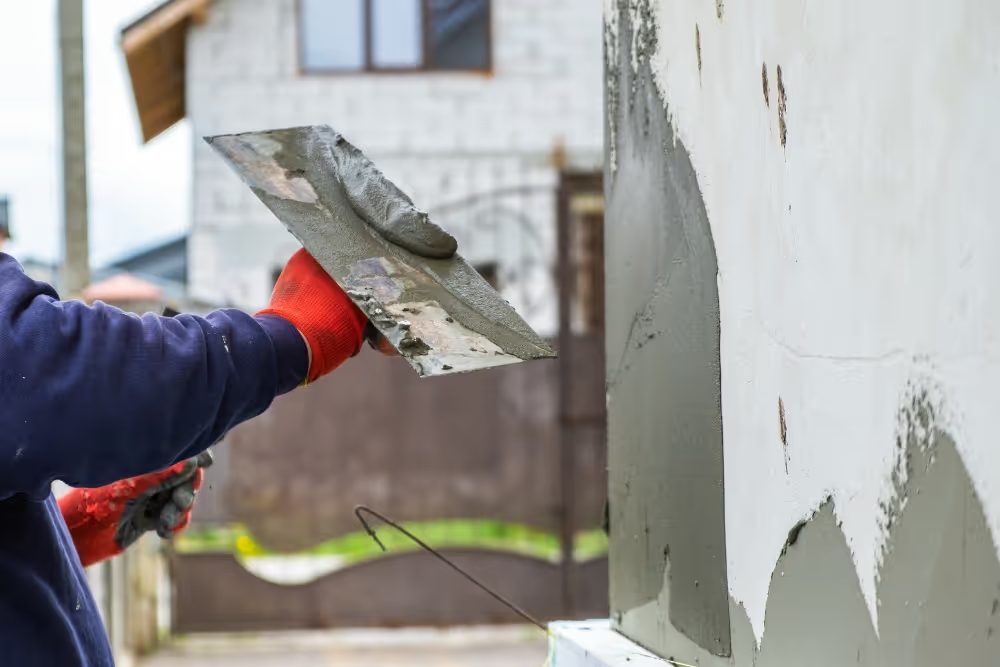
Stucco cracks are one of the most common calls we get from homeowners across Palm Springs. Most of them are not a big deal. But some of them are, and knowing the difference before you grab a tube of caulk matters a lot.
What It Actually Costs to Repair and Paint Stucco Cracks in Palm Springs
For a straightforward hairline crack repair with a color-matched paint touch-up, most Palm Springs homeowners are looking at $200 to $600 depending on how many cracks there are and where they sit on the wall. If the damage is more widespread or involves areas around windows and doors, that number climbs. Full wall repairs with texture matching and paint can run $800 to $2,000 or more. Water damage behind the stucco is a different conversation entirely and can push costs well past that.
The honest answer is that price depends almost entirely on what is actually going on with the wall. A single hairline crack on a smooth surface is cheap and fast. A section of stucco that is hollow behind it, soft to the touch, or showing moisture staining is a repair that needs to be done right, not just patched over.
Our painting team handles stucco crack repairs across the valley and can tell you within minutes of looking at it what category you are dealing with.
By the Numbers
These ranges reflect real work in the Coachella Valley, not national averages. Costs vary based on crack width, wall access, texture type, and whether moisture is involved.
Why Palm Springs Homes Crack More Than You Might Expect
The desert is hard on stucco. Most people understand that it is hot out here, but the thermal swings are what really do the damage. It can be 110 degrees on a south-facing wall at 2pm and drop 40 degrees by midnight. Stucco expands and contracts with every one of those cycles. Do that a few thousand times over several years and things start to move.
The soil under the slab moves too. Our soil in the Coachella Valley has a high clay content in some areas, which swells when it gets wet and shrinks when it dries out. That movement transfers right up into the framing and then into the stucco. It is not dramatic movement, but it is consistent, and stucco is a rigid material. It does not flex. It cracks.
Most of the homes we work on in Palm Springs were built in the 60s, 70s, and 80s. The original stucco has been through a lot of summers. The paint has faded and lost its elasticity. Cracks that could have been sealed years ago are now letting in wind-driven dust and the occasional monsoon moisture. That is when small problems become bigger ones.
Reading the Crack: What Type Are You Actually Looking At
Not all cracks are the same and treating them the same way is one of the most common mistakes homeowners make. Before anything gets patched, you need to know what you are dealing with.
The width test is simple: if a crack is wide enough to slip a credit card into, it needs more than caulk. Anything you can fit a coin into needs a proper stucco repair before paint goes on.
How to Repair Stucco Cracks the Right Way
The repair process matters more than most homeowners realize. You can fill a crack with the wrong material and it will look fine for a few months, then open right back up. The desert heat will find whatever weakness you left behind.
For hairline cracks, elastomeric caulk is the right call. It is flexible and moves with the wall. You clean out the crack with a wire brush, get any loose material out, and fill it with caulk rated for masonry. Smooth it with a putty knife and let it cure before painting over it. That is a repair that will actually hold.
For anything wider, you are into stucco patching territory. The area around the crack gets cleaned back to sound material. A bonding agent goes on. Then you build up new stucco in layers, the same way the original was done. Each coat needs to cure before the next one goes on. Rushing that process is how you end up with a patch that falls off in six months.
Texture matching is where a lot of DIY repairs fall apart visually. Palm Springs homes have a huge variety of stucco textures, from smooth Santa Barbara finishes to heavy sand finishes to skip trowel. Matching the existing texture takes experience and the right tools. A patch that is correctly filled but has the wrong texture sticks out badly and can actually make the wall look worse than the crack did.
Painting Stucco in the Coachella Valley: What Actually Holds Up
Paint selection matters a lot out here. The UV exposure in the desert is intense and it breaks down cheaper exterior paints fast. You will see fading, chalking, and cracking within two or three years if the wrong product goes on the wall.
Elastomeric paint is the standard recommendation for stucco in Palm Springs and the surrounding area. It is thicker than regular exterior paint, it bridges minor surface imperfections, and it has enough flexibility to handle the thermal movement the wall is going to go through every single day. It also provides a waterproof membrane, which matters during monsoon season.
Color matching on a stucco repaint is something you want done correctly from the start. If you are touching up one section of a wall, the new paint needs to match the existing finish. That is harder than it sounds because the existing paint has faded with years of sun exposure. A good painter will know how to account for that. We had a job recently at a home in Deepwell where the homeowner had tried to match the color themselves and the patch stood out like a window on the wall. We had to tint the repair paint a shade lighter than the current wall color to get it to visually blend after curing.
Two coats minimum on any stucco repaint. One coat on a porous stucco surface is not going to give you even coverage or adequate protection. Some textures need three passes to get the product into all the voids.
When the Crack Is Not Just a Crack: Signs of Bigger Problems
Most stucco cracks in Palm Springs are cosmetic. But some of them are telling you something important about what is happening inside the wall or below the slab, and ignoring those is how a $500 repair turns into a $15,000 problem.
Tap the wall around the crack with your knuckles. Solid stucco sounds dense. If it sounds hollow, the stucco has separated from the substrate behind it. That section needs to come off and be rebuilt, not patched over. Painting a hollow section of stucco just delays the inevitable.
Any softness or sponginess when you press on the wall near a crack is a sign of moisture in the assembly. That moisture is doing damage to the framing right now. You can smell it sometimes, a faint musty or earthy odor near the wall. If you see white chalky deposits running down from a crack, that is efflorescence, which means water has been moving through the stucco and carrying mineral salts with it.
Diagonal cracks that run from the corners of windows or doors deserve a professional set of eyes before anyone starts patching. If the crack reappears within a few months of being repaired, that is your tell. Something structural is still moving. Filling it again is not the answer.
- Hollow sound when tapped near the crack means the stucco has delaminated from the substrate
- Soft or spongy texture when pressed indicates moisture damage behind the wall
- White mineral deposits running from the crack are a sign of ongoing water movement through the stucco
- Musty smell near an exterior wall should be taken seriously, especially after rain
- Cracks that return after being repaired mean the underlying movement has not been resolved
- Wide diagonal cracks at windows or doors that were not there before may point to foundation or framing issues
Stucco Crack Repair in Palm Springs: DIY vs. Hiring a Pro
I will be honest with you. A single hairline crack on a flat, accessible section of wall is something a handy homeowner can tackle. Buy a tube of paintable elastomeric caulk, clean the crack out, fill it, let it dry, sand smooth, and touch up the paint. Total materials cost is under $30. If the texture is simple, you can make it look decent.
Where DIY gets people into trouble is texture matching, larger repairs, anything above one story, and any situation where water is involved. Matching a Santa Barbara or skip trowel finish by hand without experience usually does not go well. The patch ends up visible, which defeats the whole point. And working on a ladder on the second story of a stucco exterior while holding wet patching compound and a trowel is genuinely dangerous.
If there are more than a handful of cracks, or if any of them are wider than a quarter inch, or if you suspect moisture is involved, calling a contractor is just the smarter play. The cost of a professional repair is almost always less than the cost of fixing a DIY repair that did not hold or made the wall look worse.
You can reach our painting division at 760-343-5770 or at Painting@TrulyTough.com if you want someone to come take a look and tell you exactly what you are dealing with.
HOA Rules and Stucco Color in Palm Springs Communities
A lot of Palm Springs properties sit inside HOA communities with strict rules about exterior colors and approved materials. If you are doing anything beyond a like-for-like touch-up, it is worth checking with your HOA before the paint goes on.
Most HOAs in the valley maintain an approved color palette. Some require you to submit paint samples and get written approval before any exterior painting work starts. Getting that wrong means you may be required to repaint again at your expense, which nobody wants after already paying for a repair.
Communities like Seven Lakes Country Club have specific finishes and color standards that have been in place for decades. We have worked in enough HOA communities across Palm Springs to know how to handle the approval process and make sure the work passes inspection.
When in doubt, match exactly what is already there. Same texture. Same color. No surprises.
Frequently Asked Questions
How much does it cost to repair and paint stucco cracks in Palm Springs?
Most hairline crack repairs with paint touch-up run $200 to $600. More extensive repairs with texture matching and repainting of larger sections typically fall between $600 and $2,000 depending on the scope of the damage.
Are hairline stucco cracks a serious problem?
Most hairline cracks are cosmetic and caused by normal thermal movement. They should be sealed to prevent moisture intrusion, but they do not usually indicate a structural issue. Wider cracks, diagonal cracks, or cracks that keep coming back are worth a closer look.
Can I paint over stucco cracks without repairing them first?
No. Paint does not seal or bridge a stucco crack. It will cover it temporarily but the crack will telegraph through the paint within a season. The crack needs to be properly filled and cured before any paint is applied.
What type of paint should I use on stucco in Palm Springs?
Elastomeric exterior paint is the right product for stucco in the Coachella Valley. It is flexible enough to handle daily thermal movement, provides a waterproof membrane, and holds up to UV exposure far better than standard exterior latex.
How do I know if my stucco crack is just cosmetic or something more serious?
Tap the wall around the crack. If it sounds hollow, the stucco has separated from the substrate. If the area feels soft or there are white mineral deposits around the crack, moisture is likely involved. Diagonal cracks at window corners that reappear after repair usually point to movement that has not been resolved.
How long does a professional stucco crack repair take?
Minor repairs with paint touch-up can be done in a day. Larger repairs that require multiple stucco coats take two to three days because each layer needs time to cure before the next goes on. Rushing the cure time is what causes patches to fail.
Do I need HOA approval before repainting stucco in Palm Springs?
Many HOA communities in Palm Springs require written approval before any exterior color changes. Even like-for-like touch-ups may require you to document the original color. Check with your HOA before work starts to avoid having to redo it.
Can stucco crack repairs be matched to the existing texture?
Yes, but it takes experience. Palm Springs homes have a wide variety of stucco textures and getting a patch to blend visually requires using the right tools and technique. A visible patch that is the wrong texture often looks worse than the original crack.










.svg)
