.svg)



Gravel roof inspection and repair in Palm Springs addresses one of the city's oldest flat roof systems. Tar and gravel roofs, formally called built-up roofing or BUR, were the standard flat roof system on mid-century modern homes built throughout the 1950s, 60s, and 70s, and many are still in service today.
Gravel Roof Inspection and Repair in Palm Springs
Gravel roof repair in Palm Springs runs $300 to $1,500 for minor isolated work: patching a blister or crack with roof cement, adding gravel to a section where displacement has exposed the underlying asphalt surface, clearing a blocked drain that is causing ponding against the membrane, or fixing a failed flashing detail. Moderate repairs covering multiple problem areas, a section of membrane that needs to be built back up, or larger flashing work run $1,500 to $5,000. Major repairs involving significant deck work, large membrane sections, or drainage system repairs can reach $5,000 to $15,000 or more depending on roof size and what is found during the work.
A gravel roof, also called a tar and gravel roof or built-up roof (BUR), is a multi-layer asphalt roofing system built up on the roof deck in alternating layers of bitumen-saturated felt and hot asphalt, finished with a top surface of pea gravel or crushed stone. The gravel is not decorative: it serves as the primary UV shield for the asphalt layers beneath it, adds ballast to hold the system down against wind uplift, and provides fire resistance. When gravel is displaced or absent from sections of the roof, the underlying asphalt oxidizes under direct desert UV and develops alligatoring, cracks, and eventually leak points.
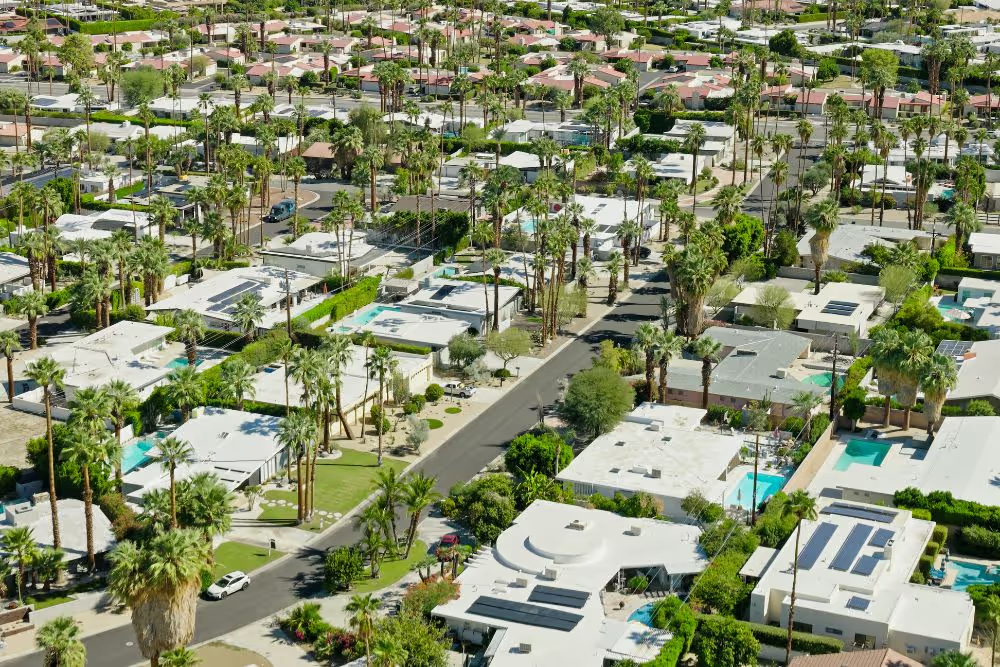
In Palm Springs, gravel roofs represent a significant portion of the flat roof stock on mid-century modern homes built during the postwar residential building boom that defined the city's architectural identity. Many of these homes in Old Las Palmas and similar neighborhoods still have their original BUR systems, though most have been replaced at least once over the decades. The homes that retain original BUR systems or early replacements are now operating roofs that are well past their designed service life and require more frequent and careful inspection than newer systems.
How Built-Up Roofing Works
Understanding BUR's construction explains why it performs the way it does and where it fails first.
A BUR system is built in place on the roof deck, which is why it is called built-up roofing. The installation process begins with a base sheet applied to the deck, followed by alternating layers of roofing felt and hot asphalt mopped onto each layer as it is applied. A three-ply system has three layers of felt with hot asphalt between each one; a four or five-ply system adds additional layers for greater waterproofing redundancy. The final hot asphalt layer is topped with an even broadcast of pea gravel while the asphalt is still hot, embedding the gravel into the surface to lock it in place.
The multi-layer structure is BUR's primary strength. Each felt layer adds to the system's waterproofing redundancy. A small crack in the surface asphalt does not immediately produce a leak because there are additional layers below it. This layered redundancy is what allowed well-installed BUR systems from the 1960s and 1970s to remain in service far longer than their original design life on many Palm Springs mid-century homes.
The challenge with BUR as it ages in desert conditions is leak detection. When water gets through the surface asphalt and enters the felt layers, it can travel laterally between plies, potentially for several feet, before finding a path through the deck to the interior. A ceiling stain in one location may originate from a failure point significantly distant from the visible water entry. Systematic inspection of the full roof surface is required to find the source.
How Desert Climate Affects Gravel Roofs in Palm Springs
BUR performs better in dry climates than in humid or freeze-thaw environments because moisture intrusion and ice damage are the primary failure accelerators in colder markets. Palm Springs's low rainfall and absence of freeze-thaw cycles are genuine advantages for BUR longevity. But the desert's specific stressors work on BUR in ways that accelerate different failure modes.
- UV oxidation and alligatoring. The asphalt in a BUR system dries out and oxidizes under sustained UV exposure, particularly in any area where gravel has been displaced and the asphalt surface is exposed directly to desert sun. Alligatoring, the pattern of raised and separated surface asphalt that resembles reptile skin, is the visual indicator of this oxidation process. Once alligatoring is widespread across the field surface, the asphalt has lost meaningful flexibility and the system is approaching functional end of life. Early-stage alligatoring in isolated areas is addressable with roof cement and gravel; widespread alligatoring is a system replacement signal.
- Gravel displacement from wind. Palm Springs experiences significant wind events, particularly through the San Gorgonio Pass corridor. High-velocity winds can displace gravel from flat roof surfaces, particularly at parapet walls and edges where wind turbulence concentrates. Displaced gravel leaves the underlying asphalt exposed to UV and reduces the fire resistance and ballast function of the gravel layer. Gravel distribution should be checked after major wind events and supplemented where displacement has created bare asphalt areas.
- Drain blockages from gravel migration. The same gravel that protects the membrane can block internal drains when it migrates into drain sumps. A partially blocked drain converts a flat roof into a temporary pond during any rain event. Gravel in a drain sump is one of the most common maintenance issues on Palm Springs tar and gravel roofs, and keeping drains clear is the most cost-effective regular maintenance action available.
- Thermal cycling and blister formation. Blisters, raised bubbles beneath the membrane surface, form when moisture or air trapped between BUR plies expands under summer heat. Palm Springs roof surface temperatures reaching 160-plus degrees in summer create significant expansion pressure on any trapped moisture or air pocket. Blisters that remain stable and un-ruptured may not be immediately leaking, but a blister that has opened or cracked has breached the waterproofing at that location. Active blisters should be examined and repaired before rain season.
- Flashing failures at parapet walls and penetrations. The asphalt flashing detail at every parapet wall base, HVAC curb, pipe penetration, and roof edge experiences the same thermal cycling stress as the field membrane, but concentrated at the transition point between the flat surface and the vertical element. As asphalt ages and loses flexibility, these transition flashings crack and separate. They are the most common active leak source on aging BUR roofs in Palm Springs and receive specific attention during every inspection.
What a Gravel Roof Inspection Covers in Palm Springs
Repair vs Replacement for Palm Springs Gravel Roofs
Permits and Licensing for Gravel Roof Work in Palm Springs
Minor repairs including blister patching, crack filling, gravel addition, and drain clearing generally do not require a permit in Palm Springs. Full re-roofing and large-area membrane replacement require a permit through the City of Palm Springs Building Department. Re-roofing projects replacing 50 percent or more of the roof area must comply with California Title 24 cool roof requirements for Climate Zone 15. Your contractor should pull the permit, specify a CRRC-rated product, and schedule required inspections on your behalf.
All California roofing contractors must hold an active C-39 Roofing Contractor license from the Contractors State License Board. BUR work requires specific experience with hot asphalt application, which is less common among contractors whose primary work is single-ply membrane systems. Verify license status and ask about BUR-specific experience before committing any contractor to gravel roof repair or replacement work.
Truly Tough Roofing Serving Palm Springs and the Coachella Valley
Our roofing division at Truly Tough Roofing handles gravel roof inspections, BUR patching and repairs, flashing work, drain repairs, reflective coating applications over existing BUR, and full re-roofing across Palm Springs, Palm Desert, La Quinta, Rancho Mirage, Indio, and throughout the Coachella Valley. We work across mid-century modern homes, older commercial buildings, and any property carrying a BUR system. Our roofing work is led by Alber Melara, a Coachella Valley native with over 20 years of hands-on roofing experience. Call us at 760-343-5807 or reach us at Roofing@TrulyTough.com.
Frequently Asked Questions
How much does gravel roof repair cost in Palm Springs?
Minor repairs including blister patching, crack filling, gravel addition, or drain clearing typically run $300 to $1,500. Moderate repairs covering multiple problem areas or flashing sections run $1,500 to $5,000. Major repairs involving membrane sections, deck damage, or drainage system work can reach $5,000 to $15,000 or more. Full BUR replacement runs $3.50 to $7.50 per square foot installed.
How long does a tar and gravel roof last in Palm Springs?
A properly installed BUR system in Palm Springs can last 20 to 30 years, and some well-maintained systems on mid-century modern homes have lasted longer in Palm Springs's dry climate. The absence of freeze-thaw cycles works in BUR's favor in this market. The primary aging factors here are UV oxidation of the asphalt, gravel displacement from wind events, and thermal cycling stress on flashing details. Regular inspection and gravel maintenance extend service life significantly over systems that receive no attention.
Why is my gravel roof leaking if I can't see any obvious damage?
Lateral water migration between BUR plies. When water enters the membrane through a crack or failed flashing, it travels horizontally between the layers before finding a path through the deck to the interior. The ceiling stain you see inside the home can be several feet away from the actual entry point on the roof. A thorough inspection of the full roof surface, not just the area above the visible stain, is required to find the actual source. This is one of the most frustrating characteristics of aging BUR systems and why BUR leak diagnosis specifically requires systematic inspection rather than targeted spot-checking.
What does alligatoring mean on a gravel roof?
Alligatoring is the pattern of raised, cracked asphalt surface that appears when the asphalt has oxidized and lost its flexibility under sustained UV exposure. It looks like the skin texture of an alligator or crocodile. Minor alligatoring in areas of depleted gravel can be addressed by cleaning, applying roof cement to the cracked surfaces, and adding gravel to restore UV protection. Widespread alligatoring across large sections of the field membrane indicates the asphalt has degraded broadly and the system is approaching end of life.
How often should a gravel roof be inspected in Palm Springs?
Every one to two years is the right interval, and annually for roofs over 15 years old. Additionally inspect after significant wind events that may have displaced gravel, after heavy rain to confirm no new leaks have developed, and before listing the property for sale. The most important maintenance action between professional inspections is keeping drains clear of gravel migration, which can be done by any maintenance-oriented property owner.
Can a tar and gravel roof be replaced with foam roofing?
Yes, and this is one of the most common replacement paths for end-of-life BUR systems on Palm Springs mid-century modern homes. Spray polyurethane foam can in many cases be applied directly over a sound existing BUR substrate after preparation, which avoids the cost of full tear-off. The resulting system is seamless, well-insulated, and renews its service life through periodic recoating. Confirming whether the existing BUR substrate is dry and sound enough to receive foam directly is part of the pre-installation assessment.
Should I replace my gravel roof before adding solar panels?
If the BUR system is within five to eight years of needing replacement, yes. Removing and reinstalling a solar array mid-life adds significant cost and scheduling complexity. A roofer should assess the gravel roof condition before any solar installation begins. If the roof is in the final quarter of its service life, replacing it before panels go on is almost always the financially correct sequence.






.svg)
