.svg)


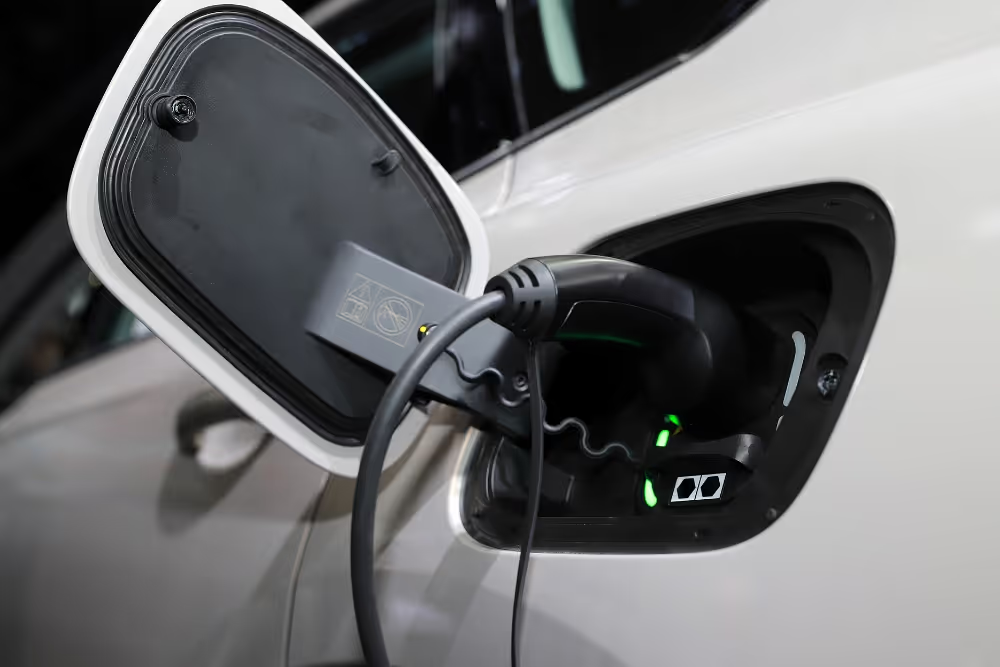
EV charger installation in La Quinta is one of the most requested electrical upgrades we handle, and the process is more straightforward than most homeowners expect once you understand what is actually involved.
EV Charger Installation in La Quinta
EV charger installation in La Quinta typically runs $800 to $3,000 for most residential projects, with complex installs involving panel upgrades or long wiring runs reaching $6,000 or more. Most straightforward garage installations, where the panel is close and has available capacity, come in on the lower end of that range. The install itself usually takes two to six hours and is done in a single visit once the permit is in hand.
La Quinta is served primarily by the Imperial Irrigation District (IID) for electricity, which is relevant because IID's rates are generally lower than Southern California Edison's. Pairing an EV charger with a solar installation in La Quinta is especially common in this market. Homeowners who charge overnight using solar energy stored during the day can offset most or all of their EV charging cost entirely.
The most important decision before scheduling an install is understanding what your electrical panel can support. That single factor determines whether the job is a straightforward afternoon of work or a project that also involves a panel upgrade or subpanel addition.
Level 1 vs Level 2 vs Level 3 Chargers
Not all EV chargers are the same, and the type you install determines how fast your vehicle charges, what electrical work is required, and what the project costs. For home installations in La Quinta, Level 2 is almost always the right answer.
Cost of EV Charger Installation in La Quinta
Cost is driven primarily by three things: the distance from the electrical panel to the charger location, whether the panel has available capacity or needs to be upgraded, and whether trenching is required for a detached garage or carport installation. Get a written scope with a load calculation before committing to any price.
What Drives Installation Cost Up or Down
La Quinta-Specific Considerations
A few things about La Quinta's housing stock and climate make EV charger installation slightly different here than in a typical California market.
Large lot homes, particularly in communities like Griffin Ranch and similar golf course neighborhoods, often have detached garages, porte-cocheres, or carports that are a meaningful distance from the main panel. That distance translates directly to higher wire run cost and, in many cases, underground conduit requirements. We factor that in from the first visit rather than quoting a low number and adjusting later.
Heat exposure is a real consideration for outdoor charger placement. A charger mounted on a south or west-facing wall in La Quinta can sit in direct sun for six to eight hours a day in summer. Most quality chargers handle this, but placement matters. Wherever possible, we position outdoor units where they get morning sun rather than afternoon sun, or where a wall overhang provides shade during peak heat hours.
HOA restrictions exist in some communities and occasionally affect where the charger can be mounted or whether conduit can be surface-mounted on exterior walls. California law generally protects a homeowner's right to install an EV charger even in communities with HOAs, but it is worth knowing your CC&Rs before scheduling the job so there are no surprises.
La Quinta is served by the Imperial Irrigation District (IID) for electricity. IID's flat residential rate is currently 19.76 cents per kilowatt-hour, which is substantially lower than SCE rates in Palm Springs and Palm Desert. That lower rate makes home charging in La Quinta economically favorable, especially when paired with a solar system that generates the energy used for charging.
Solar and EV Charger Pairing in La Quinta
The combination of solar generation and home EV charging is one of the strongest financial pairings available to La Quinta homeowners. La Quinta's solar resource is excellent year-round, and charging a vehicle with electricity generated on your own roof eliminates the fuel cost of the vehicle almost entirely.
If you are adding a solar system and an EV charger at the same time, both projects should be designed together. The solar array size, the battery storage capacity if you are adding one, and the charger amperage all interact. A solar contractor and electrician working from the same load calculation produce a cleaner, better-integrated system than two separate contractors working independently.
Chargers with smart scheduling or load management features are particularly useful in solar-plus-EV homes. You can set the charger to run during peak solar production hours in the middle of the day, drawing from the panels rather than the grid, and avoid charging during evening hours when you would otherwise be drawing from battery storage or grid power.
How EV Charger Installation Works in La Quinta
Popular EV Charger Models We Install
Most quality Level 2 chargers work with any EV that has a J1772 connector or a Tesla connector, which covers virtually every vehicle on the market. The choice of charger model mainly comes down to amperage, smart features, and whether you want app control and scheduling capability.
- Tesla Wall Connector. The best choice for Tesla owners and compatible with non-Tesla vehicles via adapter. Supports up to 48 amps and handles multi-unit load sharing if you are charging two vehicles from one circuit.
- ChargePoint Home Flex. Adjustable from 16 to 50 amps, app-enabled with scheduling and energy tracking. One of the more flexible options for households that want control over when charging happens relative to solar production or utility rates.
- JuiceBox. Smart charger with app control, scheduling, and energy monitoring. Solid reliability record and widely used in California markets.
- Emporia. A cost-effective smart option with load management capability. Good choice for households adding a charger to a panel that is already carrying significant load, since the load management feature reduces the charger draw when other large appliances are running.
- Wallbox Pulsar Plus. Compact form factor, up to 48 amps, app control with scheduling. A good option when wall space is limited or a cleaner install profile is a priority.
- Enphase EV Charger. Designed specifically for integration with Enphase solar and battery systems. If you have or are adding an Enphase solar setup, this charger communicates directly with the system to maximize charging from solar production rather than grid power.
Licensing for EV Charger Work in California
EV charger installation in California requires a licensed electrical contractor. The classification that covers all residential EV charger work, including the 240-volt circuit, breaker installation, and wiring, is the C-10 Electrical Contractor license issued by the California Contractors State License Board. You can verify any contractor's license, bond status, and complaint history on the CSLB website at no cost before scheduling work.
Unpermitted EV charger installations create real problems. Beyond the safety risk of an uninspected 240-volt circuit that will run high current for hours at a time, unpermitted work can complicate a home sale, affect homeowner's insurance coverage, and void the charger's manufacturer warranty. A licensed electrician who pulls the permit and schedules the inspection is doing the job correctly. Any contractor who offers to skip the permit to save time or money is shifting that risk to you.
Truly Tough Electrical Serving La Quinta and the Coachella Valley
Our electrical division at Truly Tough Electrical handles EV charger installation, panel assessments, circuit work, and full residential electrical across La Quinta, Palm Desert, Palm Springs, Rancho Mirage, Indio, and throughout the Coachella Valley. We run the load calculation, pull the permit, complete the installation, and coordinate the city inspection from start to finish. Call us at 760-343-5854 or reach us at Electrical@TrulyTough.com.
Frequently Asked Questions
How much does EV charger installation cost in La Quinta?
Most residential Level 2 charger installations in La Quinta run $800 to $3,000. Basic installs where the panel has capacity and the charger mounts close to the panel come in on the lower end. Projects requiring a panel upgrade, a long wire run, or underground conduit to a detached garage can reach $6,000 or more. Get a quote that includes a load calculation so you know upfront whether any panel work is needed.
Do I need a permit to install an EV charger in La Quinta?
Yes. An electrical permit is required from the City of La Quinta Building Division for any new 240-volt circuit installation. Permits are submitted through the city's Hub Online Portal and are typically approved within one to five business days for standard residential EV charger installs. Your electrician handles the application and inspection scheduling as part of the job.
How long does EV charger installation take?
The installation itself usually takes two to six hours and is done in a single visit. The permit typically takes one to five days to process. From first call to finished install, most La Quinta projects are complete within a week. Complex installs with panel upgrades or trenching take longer.
Does my electrical panel need to be upgraded to add an EV charger?
Sometimes. A 200-amp panel with available capacity and open breaker slots can usually support a Level 2 charger without modification. A 100-amp panel, a full panel with no available slots, or a panel already loaded with pool equipment and multiple HVAC systems may need a subpanel addition or a full service upgrade first. A load calculation done before the permit is pulled tells you exactly where you stand.
Which EV charger is best for a La Quinta home?
For most homeowners, a 40 to 50-amp Level 2 charger from ChargePoint, JuiceBox, Tesla, or Emporia covers daily charging needs with room to spare. If you have an Enphase solar system, the Enphase EV Charger integrates directly with your solar production. If you have two EVs, load-sharing chargers or a panel-level load management solution prevents either vehicle from overloading the circuit.
Can I install an EV charger outside in La Quinta?
Yes. Outdoor installations are common here, particularly in homes with carports or detached garages. The charger needs to be rated for outdoor use and should be positioned to minimize direct afternoon sun exposure where possible. West-facing exterior walls in La Quinta get intense heat during summer afternoons, and shaded or north-facing locations extend the charger's service life.
Does solar make an EV charger more cost-effective in La Quinta?
Significantly. La Quinta has excellent solar production year-round, and charging a vehicle from solar-generated electricity essentially eliminates the fuel cost of the vehicle. Homeowners who pair solar with an EV charger and set the charger to run during peak production hours in the middle of the day can charge largely or entirely from their own generation rather than from the IID grid.
What is the difference between a Level 1 and Level 2 EV charger?
A Level 1 charger uses a standard 120-volt outlet and adds 2 to 5 miles of range per hour. A Level 2 charger uses a dedicated 240-volt circuit and adds 20 to 40 miles per hour. For any EV used as a primary vehicle, Level 2 is the correct choice. Level 1 takes so long to charge a modern EV battery that most drivers find it impractical as a daily solution.










.svg)
