.svg)


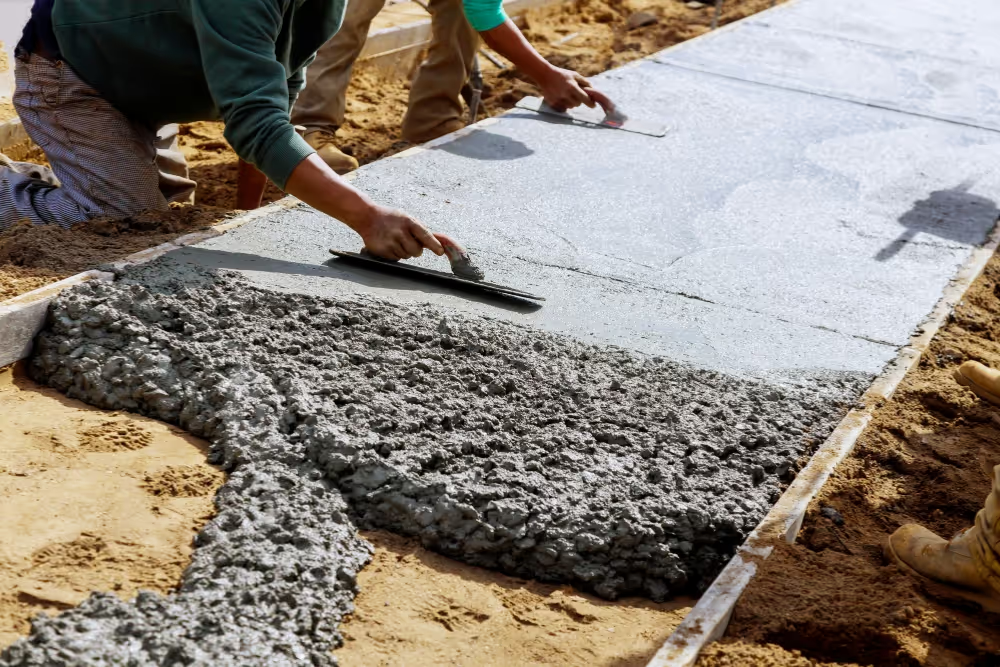
Foundation cracks in Palm Springs are common, and most homeowners have no idea what they are actually looking at or how serious it really is.
What Concrete Foundation Repair Costs in Palm Springs
For most homes in Palm Springs, concrete foundation repair runs somewhere between $500 and $8,000 depending on the method and the damage. Crack filling with epoxy or polyurethane typically lands in the $300 to $800 range per crack. If the slab has settled and needs to be lifted, mudjacking usually costs $500 to $1,500 per affected area, while polyurethane foam injection runs $800 to $2,500 per section. When the foundation has shifted significantly and needs piers, costs jump to $1,500 to $3,000 per pier, with most homes needing somewhere between five and twelve of them.
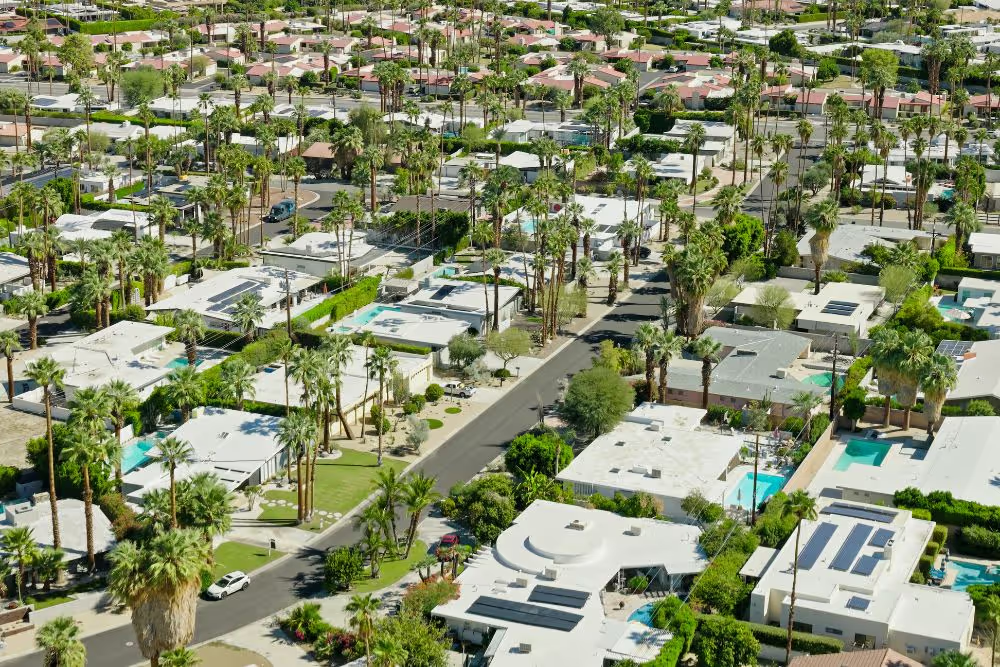
The desert soil under Coachella Valley homes is a big reason repairs come up so often. It expands when it gets wet and shrinks when it dries out. Over years, that constant movement wears on a slab foundation in ways that coastal California homeowners never have to think about.
The good news is that most foundation issues we see are not structural emergencies. They are maintenance problems that got delayed a little too long. The sooner you get eyes on it, the cheaper the fix.
By the Numbers
These ranges reflect Southern California labor and material rates as of 2025. Final pricing depends on access, soil conditions, and how much the slab has moved. A proper inspection is always the first step before any estimate is given.
Why Desert Soil Is So Hard on Slab Foundations
Palm Springs and the surrounding Coachella Valley sit on a mix of alluvial sand, silt, and expansive clay. That combination behaves differently than the soil in most of California. When rain hits, it absorbs water fast and swells. When it dries back out, it contracts. That cycle repeats every year, sometimes multiple times in a season, and over a decade or two it translates directly into foundation movement.
Irrigation is another factor people overlook. Homes with mature landscaping, leaking drip systems, or grass adjacent to the foundation are constantly introducing water into the soil around and under the slab. That uneven moisture distribution is one of the more common causes of differential settlement, which is when one corner or side of a slab drops while the rest stays flat.
The UV and heat here also accelerate surface concrete degradation. Slabs that were poured without adequate rebar or that used lower-quality mix are more likely to crack along stress lines as the material expands and contracts through summer temperatures that routinely push past 115 degrees. That is not a flaw in the original work necessarily, just a reality of building in the desert.
Cracks That Are Fine vs. Cracks You Need to Fix Now
Not every crack in your foundation or slab floor is a problem worth losing sleep over. Hairline cracks that run vertically and stay stable over time are almost always just shrinkage from the original cure. Concrete does that. It is normal and does not indicate structural movement.
The ones we take more seriously are horizontal cracks in stem walls, diagonal cracks running from corners of doors or windows, and cracks with vertical displacement where one side is sitting higher than the other. That last one, called a step crack or offset crack, tells you the slab is moving and not just settling uniformly.
Width matters too. Anything under about 1/16 of an inch is usually a monitoring situation. Once you are seeing gaps wider than that, especially with displacement, it is time to call someone. The other thing to watch for is whether a crack is growing. Take a photo with something for scale and check it again in 60 to 90 days. A crack that is changing is always more concerning than one that has been there for years and stayed the same.
- Hairline vertical cracks that have not changed in years are generally low priority
- Horizontal cracks in stem walls suggest lateral soil pressure and need attention soon
- Diagonal cracks from door or window corners often indicate differential settlement
- Offset or step cracks where one side is higher than the other are a red flag
- Any crack wider than 1/4 inch should be evaluated by a professional
- Growing cracks require prompt inspection regardless of size
Repair Methods Explained: Mudjacking vs. Foam vs. Piers
The right method depends on what is actually happening under your slab, not just what it looks like on the surface. A good contractor will probe for voids, check for moisture, and look at the surrounding grade before making a recommendation. If someone quotes you a repair without doing any of that, that is a problem.
What a Foundation Inspection Actually Involves in Palm Springs
A proper foundation inspection is not someone walking around and looking at cracks. It is a systematic process that starts outside and works inward. The inspector is checking the grade around the perimeter first, because the way water drains away from the house tells you a lot about what has been happening under the slab over the years.
Inside, we are looking at floors with a level or a laser to identify low spots and areas of differential settlement. We check door frames and window frames for racking, because when a foundation shifts the framing above it shifts too and that shows up in gaps, sticking, or misaligned hardware. We look at tile floors closely, since grout cracking in a consistent pattern often maps directly to where the slab has moved.
If we suspect voids under a slab, a sounding test can confirm it. That is as simple as tapping the concrete and listening for the hollow response. More advanced situations may call for a probe or ground-penetrating radar, though for most residential work in the valley the visual and physical inspection covers the diagnostic picture pretty well.
We did an inspection recently for a homeowner at Deepwell who had been told by a handyman that the cracks in his tile floor were just settling and nothing to worry about. Turned out there was a void under a section of the slab about four feet wide that had been created by a slow irrigation leak. The tile cracks were a symptom, not the actual problem.
Do You Need a Permit for Concrete Foundation Repair in Palm Springs?
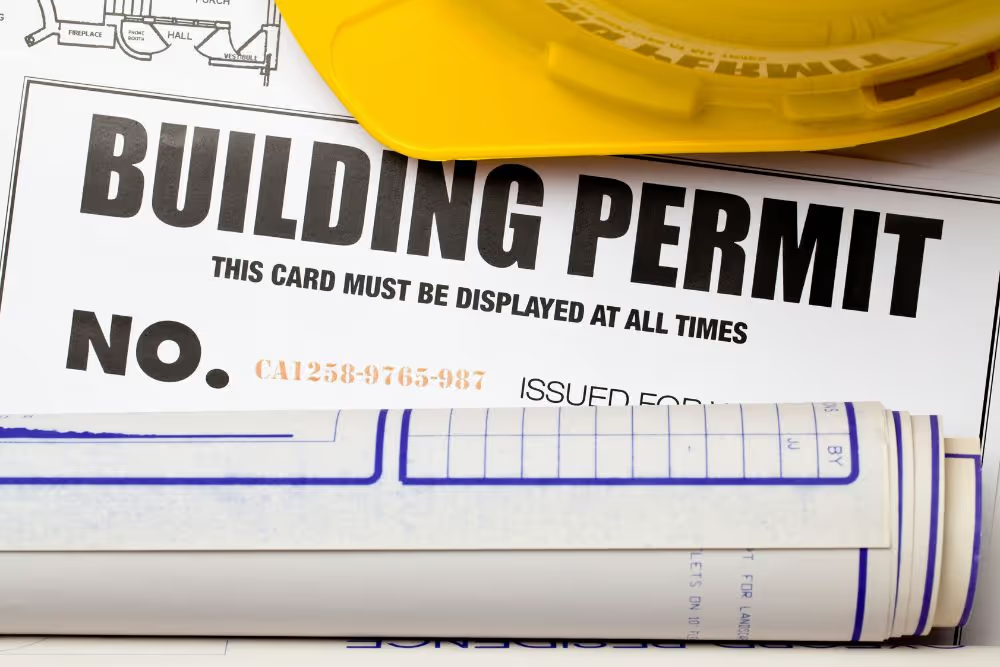
It depends on the scope of work. Crack injection and minor cosmetic patching typically do not require a permit in the City of Palm Springs. But once you get into slab lifting, underpinning with piers, or any work that involves structural elements of the foundation, a permit is generally required under California building code.
This matters more than most homeowners realize. Unpermitted structural work creates complications when you sell. Buyers in the Coachella Valley have gotten more sophisticated about pulling permit histories, and a disclosure showing foundation work was done without a permit is a negotiating problem. It can also affect your homeowner's insurance claim if you ever need to make one related to structural damage.
The permit process for foundation work in Palm Springs runs through the City building department. For projects that involve SCE service lines or drainage modifications, additional coordination may be required. A licensed contractor will handle the permit on your behalf and schedule the inspection when the work is complete. If someone is offering to skip it to save you money and time, that is not actually saving you anything.
Foundation Issues and What They Mean for Your Home's Value
Foundation problems show up on home inspections. When they do, buyers get nervous fast, and lenders sometimes will not finance a home with an open foundation issue. If you are planning to sell in the next few years, getting the repair done and documented before listing is almost always the right call.
The math is pretty straightforward. A minor foundation repair that costs $2,000 now can prevent a price reduction of $10,000 or more in escrow, or a deal falling apart entirely when the buyer's inspector flags it. We have seen transactions in Indian Canyons and other Palm Springs neighborhoods get delayed or killed over foundation disclosures that could have been handled before the house went on the market.
On the flip side, a clean foundation with a documented repair history and a transferable warranty is a selling point. It tells a buyer the current owner was paying attention. That matters, especially in the luxury and vacation home segments that dominate a lot of the Palm Springs market.
Our concrete team handles foundation assessments and repairs throughout Palm Springs and the full Coachella Valley. If you want to talk through what you are seeing and whether it warrants a repair, reach us at 760-343-5894 or at Concrete@TrulyTough.com.
Frequently Asked Questions
How much does concrete foundation repair cost in Palm Springs?
Most repairs in Palm Springs fall between $500 and $8,000 depending on the method. Crack injection runs $300 to $800 per crack, slab lifting with mudjacking or foam costs $500 to $2,500 per area, and pier installation runs $1,500 to $3,000 per pier. Major structural work can exceed $15,000 to $25,000.
What causes foundation problems in the Coachella Valley?
The main culprits are expansive desert soil, poor drainage around the foundation, and irrigation leaks that create uneven moisture conditions under the slab. The extreme heat and temperature swings accelerate surface cracking as well.
Are foundation cracks in my Palm Springs home serious?
Not always. Hairline vertical cracks from normal concrete shrinkage are usually not a concern. Horizontal cracks, offset or step cracks, and cracks that are actively growing are more serious and should be inspected by a professional sooner rather than later.
Do I need a permit for foundation repair in Palm Springs?
Minor crack sealing typically does not require a permit, but structural work such as pier installation, slab lifting, or underpinning does. Unpermitted structural work can create problems when you sell the home or file an insurance claim.
How long does concrete foundation repair take?
Crack injection and small slab lifts can often be completed in a single day. Pier installations for significant settlement typically take two to four days depending on the number of piers and site access.
What is the difference between mudjacking and polyurethane foam injection?
Mudjacking pumps a cement slurry under the slab and is less expensive, but the material is heavy and typically lasts five to seven years. Polyurethane foam is lighter, cures in minutes, and lasts 20-plus years, making it the better long-term option for most applications.
Can I sell my Palm Springs home with a known foundation issue?
You can, but it will complicate the sale. Buyers and lenders get cautious when a foundation issue shows up on an inspection report. Getting the repair done and documented before listing is almost always the better financial decision.
When should I call a foundation repair contractor vs. a structural engineer?
A foundation repair contractor can handle diagnosis and repair for most common issues. If there is significant structural damage, shifting walls, or a situation where a permit requires an engineering sign-off, a structural engineer may need to be involved before or alongside the repair contractor.







.svg)
