.svg)

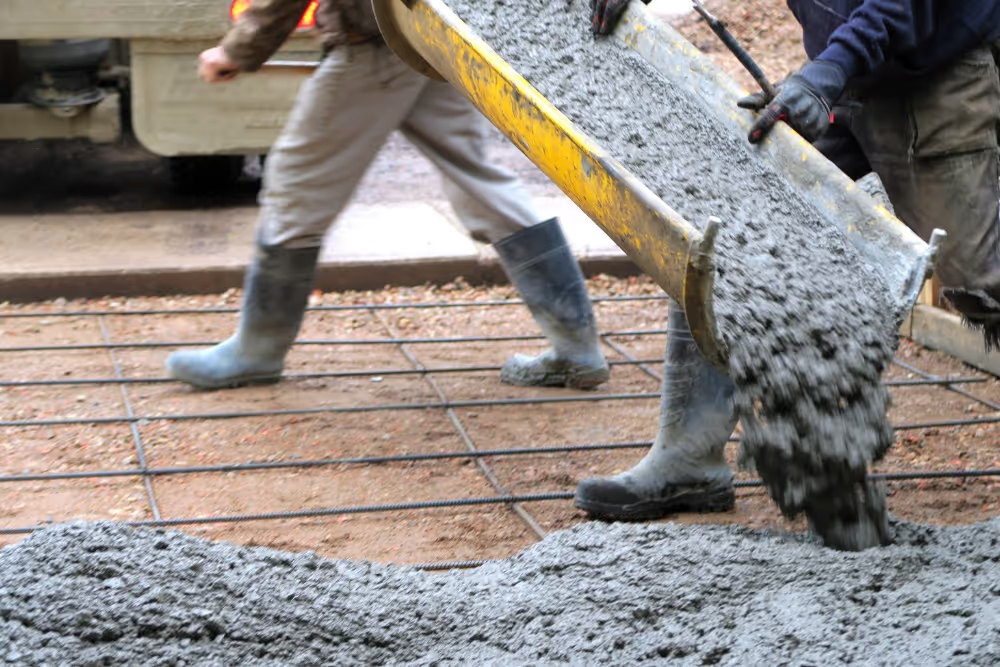
A concrete driveway in Palm Desert deals with conditions that most of the country never sees. Getting the installation right from the start is what separates a slab that lasts 30 years from one that starts cracking in five.
Concrete Driveway Work in Palm Desert
A concrete driveway installation in Palm Desert done correctly will last 25 to 40 years. Done wrong, and you are looking at surface cracking, slab shifting, and drainage failures within the first few years. The desert environment is hard on concrete in specific ways that general contractors from outside this market often underestimate, and the decisions made during installation determine how the slab performs for the entire life of the driveway.
The three most common reasons Palm Desert homeowners call us about driveway problems are cracking from thermal expansion, slabs that have shifted because the subgrade was not properly compacted, and surface spalling that started as hairline fractures and spread over a couple of summers. All three are largely preventable with the right pour and the right joint placement from day one.
Whether you need a new installation, targeted repair on existing concrete, or a full tear-out and replacement, the starting point is the same. An honest assessment of what is actually causing the problem and what it will take to fix it properly.
Palm Desert Concrete Driveway Cost Benchmarks
Final cost depends on driveway size, current condition, site access, finish type, and whether subgrade issues need correction before the pour. Get a written scope before agreeing to any number.
Why Desert Concrete Fails Faster Than It Should
The Coachella Valley puts concrete through a cycle that accelerates deterioration compared to more moderate climates. Surface temperatures on a Palm Desert driveway can hit 160 degrees in summer. At night, especially in winter, temperatures drop significantly. That daily expansion and contraction stresses the slab continuously. Over years, it works the control joints loose, opens hairline cracks, and eventually causes sections to shift or heave.
Desert soil compounds the problem. The soil in much of the Coachella Valley has clay content that expands when it gets wet and contracts when it dries out. Driveways here are subject to soil movement from below as well as thermal stress from above. A slab poured over improperly compacted or unstable subgrade will begin to reflect those soil movements within a few seasons. That is why site prep matters as much as the concrete mix itself.
UV degradation is another factor that does not get enough attention. Direct desert sun breaks down surface sealers faster than anywhere else in California. A sealer that would protect concrete for five years in coastal conditions might need reapplication in three years here. When the sealer fails and goes unnoticed, water and oil from vehicles begin penetrating the slab surface and the deterioration accelerates quickly.
New Driveway Installation in Palm Desert
A new concrete driveway installation done right in the desert starts well before the first truck arrives. The subgrade has to be properly graded and compacted. Poor compaction is the leading cause of slab settlement and cracking in this area. If the soil beneath the slab is not uniformly stable, the concrete will eventually follow whatever the soil does underneath it.
Rebar reinforcement is not optional on a Palm Desert driveway. The thermal cycling this climate produces creates stress that an unreinforced slab cannot handle over the long term. The size and spacing of rebar, as well as the concrete mix design, should be matched to the expected vehicle loads and the specific soil conditions on the property.
Control joint placement is critical and often underdone. Joints tell the concrete where to crack if cracking occurs, directing movement to planned locations that can be sealed and managed. A slab poured without enough joints, or with joints in the wrong locations, will develop random cracks that are much harder to address. In this climate we typically cut or form joints more frequently than minimum code requirements call for, because the thermal movement here is more aggressive than code was written for in most of California.
Curing is one of the most common areas where quality drops in hot weather. Concrete needs to retain moisture during the curing process to reach its design strength. In summer in Palm Desert, that means active curing measures including wet burlap, curing blankets, or curing compounds applied immediately after finishing. A slab that dries too fast in desert heat will not reach its rated strength and will be softer and more prone to surface wear over time.
Repair vs Replacement for Palm Desert Driveways
Not every cracked driveway needs to come out. The decision between repair and replacement depends on what is causing the damage and how far it has progressed.
Finish Options for Palm Desert Driveways
A new installation or resurfacing project is an opportunity to upgrade the look of the driveway beyond basic gray concrete. Several finish options work well in the desert and hold up to the UV and heat.
Broom finish is the standard for residential driveways. The textured surface provides traction and is straightforward to maintain. It is the workhorse option and there is nothing wrong with it for a functional driveway.
Exposed aggregate is popular in the Coachella Valley because it looks good, handles foot and vehicle traffic well, and stays cooler underfoot than a smooth finish in direct sun. The aggregate surface also provides natural texture without needing the broom finish pattern.
Stamped concrete can replicate the appearance of pavers, slate, or flagstone at a lower per-square-foot cost than the real materials and without the maintenance issues of individual units shifting over time. Stamped driveways add real curb appeal. The coloring agent is mixed into the concrete itself, not applied as a surface coat, so it does not peel or fade the way painted finishes do.
Integral color is a clean option for homeowners who want a consistent color throughout the slab rather than the natural gray. Color is added to the mix before pouring. It costs more than natural gray but less than stamped work and gives a finished, intentional look.
On a recent project in Bighorn Golf Club, Palm Desert, we poured an exposed aggregate driveway with a charcoal integral color border. The homeowner had three quotes for pavers at significantly higher cost. The finished concrete looked comparable, held up better in the heat, and was done in a fraction of the time.
Permits for Concrete Driveways in Palm Desert
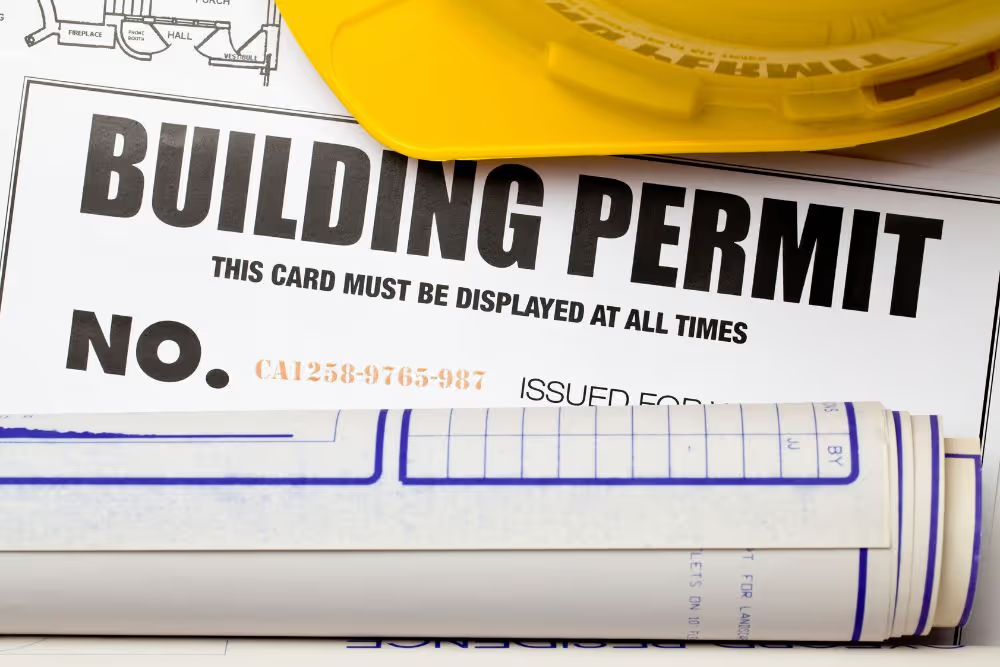
Most structural exterior concrete work in Palm Desert requires a permit from the City of Palm Desert Building and Safety Division. This includes new driveway installations and significant replacement work. The city conducts concrete slab inspections to verify that grading, reinforcement, and other requirements are met before the concrete is poured. The Palm Desert Building and Safety Division handles permit review and inspection scheduling. Permits are applied for through the city's Clariti online permitting system.
Your contractor should be pulling the permit and scheduling inspections as part of the job. Any contractor who suggests skipping the permit process to save time or money is creating a problem that will surface when you sell the home or file an insurance claim. An unpermitted concrete installation that does not meet code is your liability, not the contractor's.
Every concrete contractor in California must hold an active license. The classification covering driveway and flatwork concrete is the C-8 Concrete Contractor license issued by the Contractors State License Board. You can verify any contractor's license status, bond, and complaint history on the CSLB website at no cost before signing anything.
Truly Tough Concrete Serving Palm Desert and the Coachella Valley
Our concrete division at Truly Tough Concrete handles driveway installations, repairs, and full replacements across Palm Desert, Palm Springs, La Quinta, Indio, and the rest of the Coachella Valley. We do new pours, crack repair, slab leveling, resurfacing, and decorative finishes including stamped, exposed aggregate, and integral color work. Every project starts with an honest assessment of what the concrete actually needs, not a pitch for the most expensive option. Call us at 760-343-5894 or reach us at Concrete@TrulyTough.com.
Frequently Asked Questions
How much does a concrete driveway cost in Palm Desert?
New installations in the Coachella Valley typically run $8 to $14 per square foot for a standard finish. Decorative options like stamped or exposed aggregate run $12 to $20 per square foot. Full replacement including demolition, haul away, and a new pour generally lands between $6,000 and $18,000 for a typical residential driveway depending on size and scope.
Why is my Palm Desert concrete driveway cracking?
The most common causes are thermal expansion and contraction from desert temperature swings, clay soil movement beneath the slab, and control joints that were placed too far apart or not deep enough. Poor subgrade compaction at the time of installation is also a major contributor. In most cases, a combination of these factors is at work.
Should I repair or replace my cracked driveway?
Isolated hairline cracks in otherwise sound concrete are worth repairing. If the slab has multiple damaged areas, sections are heaving or settled at different heights, or the concrete is 20-plus years old with widespread surface deterioration, replacement is usually the better long-term value. A proper inspection tells you which situation you are in.
How long does a concrete driveway last in the Coachella Valley?
A properly installed and maintained concrete driveway in Palm Desert can last 25 to 40 years. The key factors are proper subgrade preparation, correct rebar placement, adequate control joints, quality concrete mix, and active curing during hot weather pours. Driveways installed without attention to those details fail much sooner.
Do I need a permit for a new concrete driveway in Palm Desert?
Yes. Most structural exterior concrete work including new driveway installations requires a permit from the City of Palm Desert Building and Safety Division. Your contractor should handle the permit application and inspection scheduling. Work done without a permit creates problems when you sell the property or file an insurance claim.
How do I verify a concrete contractor is licensed in California?
Search the contractor's license number on the CSLB website before signing anything. Concrete driveway work requires an active C-8 Concrete Contractor license. The search is free and shows bond status and complaint history as well.
When should concrete be poured in Palm Desert to avoid heat damage?
Late afternoon or early evening pours are common in summer to avoid the worst heat during finishing and initial curing. Any pour during extreme heat requires active curing measures immediately after finishing, including wet burlap, curing blankets, or applied curing compounds. Concrete that dries too fast in desert heat will not reach its design strength.
What finish is best for a Palm Desert concrete driveway?
Exposed aggregate is a popular choice because it provides natural traction, looks clean, and holds up well under UV and heat. Broom finish is a reliable standard option. Stamped and integral color finishes are worth the added cost if curb appeal is a priority. All of these hold up better in the desert than painted or coated surface treatments.





.svg)
