.svg)


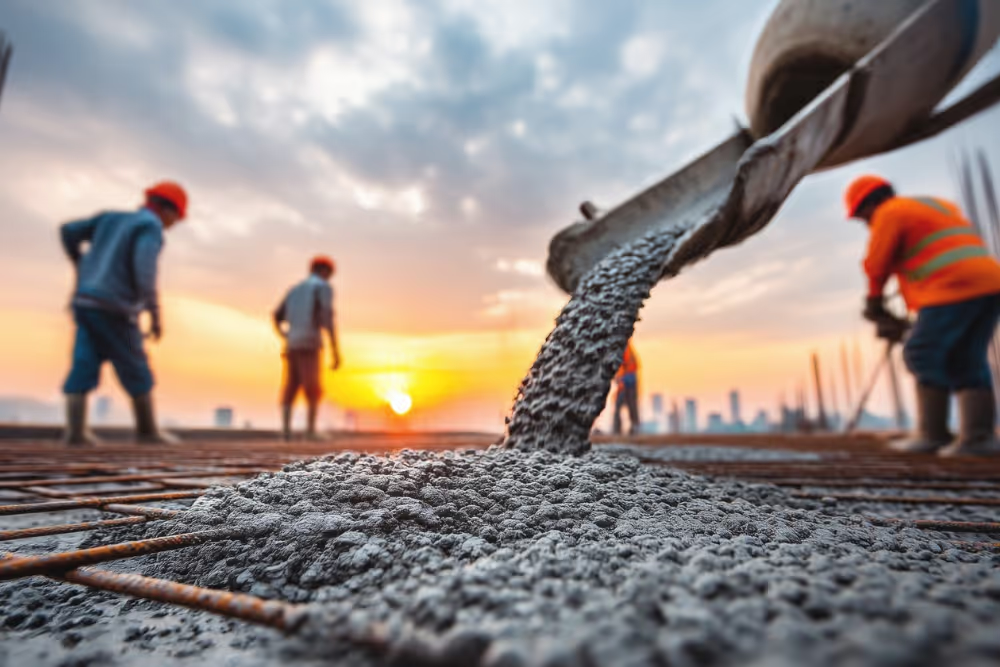
An ADU foundation in the Coachella Valley carries challenges that most general concrete guides never mention. Desert soil, extreme thermal cycling, and local code requirements all shape how the slab needs to be built.
ADU Concrete Slab Foundation Installation in the Coachella Valley
An ADU concrete slab foundation in the Coachella Valley is not a generic pour. The desert soil profile, the thermal stress from daily temperature swings that can exceed 50 degrees between night and afternoon, the expansive clay content common in parts of the valley, and the permit and inspection requirements in cities like Palm Springs, Palm Desert, La Quinta, Rancho Mirage, and Indio all create a specific set of demands that have to be addressed before any concrete goes down.
The slab is the most consequential phase of an Accessory Dwelling Unit build. Everything stacked on top of it depends on it being level, structurally sound, properly reinforced, and code-compliant. A foundation that passes inspection but was poured over an inadequately compacted subgrade, with insufficient rebar, or without a proper vapor retarder will cause problems for the life of the structure. Those problems are expensive to fix after the fact.
Getting the foundation right from the start is worth the attention it takes. What follows covers what a proper pour actually requires in this climate, what the inspection process looks like, and what to ask before hiring anyone for the work.
ADU Foundation Cost in the Coachella Valley
Foundation cost is only one component of total ADU construction. Utility connections, framing, roofing, electrical, plumbing, and finish work all add significant cost on top of the foundation. Get a complete written scope before committing to any phase of the project.
Why Coachella Valley Soil Makes Foundation Work More Demanding
Much of the Coachella Valley sits on alluvial deposits that include clay-bearing soils in many areas. Clay-bearing soil is classified as expansive because it absorbs moisture and swells, then shrinks and contracts as it dries. In a desert climate that gets concentrated seasonal rainfall after extended dry periods, that cycle is pronounced. The soil beneath a slab can shift meaningfully from season to season.
When expansive soil is not accounted for in the foundation design, the concrete above it heaves and cracks as the soil moves. This is not a minor cosmetic issue. It affects the structural integrity of everything above the slab. California building code addresses expansive soil conditions directly in residential foundation requirements, and cities like Palm Desert, Palm Springs, La Quinta, and Indio apply these provisions to Accessory Dwelling Unit construction.
A soils report, sometimes called a geotechnical investigation, assesses the specific soil conditions at the build site and informs the foundation design. Not every jurisdiction requires one for every ADU, but in the Coachella Valley it is frequently required and almost always worth doing even when it is not mandatory. The cost of a soil report is small relative to what it prevents.
The good news is that proper engineering addresses these conditions reliably. Continuous perimeter footings designed to the expansive soil requirements in the California Residential Code, appropriate rebar placement, correct slab thickness, and a quality vapor retarder beneath the slab all combine to produce a foundation that handles the valley's soil behavior for decades.
What a Proper ADU Slab Pour Requires in This Climate
The steps below apply to a standard detached ADU on a flat or near-flat site in the Coachella Valley. Sloped sites, unusual soil conditions, or larger footprints add complexity and cost at each stage.
Desert Heat and the Concrete Pour
Hot weather concrete work requires active management that is not needed in most other California climates. In the Coachella Valley, summer ambient temperatures regularly exceed 110 degrees. Concrete surface temperatures during finishing can be significantly higher. At those temperatures, the water in the mix evaporates faster than the hydration reaction needs it to, and the result is a slab that does not reach its rated compressive strength.
The fix is straightforward but it requires intention. We schedule summer pours in the early morning before the worst heat of the day or in the late afternoon after it passes. We use chilled mix water or ice as aggregate in the mix design when conditions call for it. We apply curing compound or wet-cure blankets immediately after finishing and keep the slab protected from direct sun during the critical first several days.
We worked on an ADU slab in Sun City Shadow Hills, Indio in August. The homeowner had been told by another contractor that a standard mid-afternoon pour would be fine. We pushed it to a 5 a.m. start, had the slab finished and covered before 10 a.m., and kept it wet-cured for seven days. A surface hardness test at 28 days confirmed the design strength. That kind of discipline during the pour is what determines how the slab performs over the next 30 years, not what it looks like when the forms come off.
Permits, Inspections, and Local ADU Requirements
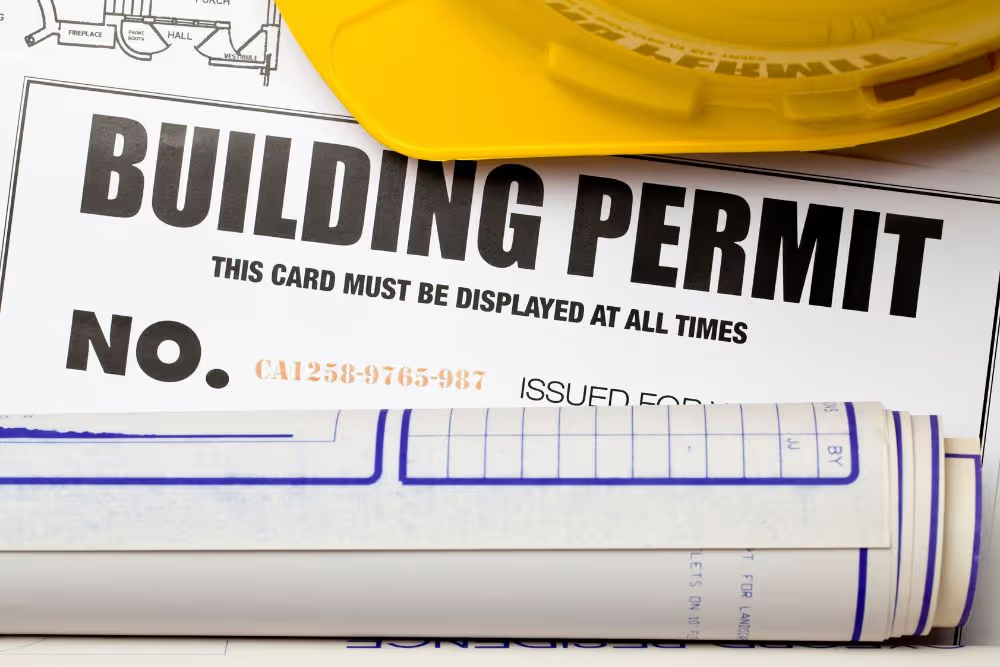
Every Accessory Dwelling Unit in the Coachella Valley requires a building permit. For properties on unincorporated land, permits go through the Riverside County Building and Safety Department, which offers a Permit Ready ADU program with pre-approved standard plan sets for qualifying properties. Using a pre-approved plan can shorten the design and plan check timeline considerably. For properties within Palm Springs, Palm Desert, La Quinta, Indio, or Rancho Mirage, permits are issued through those cities' own building departments, each with their own submittal portals and review timelines.
The foundation phase triggers a mandatory inspection before any concrete is poured. The building inspector reviews footing depth, rebar placement and sizing, vapor retarder installation, and compliance with the approved structural drawings. No concrete goes in until this inspection is signed off. An inspector who finds deficiencies will require corrections before reinspecting. Trying to pour before the inspection is a code violation with real consequences, including being required to demolish and redo the work.
Expansive soil requirements across the Palm Springs area follow the California Residential Code. All exterior walls of an ADU must be supported by continuous footings. Where expansive soil conditions apply, the footing design must meet specific depth and reinforcement requirements. A soils report may be required depending on the city and site conditions, and it informs the structural engineer's foundation design.
Any contractor performing concrete work must hold an active California contractor's license. The classification for concrete flatwork, slabs, and foundation pours is the C-8 Concrete Contractor license issued by the Contractors State License Board. Verify any contractor's license before signing a contract.
What to Ask Before Hiring a Concrete Contractor for Your ADU
The foundation is the one part of an ADU you cannot easily fix after the fact. These questions will help you evaluate any contractor before committing.
- Do you have a C-8 Concrete Contractor license? Ask for the license number and verify it on the CSLB website before the conversation goes any further.
- Have you done ADU foundation work in the Palm Springs area? Local permit knowledge across Palm Desert, La Quinta, Indio, and Rancho Mirage, and familiarity with expansive soil conditions here, matter. A contractor who mostly works outside this market will learn on your project.
- Who handles the permit application and footing inspection scheduling? Your contractor should own this process. If the answer is vague, that is a problem.
- How do you manage hot weather pours? A concrete contractor who works in this valley should have a specific, practiced answer about pour timing, curing methods, and mix design adjustments for summer work.
- What subgrade compaction do you achieve and how do you verify it? Compaction should be tested, not assumed. Ask whether they use a nuclear density gauge or other testing method to confirm compaction before forming up.
- What rebar layout does your foundation plan call for? If a contractor cannot discuss rebar sizing and spacing from the structural drawings, they may not be working from proper engineered plans.
- Will the foundation design account for expansive soil conditions? In the Coachella Valley this is not optional. The answer should be yes, with a reference to the footing requirements in the code or the soils report.
Truly Tough Concrete Serving the Coachella Valley
Our concrete division at Truly Tough Concrete handles ADU slab foundations, flatwork, driveways, patios, and structural concrete across Palm Springs, Palm Desert, La Quinta, Indio, and throughout the Coachella Valley. We work from engineered drawings, pull our own permits, and manage the full inspection process from footing through final sign-off. Every pour in summer gets scheduled and managed for desert conditions from day one. Call us at 760-343-5894 or reach us at Concrete@TrulyTough.com.
Frequently Asked Questions
How much does an ADU concrete slab foundation cost in the Coachella Valley?
Most detached ADU slab foundations in the Coachella Valley run $15,000 to $25,000 for a standard residential footprint. More complex sites, difficult access, significant soil corrections, or larger ADUs can push costs toward $30,000 to $40,000. Get a written scope that breaks down excavation, subgrade prep, rebar, vapor retarder, pour, and finishing separately.
Do I need a soils report for an ADU foundation in the Coachella Valley?
It depends on the city and the specific site. Palm Springs, Palm Desert, La Quinta, Indio, and Rancho Mirage all have their own requirements and many require or strongly recommend a soils report for new Accessory Dwelling Unit foundations given the expansive soil conditions common in the valley. Even when not required, the cost of a soil report is small relative to the cost of a foundation designed without knowing what is beneath it.
What permits are required for an ADU foundation in the Coachella Valley?
A building permit is required for every Accessory Dwelling Unit in the valley. Palm Springs, Palm Desert, La Quinta, Indio, and Rancho Mirage each issue permits through their own building departments. Properties on unincorporated land use Riverside County's Building and Safety Department, which also offers a Permit Ready ADU program with pre-approved plan sets for qualifying properties. Your contractor should handle the permit application and all inspection coordination.
Can concrete be poured before the footing inspection in California?
No. A footing and rebar inspection must be completed and approved before any concrete is poured. The inspector verifies footing depth, rebar placement, and vapor retarder installation against the approved plans. Pouring before the inspection is a code violation and can result in a requirement to demolish and redo the work.
How does desert heat affect ADU concrete pours?
High temperatures cause concrete to lose moisture too quickly during curing, which prevents the slab from reaching its design strength. In the Coachella Valley, summer pours should be scheduled for early morning or late afternoon, and active curing measures including wet blankets or curing compounds should be applied immediately after finishing and maintained for at least seven days.
What is expansive soil and why does it matter for ADU foundations?
Expansive soil contains clay that swells when wet and shrinks when dry. In the Coachella Valley, this cycle causes the soil beneath a slab to move seasonally. If the foundation is not designed to account for this movement, the slab and the structure above it will crack and shift over time. California building code addresses this with specific footing depth and reinforcement requirements for expansive soil conditions.
What license does a concrete contractor need for ADU foundation work in California?
ADU foundation and concrete slab work requires an active C-8 Concrete Contractor license issued by the California Contractors State License Board. You can verify any contractor's license, bond status, and complaint history on the CSLB website at no cost before signing anything.
What is the difference between a slab-on-grade and a stem wall foundation for an ADU?
A slab-on-grade is a concrete slab poured directly on prepared ground and is the most common foundation type for ADUs on flat lots. A stem wall foundation adds a short concrete wall around the perimeter that raises the structure above grade, which is used on sloped sites or where drainage or flood conditions require it. Stem wall foundations cost more and add construction time but are necessary in certain site conditions.







.svg)
