.svg)


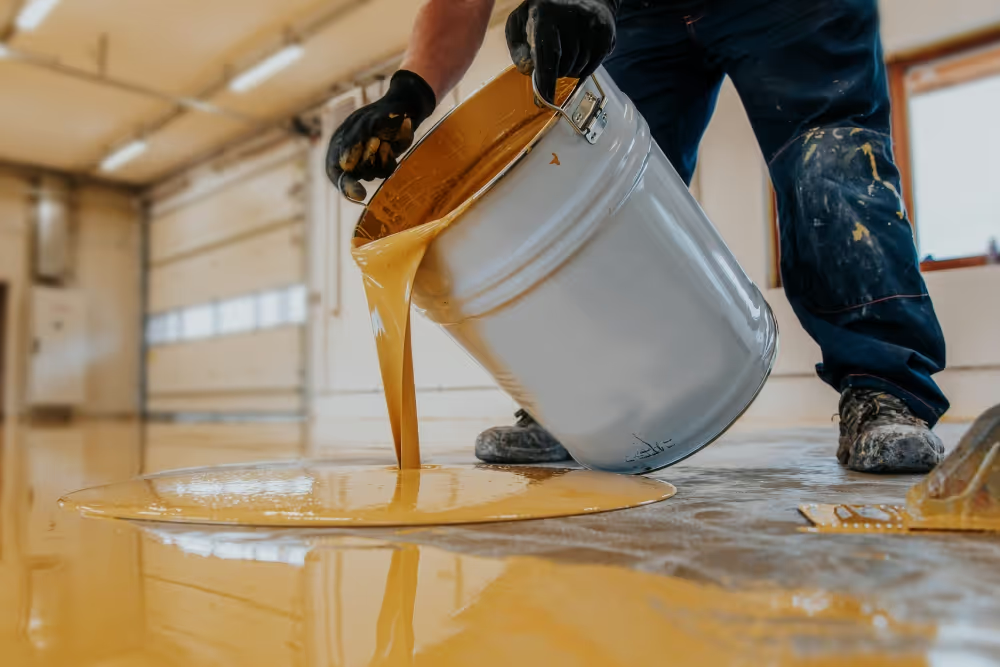
Epoxy floor coating in Palm Springs is one of those upgrades that solves several problems at once. A dusty, stained, cracked garage floor becomes a sealed, easy-to-clean surface that holds up to vehicles, heat, and whatever else a desert garage deals with.
Epoxy Floor Coating Installation and Repair in Palm Springs
Epoxy floor coating installation in Palm Springs runs $5 to $12 per square foot for most residential garage projects. A standard two-car garage in the 400 to 500 square foot range typically runs $2,000 to $4,500 fully installed, depending on the coating system chosen, the condition of the concrete, and how much prep work the slab requires. Repair work for peeling, cracking, or isolated surface failure generally runs $300 to $3,000 depending on scope.
The coating choice matters significantly in Palm Springs, and it matters in a way that general flooring guides do not address. Standard epoxy was designed for climate-controlled environments. It is brittle, not UV-stable, and struggles with the thermal cycling that a desert garage experiences as temperatures swing from cool winter mornings to 115-plus degree summer afternoons. Polyaspartic and polyurea systems are specifically engineered to handle these conditions, and they are the right specification for Palm Springs garages in most cases. Understanding the difference before signing a contract saves a homeowner from a floor that needs replacing in three to five years instead of lasting fifteen or more.
We do a lot of garage floor coating work across Palm Springs, from mid-century homes in Movie Colony to vacation rentals in the north end. The pattern is consistent: the homeowners who had standard epoxy installed a few years ago are calling us to replace a floor that is yellowing near the garage door opening and starting to peel where hot tires park. The ones who had polyaspartic installed are calling us for other projects.
Why Standard Epoxy Underperforms in Palm Springs Garages
Most homeowners shopping garage floor coatings encounter epoxy first because it is the most common name in the category and is widely available through home improvement stores. It is also the coating that fails most predictably in desert conditions. Understanding why helps explain the product recommendations that follow.
- UV degradation and yellowing. Standard epoxy is not UV-stable. Sunlight that enters through the garage door opening, even indirect light, causes epoxy to yellow and amber over time. In Palm Springs where the sun angle is intense and garage doors open to direct desert light, this happens faster than in most other markets. A floor installed in a neutral gray can develop visible yellowing along the sun-exposed portion within one to three years.
- Hot tire pickup. When a vehicle drives to a destination in summer Palm Springs heat, tires can reach temperatures that soften standard epoxy when the car is parked. The tire-to-floor contact creates localized adhesion failure, and when the car is driven away the epoxy lifts with the tire. This leaves visible marks and, over time, accelerates delamination across the entire surface. Polyaspartic systems have a stronger molecular bond to concrete and do not exhibit hot tire pickup under normal desert driving conditions.
- Thermal cycling brittleness. Concrete expands when heated and contracts when it cools. Standard epoxy is rigid and cannot move with the concrete through those cycles. The result over time is micro-cracking, delamination at edges and seams, and eventual peeling. Polyaspartic coatings have a degree of flexibility built into their chemistry that allows them to move with the concrete rather than fighting it, which is the primary reason they hold up in desert conditions over multi-year timeframes where epoxy does not.
- Cure time sensitivity to temperature. Epoxy requires a specific temperature range to cure correctly, typically between 60 and 85 degrees. In Palm Springs, the window for ideal epoxy installation is narrower than in temperate markets. Polyaspartic systems actually use heat to accelerate their cure and can be installed and ready for vehicle traffic within 24 hours even in warm conditions. This also means polyaspartic installation is not constrained to the few cooler months of the year.
Coating System Options for Palm Springs Garages
Cost of Epoxy and Polyaspartic Floor Coating in Palm Springs
These figures reflect installed cost including surface preparation, coating, and decorative elements for a standard residential garage in Palm Springs. Concrete in poor condition requiring crack injection, grinding, or moisture remediation adds $1 to $3 per square foot to the base cost. Always request a written quote that separates surface prep, material, and labor so bids are genuinely comparable. A low bid that assumes minimal prep on a damaged slab will produce a floor that fails early.
Surface Preparation Is 75% of the Job
The single most important factor in whether a garage floor coating lasts five years or fifteen is what happens to the concrete before any coating is applied. A coating applied to poorly prepared concrete will fail regardless of how good the product is. A coating applied to properly prepared concrete will last as long as the manufacturer's specification suggests.
Professional surface preparation for a Palm Springs garage floor involves mechanical diamond grinding or shot blasting to open the concrete's surface pores and remove any surface contamination, oil penetration, or previous coatings. This is not a power wash and etch process. Acid etching, which is the standard prep in most DIY kits and some low-price professional installs, does not adequately open the concrete surface for a coating bond that holds up under desert thermal cycling.
Before grinding starts, cracks are assessed and filled. Active cracks that continue to move require flexible crack filler. Dormant or surface cracks can be filled with a rigid compound and ground flush. Any areas where the concrete has spalled or delaminated need to be addressed before the coating goes down, because a coating applied over compromised concrete will simply pull that concrete off the slab when it eventually peels.
Moisture testing on the slab is the final prep step. Even in the desert, concrete slabs emit moisture vapor. Coatings applied over concrete with excessive vapor emission will blister and delaminate from the underside. A contractor who does not test for moisture before installing a coating on a Palm Springs slab is skipping a step that protects both the installation and the homeowner.
Decorative Options for Palm Springs Garage Floors
Beyond the coating system itself, the decorative finish determines how the floor looks and how it performs underfoot. Palm Springs garages have some specific considerations.
Repair vs Full Replacement for Existing Coatings
Failed or failing garage floor coatings in Palm Springs are more common than in most other California markets because of how frequently standard epoxy is installed and how quickly desert conditions expose its limitations. Understanding when repair is appropriate versus when full replacement is the only viable path saves time and money.
Where Garage Floor Coating Fits in a Larger Garage Project
Garage floor coating is frequently one component of a larger garage improvement project rather than a standalone job. In Palm Springs, garages serve a wider range of functions than in most markets. Pool equipment storage, hobby and workshop space, vacation home arrival areas, and even converted living and entertaining spaces all involve the garage floor as a foundational element.
When a garage remodel includes new electrical work for lighting upgrades, EV charger installation, or workshop circuits, the correct sequence is to complete all wall and ceiling work, any concrete repair to the slab, and all conduit runs before the floor coating goes down. A floor coating applied before electrical work or other trades are complete will be damaged by subsequent work in most cases. Coordinate trade sequencing before scheduling the coating installation.
For garage-to-living-space conversions, the floor coating decision becomes part of a larger finishes discussion. Polyaspartic systems are appropriate for the transition zone between the exterior environment and an interior living space, but for rooms being fully converted to conditioned living area, other flooring materials including LVP or tile may be more appropriate depending on the design direction and HOA requirements for the conversion.
Truly Tough Flooring Serving Palm Springs and the Coachella Valley
Our flooring division at Truly Tough Flooring handles garage floor coating installation, surface coating replacement, and concrete prep work across Palm Springs, Palm Desert, La Quinta, Rancho Mirage, Indio, and throughout the Coachella Valley. We specify and install polyaspartic systems correctly for desert conditions, perform proper mechanical surface preparation, and back our work with a written scope before any project begins. Call us at 760-343-5885 or reach us at Flooring@TrulyTough.com.
Frequently Asked Questions
How much does epoxy floor coating cost in Palm Springs?
Professional installation of a standard epoxy flake system in Palm Springs runs $5 to $7 per square foot. A polyaspartic system, which is the recommended specification for desert garages, runs $7 to $10 per square foot. A two-car garage in the 400 to 500 square foot range typically costs $2,000 to $4,500 installed depending on the system and the condition of the concrete. Always get a written scope that separates surface prep, materials, and labor.
Why does standard epoxy fail in Palm Springs garages?
Standard epoxy is not UV-stable, is brittle under thermal cycling, and is susceptible to hot tire pickup. In Palm Springs, garage floors are exposed to direct sunlight through the door opening, extreme summer temperatures, and hot tires from vehicles driven in desert heat. These conditions cause standard epoxy to yellow, crack, peel, and delaminate within three to five years. Polyaspartic systems are UV-stable, flexible through temperature cycles, and resistant to hot tire contact, which is why they are the correct specification for this climate.
What is the best garage floor coating for Palm Springs?
A polyaspartic or polyurea system with a UV-stable polyaspartic topcoat and a decorative vinyl flake broadcast is the best specification for most Palm Springs garages. It handles UV exposure without yellowing, flexes with the concrete through thermal cycles without cracking, and resists hot tire pickup. A tan or gray flake blend is the most practical color choice for hiding desert dust and heat absorption.
How long does garage floor coating last in Palm Springs?
A professionally installed polyaspartic system on properly prepared concrete realistically lasts 15 to 20-plus years in Palm Springs conditions. Standard epoxy on the same floor typically lasts three to five years before visible failure begins. The quality of surface preparation matters as much as the coating system: a premium coating on poorly prepared concrete will fail early regardless of the product specification.
How long does garage floor coating installation take?
A standard single or two-car garage with a polyaspartic system installs in one day. Surface prep, base coat, flake broadcast, and topcoat all complete the same day. Foot traffic is possible within a few hours of topcoat application. Vehicle traffic within 24 hours. Standard epoxy systems require two to five days of cure time before the garage can be used normally.
Can a failed epoxy floor be repaired or does it need full replacement?
Isolated chips or cracks in an otherwise sound, well-adhered coating can sometimes be patched. Widespread delamination, hot tire damage patterns across the floor, or any situation where the existing coating has lost its bond to the concrete requires full removal back to bare concrete and reinstallation of a new system. Coating over a failing system replicates the failure and is not a viable repair path.
Do I need to empty my garage before floor coating?
Yes. The garage must be completely empty including vehicles, shelving units, cabinets, and any stored items before the contractor arrives. The entire floor surface needs to be accessible for grinding and coating. Moving items back in typically happens the day after installation once vehicle traffic is cleared, which for polyaspartic systems is usually within 24 hours of the topcoat application.
Is garage floor coating worth it for a Palm Springs vacation home?
Yes, for a few specific reasons. A sealed floor dramatically reduces the dust and fine sand that accumulates on a bare concrete garage and tracks into the home with every entry and exit. It also handles the long unoccupied periods that vacation homes experience without maintenance concerns. A polyaspartic coating on a vacation home garage holds its appearance whether the property sees daily use or sits empty for months at a time.






.svg)
