.svg)


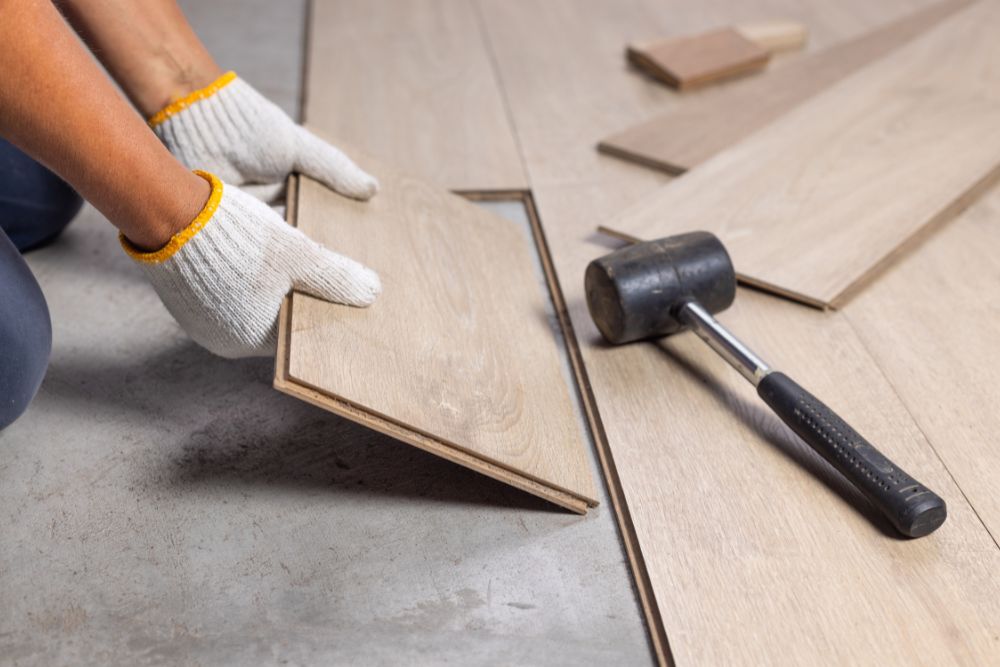
Across the Coachella Valley, from homes in Palm Desert to remodels in Palm Springs, many homeowners want updated flooring without the mess, noise, and cost of tile demolition. Removing ceramic or porcelain tile can add days of labor, significant dust, and unexpected subfloor repairs. That’s why one of the most common renovation questions we hear on projects in Rancho Mirage and La Quinta is whether new flooring can be installed directly over existing tile.
The short answer is: yes, in many cases, you can install new flooring over tile, but only if the underlying tile meets specific structural conditions. Skipping proper inspection can lead to cracking, separation, or uneven floors months after installation.
What Conditions Must the Existing Tile Meet?
Before installing any new flooring over tile, professionals inspect the existing surface to confirm it can safely support another material layer.
For many Indio properties, especially older homes with settling or thermal expansion from desert heat, tile may appear stable but still fail bonding tests.
A tile floor may qualify for overlay installation if it is:
- Fully bonded to the concrete slab beneath
- Free of hollow spots when tapped
- Structurally level across the surface
- Not cracked or lifting at grout lines
- Free of moisture intrusion from below
If tile shifts under pressure or produces a hollow sound, the bond between the tile and slab has likely failed, meaning installing flooring over it would trap movement underneath.
Flooring Types That Can Be Installed Over Tile
Not all materials perform equally well when placed over an existing tile surface. Some are specifically designed to tolerate minor inconsistencies in substrate.
In La Quinta HOA-regulated communities, flooring height changes must often meet door clearance and transition requirements, especially in condos with shared structural slabs.
Why Grout Lines Matter More in Desert Homes
Tile grout joints create recessed seams across the floor surface. In areas like Rancho Mirage, where dry desert air and thermal expansion cause slight slab movement, those seams can telegraph through thin flooring materials over time.
Before installing LVP or laminate over tile, contractors often apply a floor-leveling compound, a cement-based material that fills grout joints and smooths the entire surface.
Without this step, plank flooring may flex into grout recesses, eventually causing:
- Clicking noises
- Joint separation
- Visible plank deflection
- Locking system failure
How Professionals Inspect Tile Before Overlay Installation
Proper inspection goes beyond visual checks. On many projects in Palm Springs, installers perform:
- Tap testing for hollow tile
- Straightedge testing for levelness
- Moisture meter readings
- Edge inspection at baseboards
- Expansion joint verification
Moisture testing is especially critical in homes with slab-on-grade construction common throughout the Coachella Valley. Trapped moisture beneath tile may not be visible but can compromise adhesive bonding when new flooring is installed over it.
If moisture vapor emission exceeds acceptable thresholds, installing flooring over tile could result in warping or mold development beneath floating systems.
Height Changes and Transition Issues
Adding flooring over tile increases finished floor height by 3/8" to 3/4", depending on the material and underlayment used.
This affects:
- Door swing clearance
- Appliance positioning
- Baseboard height
- Stair riser uniformity
- Transition strips between rooms
In multi-level Palm Desert homes, stair code compliance requires consistent riser height between steps. Even small changes from flooring overlays can create safety concerns.
Common Mistakes Homeowners Make
When attempting to save on demolition costs, homeowners sometimes:
- Install flooring without leveling grout lines
- Ignore cracked tile beneath cabinets
- Use incorrect adhesives
- Skip moisture testing
- Overlay tile that’s partially debonded
These shortcuts often result in premature flooring failure, sometimes within a single season of summer heat.
Tile that expands under high slab temperatures can push upward against new flooring, especially in west-facing Indio properties exposed to extended UV heat throughout the afternoon.
Cost Considerations: Overlay vs Tile Removal
Installing flooring over tile is typically less expensive than removing it, but cost savings depend on surface preparation needs.
In many Rancho Mirage remodels, grout leveling and moisture mitigation may narrow this cost gap depending on slab conditions.
For evaluation or surface preparation concerns, homeowners can contact Truly Tough Flooring at Flooring@TrulyTough.com or 760-343-5885.
Situations Where Tile Should Be Removed First
Overlay installation may not be advisable when:
- Tile is cracked across multiple rooms
- Flooring transitions already exist
- Cabinets are installed above tile
- Subfloor moisture levels are elevated
- Structural movement is present
On several La Quinta projects involving older post-tension slabs, tile removal was necessary to correct slab elevation before new flooring installation.
Related Remodeling Considerations
Flooring overlays often intersect with other renovation needs, such as:
- Interior drywall adjustments after floor height changes
- HVAC airflow changes beneath doorways
- Electrical outlet repositioning near new baseboard height
For adjacent interior updates, homeowners may consult Truly Tough Drywall at Drywall@TrulyTough.com or 760-343-5773.


.svg)
